Sit Up (Arms Crossed)
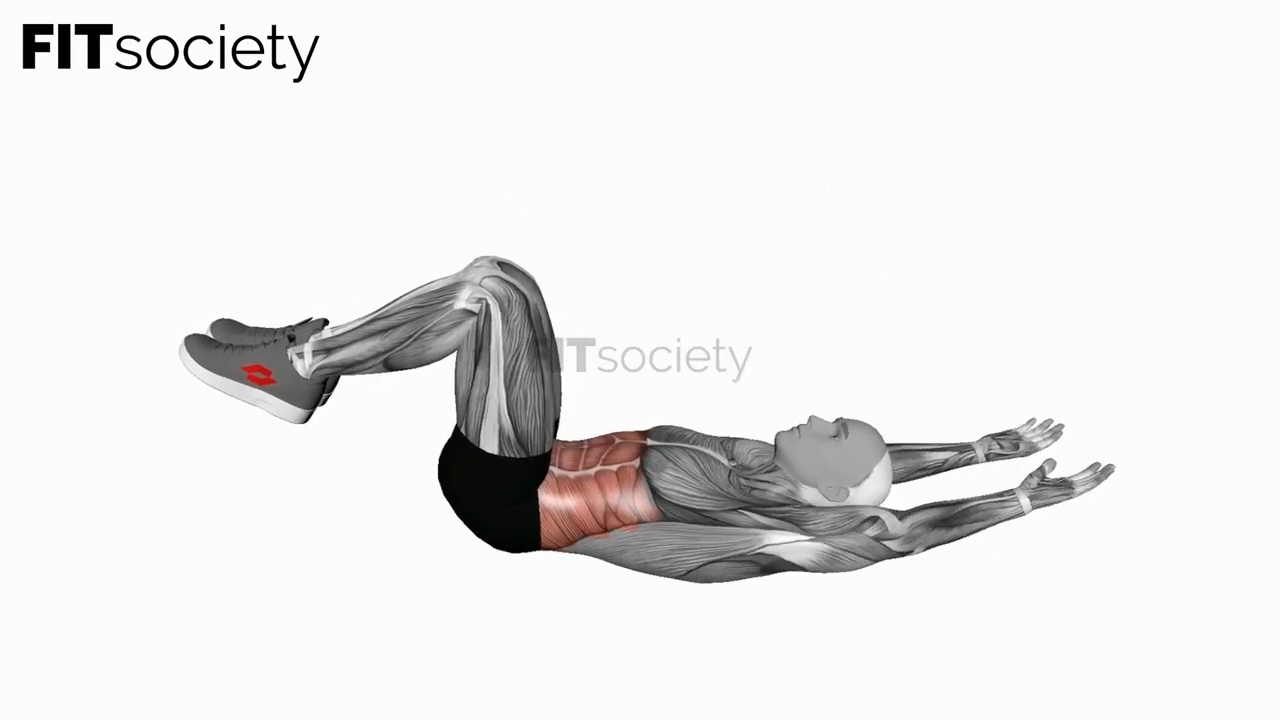
The Sit Up is a 'classic' exercise for the abdominal muscles (see notes). The exercise contains two important elements: Rounding the back and lifting the upper body.
The rectus abdominis (the basis of the 'six-pack') pulls the sternum toward the pelvis by rounding the back.
The rectus femoris brings the thigh toward the pelvis and the lower part of the spine, and vice versa. It is a so-called hip flexor and, in a standing position, brings the thigh forward from the hip joint. In the lying position of the Sit Up, it brings the entire upper body toward the legs in this way. The weaker sartorius assists the rectus femoris with this. Shorter muscles connecting the pelvis to the thigh, the psoas major and iliacus, also play an important role in flexing from the hip.
The oblique abdominal muscles on the sides stabilize the core throughout the exercise by resisting lateral tilting and rotation. The transversus abdominis (beneath the oblique abdominal muscles) pulls the abdominal wall inward and thereby acts as a natural weightlifting belt to stabilize the core.
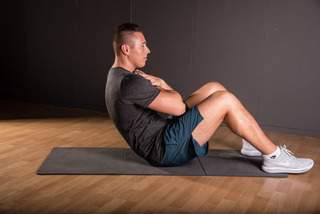
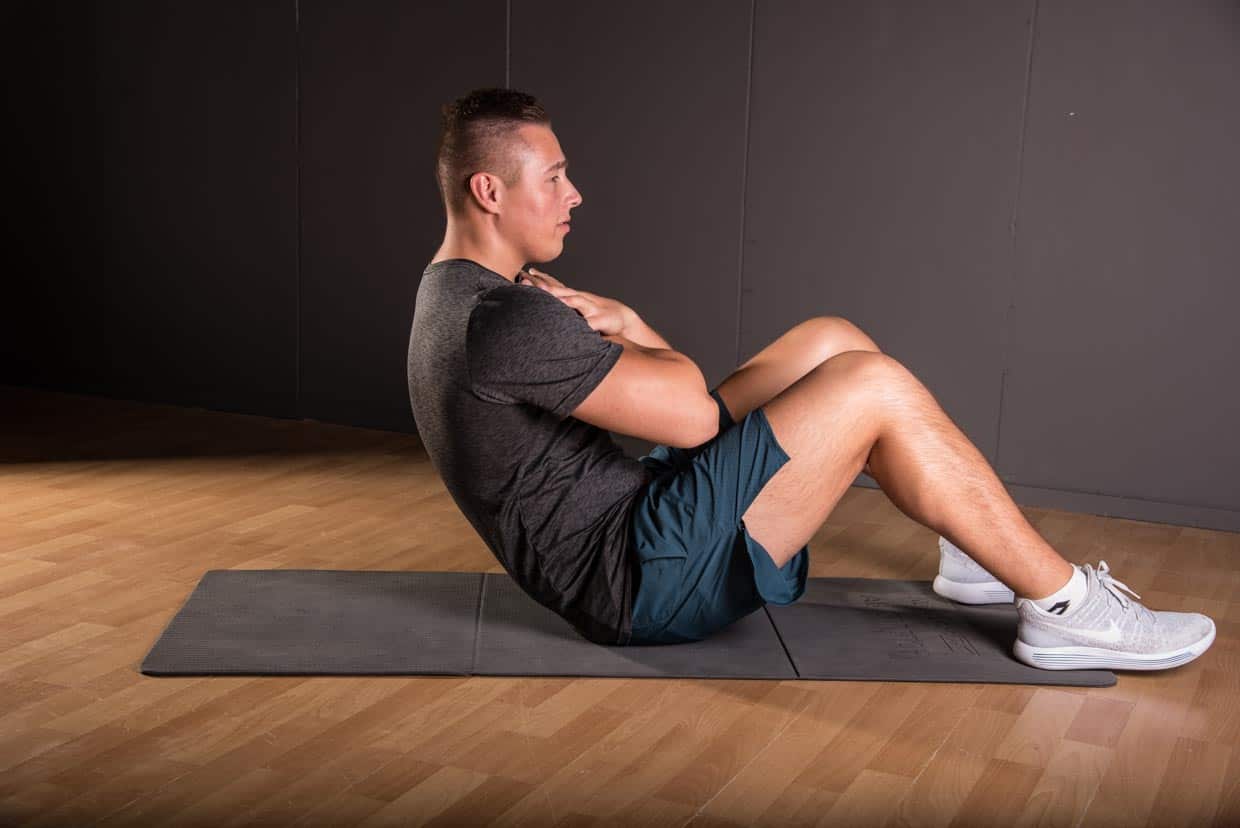
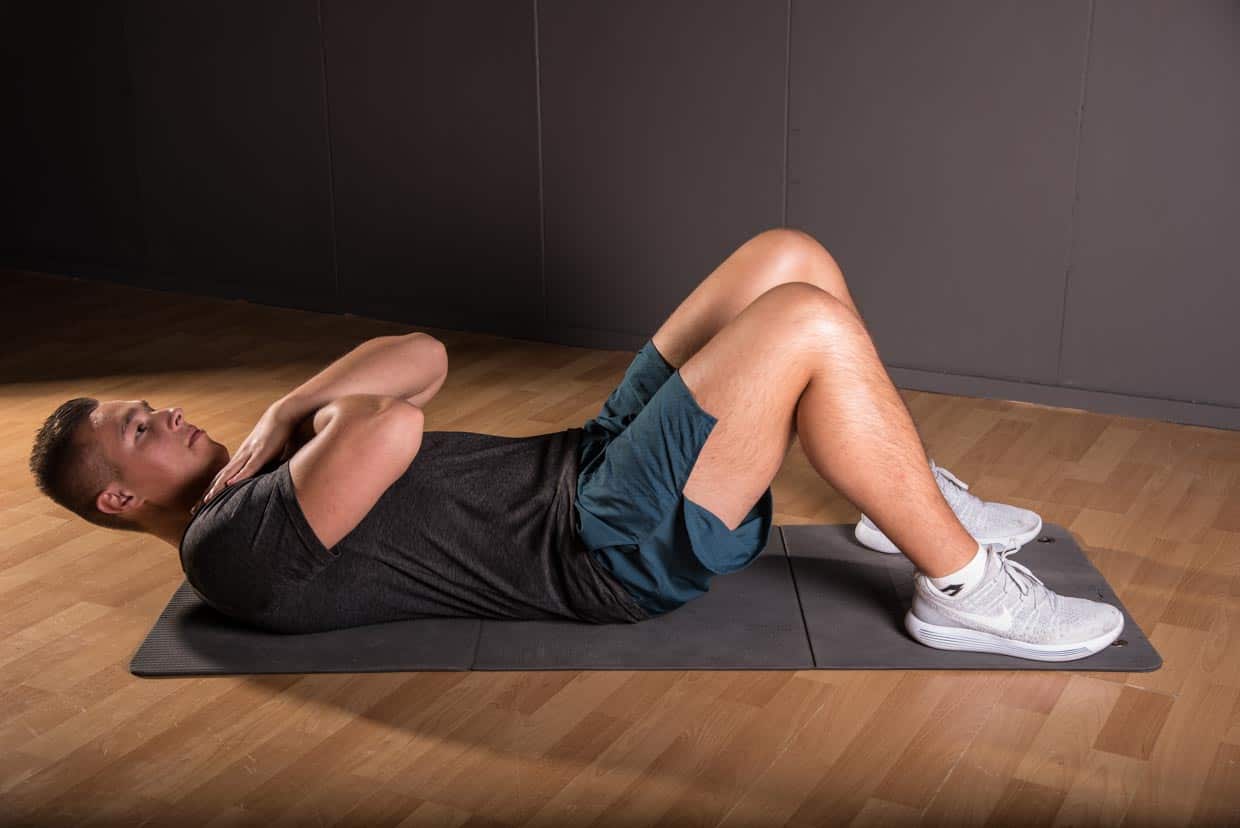
Sit Up execution
-
1
Lie on your back on the floor.
-
2
Place your feet flat on the floor, with your knees pointing straight upward.
-
3
Cross your forearms over your chest.
-
4
Bring your chest toward your pelvis by contracting your abdominal muscles. Focus on curving the spine (rounding the back). Your upper back has now lifted off the floor.
-
5
In one smooth movement, continue lifting the rest of your upper body.
-
6
Slowly lower your upper body down and back.
-
7
Extend your back until you almost touch the floor.
Sit Up
Active muscles:
Abdomen:
- Rectus abdominis (straight abdominal muscle)
- Obliquus externus abdominis (external oblique abdominal muscle)
- Obliquus internus abdominis (internal oblique abdominal muscle)
- Musculus transversus abdominis (transverse abdominal muscle, or 'corset muscle')
Pelvis:
- Psoas major
- Iliacus
Legs:
- Rectus femoris
- Sartorius
Sit Up technique
Strong abdominal muscles are indispensable for a strong core and preventing, among other things, lower back complaints. In practice, many people perform abdominal exercises mainly for a better-looking abdomen. Often with a tight stomach or six-pack as the ultimate goal. In most cases, you do not need to perform abdominal exercises for a flat stomach or six-pack. These are mainly caused by a low body-fat percentage. You cannot specifically burn the amount of fat in the abdominal region, not even with abdominal exercises. So, as the old saying goes, you mainly make a six-pack in the kitchen.
With a low body-fat percentage, abdominal exercises can make a visual difference. Thicker muscle bellies in the rectus abdominis then create deeper lines in the abdomen. However, the abdominal muscles are used and therefore trained during many different exercises and daily activities. For most people, a low body-fat percentage is therefore enough for a six-pack. In some exceptional cases, the muscle bellies (the 'blocks') in the rectus abdominis are so flat that they are barely visible, even with a low body-fat percentage. Very superficial tendons between the muscles and a linea alba that divides the muscle bellies can also contribute to this. In those cases, it may be useful to perform abdominal exercises for appearance.
Sit Ups or Crunches?
As mentioned, the Sit Up can be divided into two movements. In the second part of the movement, the aforementioned muscles in the legs and pelvis play an important role. However, Sit Ups are often performed for stronger or better-looking abdominal muscles. The Sit Up also places a greater load on the spine, while the abdominal muscles themselves work less hard than during a Crunch. In this case, a 'classic exercise' therefore partly means 'outdated'. Sit Ups have lost considerable popularity in favor of the Crunch, which is in fact only the first part of the Sit Up.
Sit Ups are sometimes also performed with the back kept continuously curved. This creates more isometric tension on the rectus abdominis and less dynamic tension.
Hands on the chest or behind the head?
The Sit Up is often performed with the forearms crossed over the chest or with the hands behind the head. In terms of abdominal muscle activation, this appears to make little difference. However, with the hands behind the head, you may be more inclined to also bend from the neck (bringing the chin toward the chest). Keeping the hands on the chest therefore more readily ensures the correct posture during the exercise.
Feet secured or not
During Sit Ups, it can prove difficult to get through the 'sticking point'. Momentum is often needed to raise the upper body. If you want to perform the movement purely through muscular strength, it may therefore be useful to secure your feet or have someone hold them.
Alternatives
- Crunches
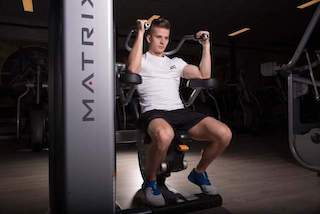
- Crunch Machine
- Cable kneeling Crunch
- Ball Crunch
Run your fitness business with more structure
- Planning, member management and coaching in one platform
- Built for coaches, studios and gyms
- Fewer separate tools, more overview