Side Plank
Plank exercises are stabilizing exercises. By holding a plank position, the muscles in the lower back, abdomen, glutes, and legs (especially the hamstrings) must work to keep the back and legs aligned.
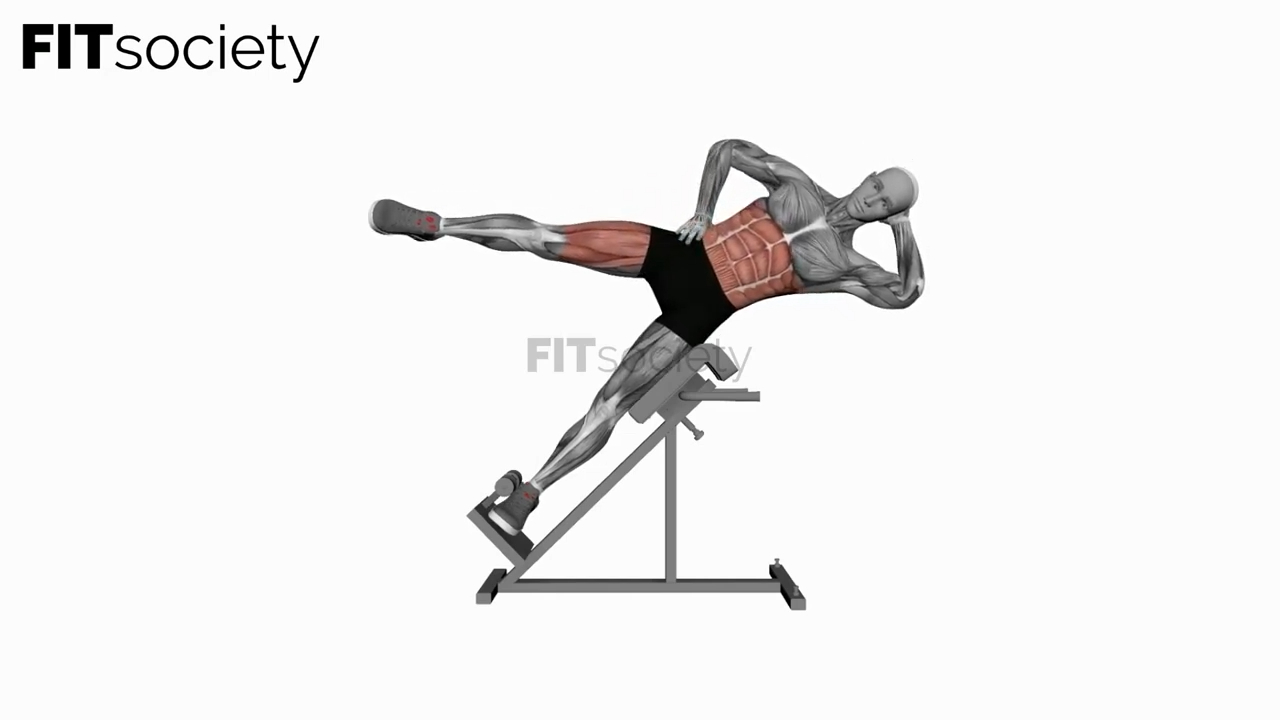
Because it is performed sideways, the emphasis in the abdomen shifts more toward the oblique abdominal muscles. In the glutes and legs, this means the emphasis shifts toward the muscles that bring the legs inward and outward, respectively the adductors and abductors.
Put very simply, you could say that the emphasis shifts more toward the muscles on the outside of the body and less toward the front and back.
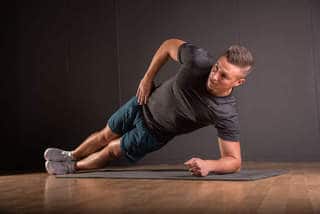
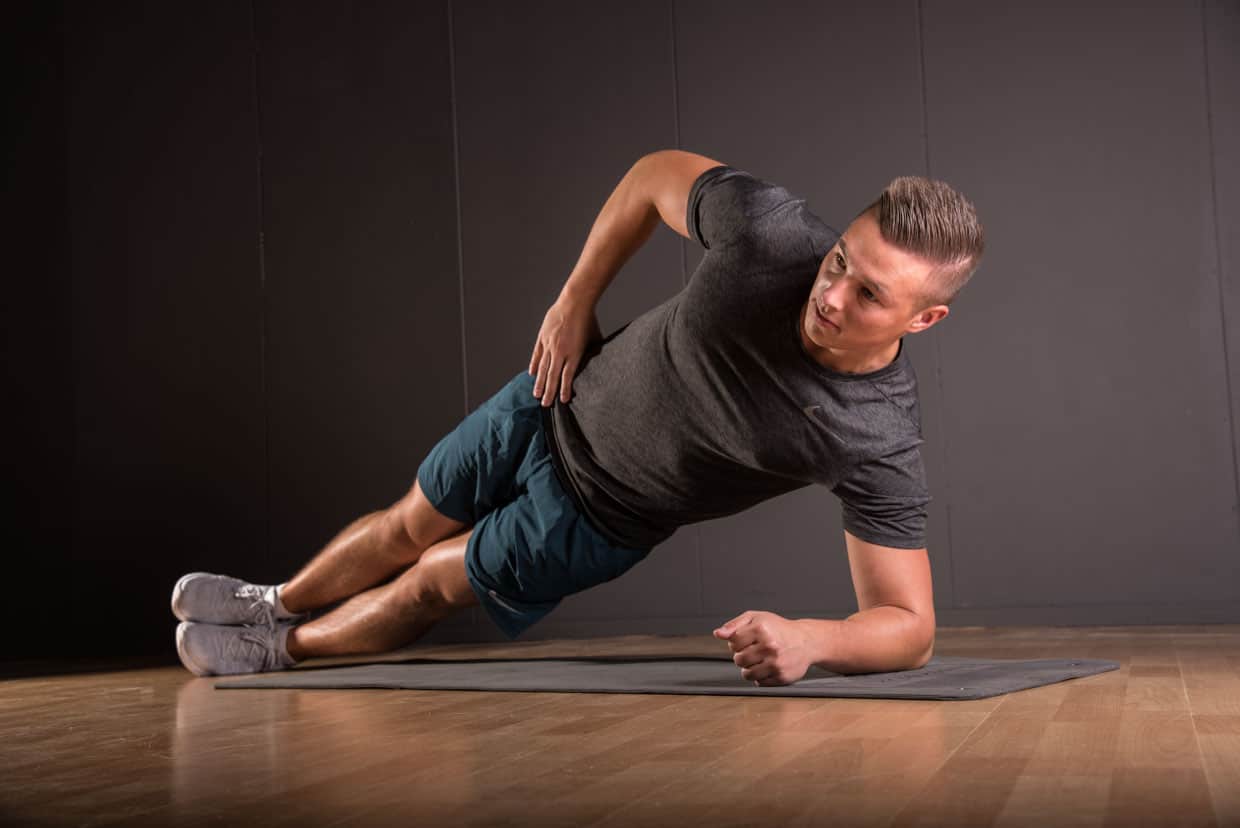
Side Plank
Muscles involved:
- External oblique (outer oblique abdominal muscle)
- Internal oblique (inner oblique abdominal muscle)
- Rectus abdominis (straight abdominal muscle)
- Transversus abdominis (transverse abdominal muscle, or 'corset muscle')
- Erector spinae
- Abductors and adductors of the legs/hips.
- Abdominal muscles
- Gluteal muscles
- Deltoid (shoulder muscle)
- Triceps brachii
- Biceps brachii
- Serratus anterior
- Rotator cuff (stabilizing shoulder muscles, supraspinatus, subscapularis, teres major, teres minor)
- Latissimus dorsi
Side Plank execution
Lie on your side on the floor and place your forearm with a clenched fist on the floor at shoulder width. Make sure your upper arm is pointing straight down and not diagonally toward your head or feet. Now push your waist upward until your legs and back are aligned as they are when standing upright.
Side Plank technique
In gyms, you usually see people performing dynamic exercises for the abdominal muscles. However, the abdominal muscles (and other core muscles) are not engaged in large movements for most of the day. They are almost constantly stabilizing the torso. Plank exercises therefore strengthen this practical function. This makes them highly suitable not only for active athletes and injury prevention, but also for preventing back problems in less active people.
This may apply even more to the oblique abdominal muscles than to the rectus abdominis. Many people perform dynamic exercises for this purpose, such as the Side Bend or Broom Stick Twist. In many cases, however, a static exercise such as the Side Plank should be preferred.
Another good alternative is the Side Plank Dip/Crunch. In this version of the Side Plank, you lower your waist until it is just above the floor, then straighten it back into a plank. Although this is a dynamic exercise, it focuses on naturally straightening the torso. It should not be compared with the Dumbbell Side Bend and Broom Stick Twist, which create unnaturally large rotations and bends and thereby place dangerous pressure on the spine.
Alternatives
- Side plank
- Elevated Feet Plank
- Incline Plank
- RKC Plank
Run your fitness business with more structure
- Planning, member management and coaching in one platform
- Built for coaches, studios and gyms
- Fewer separate tools, more overview