Incline Bench Leg Raise
The Incline Bench Leg Raise is an exercise targeting the abs, although some muscles in the thighs and pelvis also actively contribute.
As the name indicates, the legs are raised. Two muscles in the thighs and muscles in the pelvis are primarily involved.
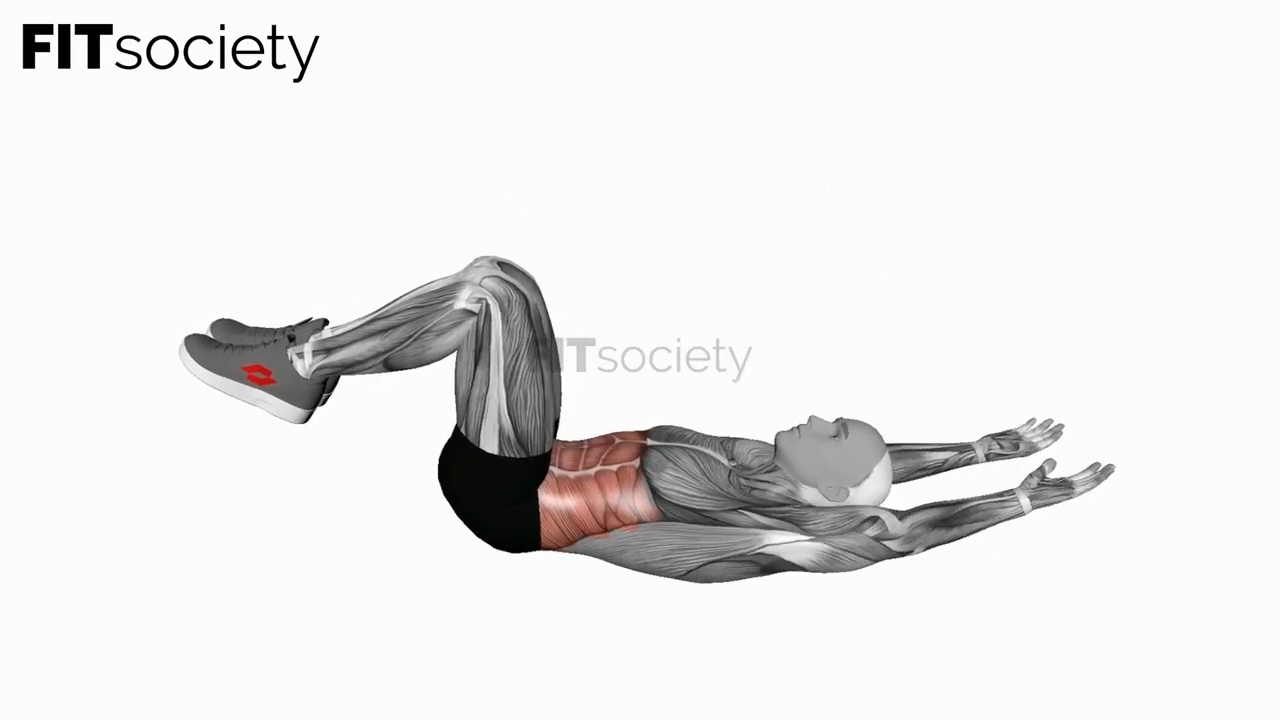
The exercise is then extended by also raising the pelvis itself toward the chest. This is primarily a function of the rectus abdominis (the basis of the 'six-pack'). It draws the pelvis toward the sternum by rounding the back.
Performing the exercise on an incline bench provides less resistance than the hanging variation.
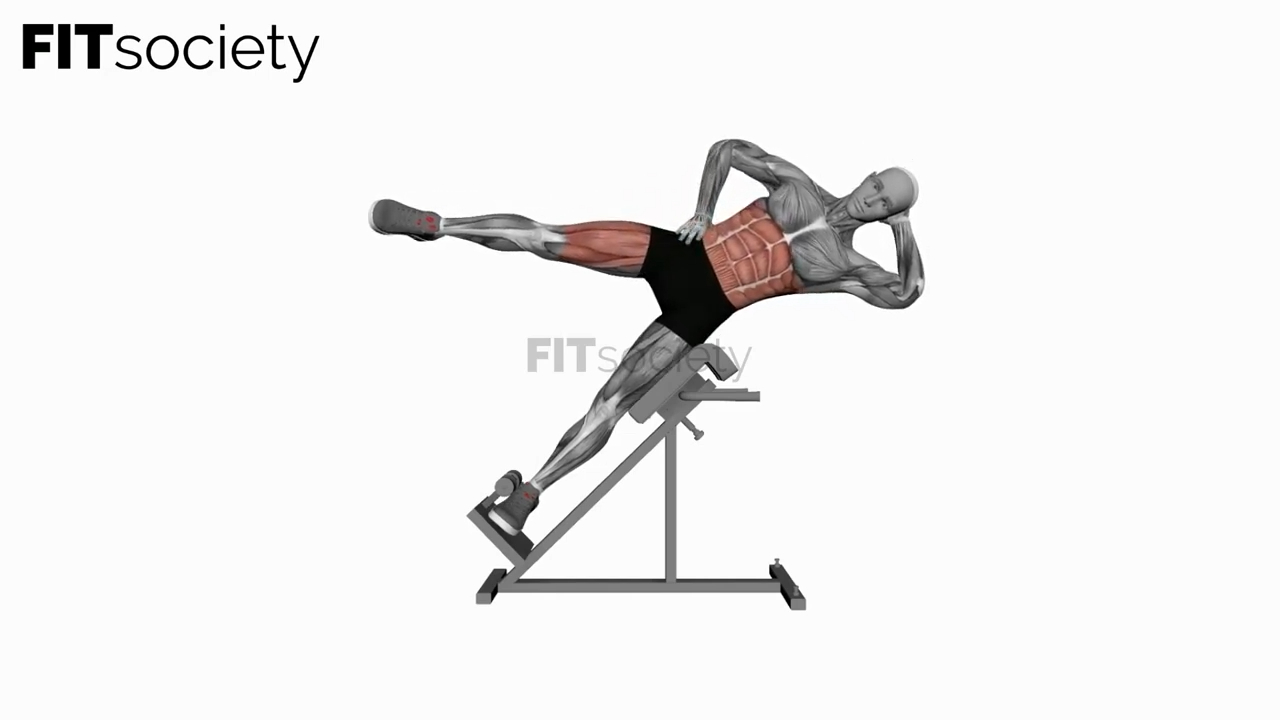
Although the exercise is called Incline Bench Leg Raise, it is usually not performed on an incline bench. Incline refers to being tilted straight upward. However, an incline bench has a horizontal seat section that would obstruct the legs during this exercise. A decline bench that you lie on in reverse (therefore incline) works better.
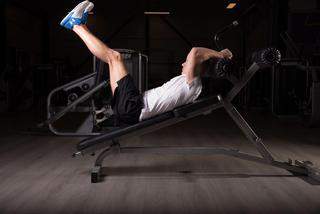
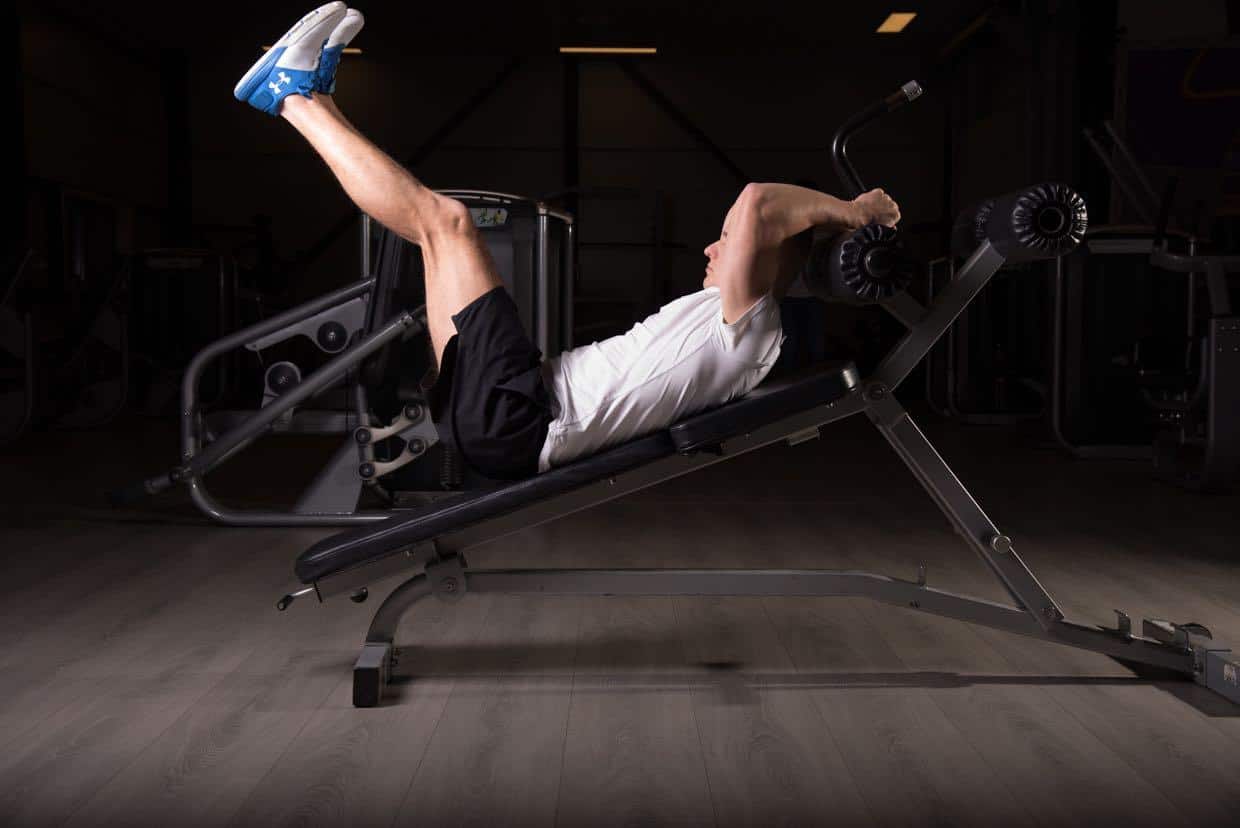
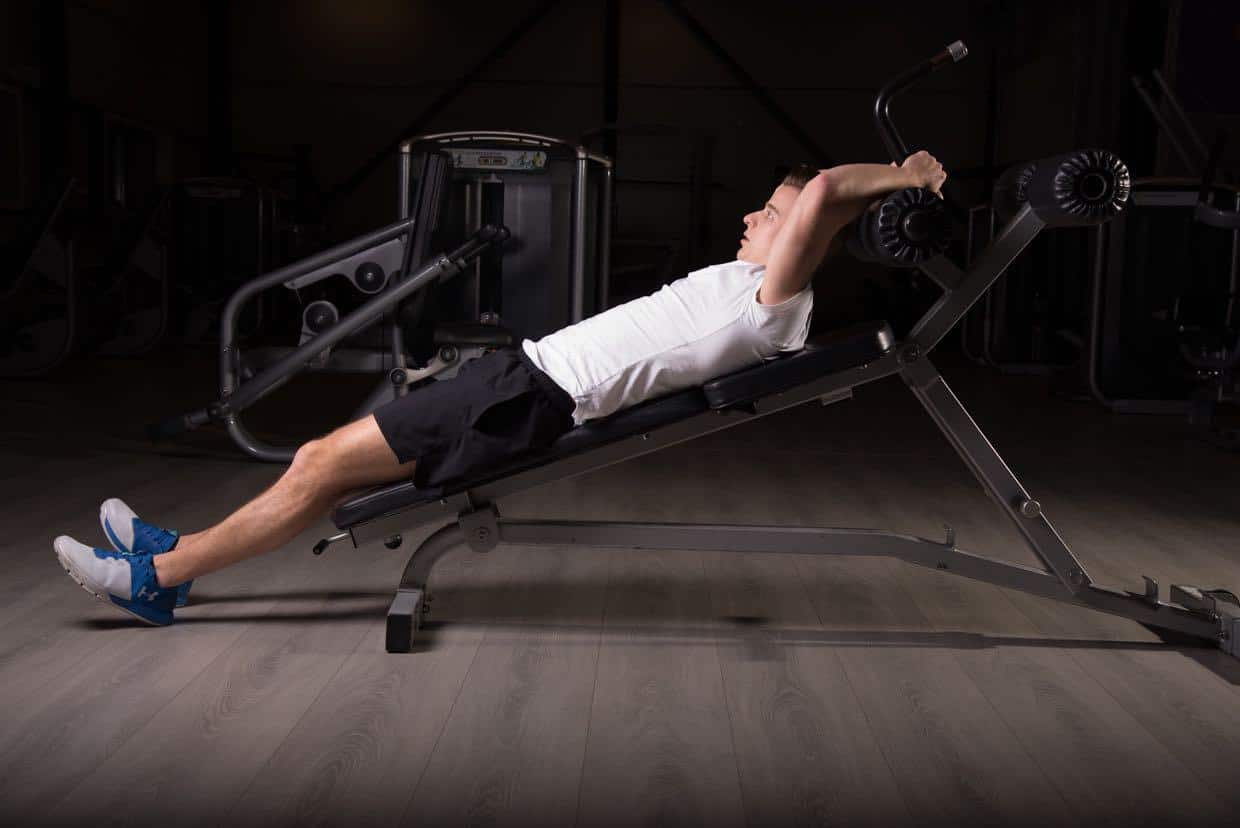
Incline Bench Leg Raise execution
-
1
Remove any barbell from the rack.
-
2
Lie as high as possible on the decline bench.
-
3
Grasp the leg supports behind your head. Make sure they are securely fastened and do not rotate before beginning the exercise.
-
4
Raise the nearly straight legs until they are perpendicular to the torso.
-
5
In a smooth movement, continue bringing the legs toward chest height or higher by raising the pelvis/hips themselves.
Incline Bench Leg Raise
Active muscles:
Abs:
- Rectus abdominis
- External oblique
- Internal oblique
- Transversus abdominis (transverse abdominal muscle, or 'corset muscle')
Pelvis:
- Psoas major
- Iliacus
Legs:
- Rectus femoris
- Sartorius
Incline Bench Leg Raise technique
You do not perform this and similar exercises to train the lower part of the abs. That is not possible. You train the entire rectus abdominis, not specifically one part of it.
During the first part of the exercise, muscles in the pelvis and thighs are primarily engaged. The rectus femoris brings the thigh toward the pelvis and the lower spine, and vice versa. The weaker sartorius and the muscles in the pelvis (psoas major and iliacus) assist the rectus femoris in this.
The abdominal muscles become primarily active in the second part of the exercise, when the pelvis itself is raised. Nevertheless, we see that many people who want to train their abs do not perform this part of the exercise.
Hanging, inclined lying or lying flat?
Leg raises can be performed hanging or lying (inclined). When lying, more emphasis is placed on the beginning of the exercise, when gravity provides the most resistance. This means that the mentioned muscles in the legs and pelvis have to work harder. When lying, there is less resistance as the legs rise higher and the abdominal muscles become more isolated. In terms of resistance distribution, performing the exercise on an incline bench therefore falls between the lying and hanging versions.
The freely hanging variation also requires more stabilization. The (inclined) lying variations provide support for the back, requiring less stabilizing work from the upper body. This can make it easier to isolate the muscles in the legs and abs.
The exercise can also be performed in a dip station with support pads for the forearms and back. You then maintain the vertical position with later resistance while the back is supported.
Alternatives
- Hanging Leg-Hip Raise
- Lying Leg-Hip Raise
- Sit-Ups
- Crunch Machine
- Kneeling Cable Crunch
Run your fitness business with more structure
- Planning, member management and coaching in one platform
- Built for coaches, studios and gyms
- Fewer separate tools, more overview