Cable Side Bend
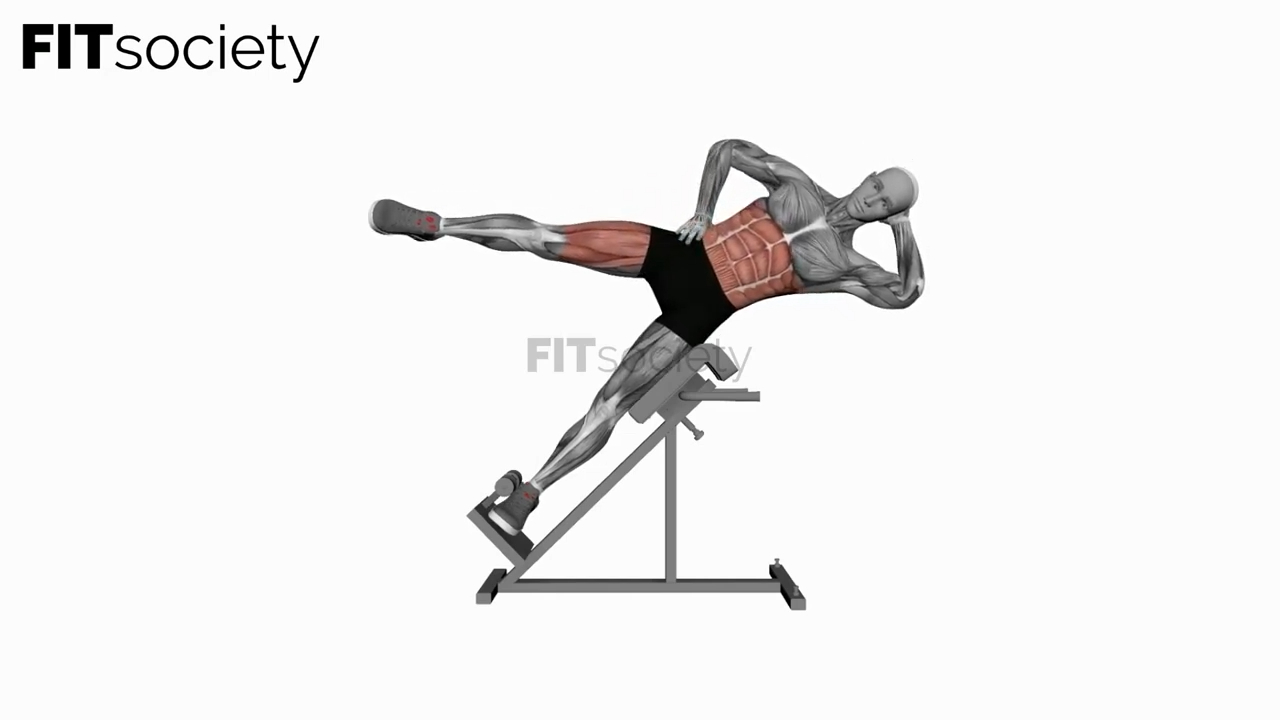
Side bend exercises primarily target the obliques (internal and external). These are the muscles on the sides of the abdomen that enable rotation of the torso and straighten the torso from a laterally tilted position (lateral flexion of the spine). The rectus abdominis and transversus abdominis primarily have a stabilizing function.
In this variation, you perform the exercise with the cable as resistance.
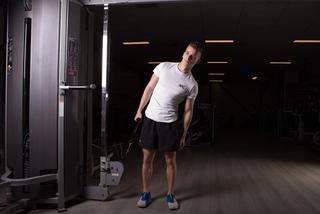
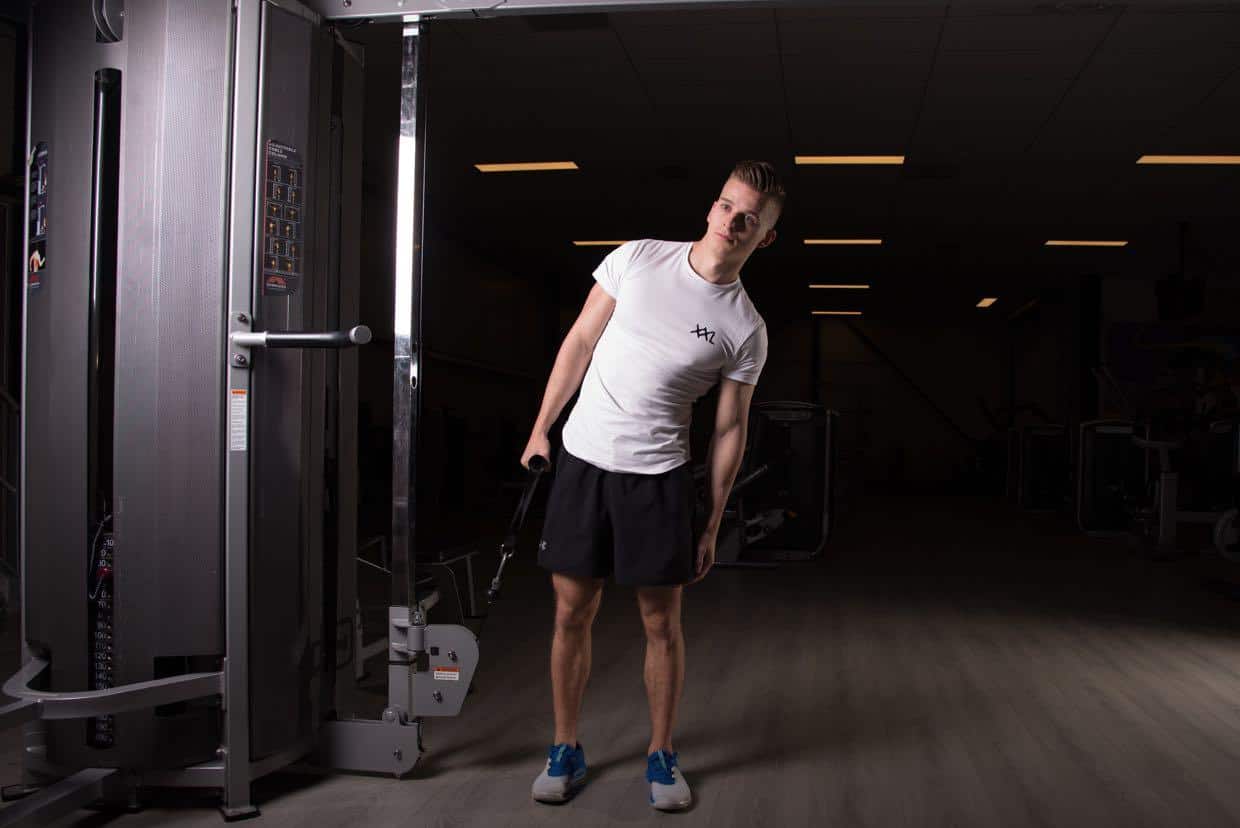
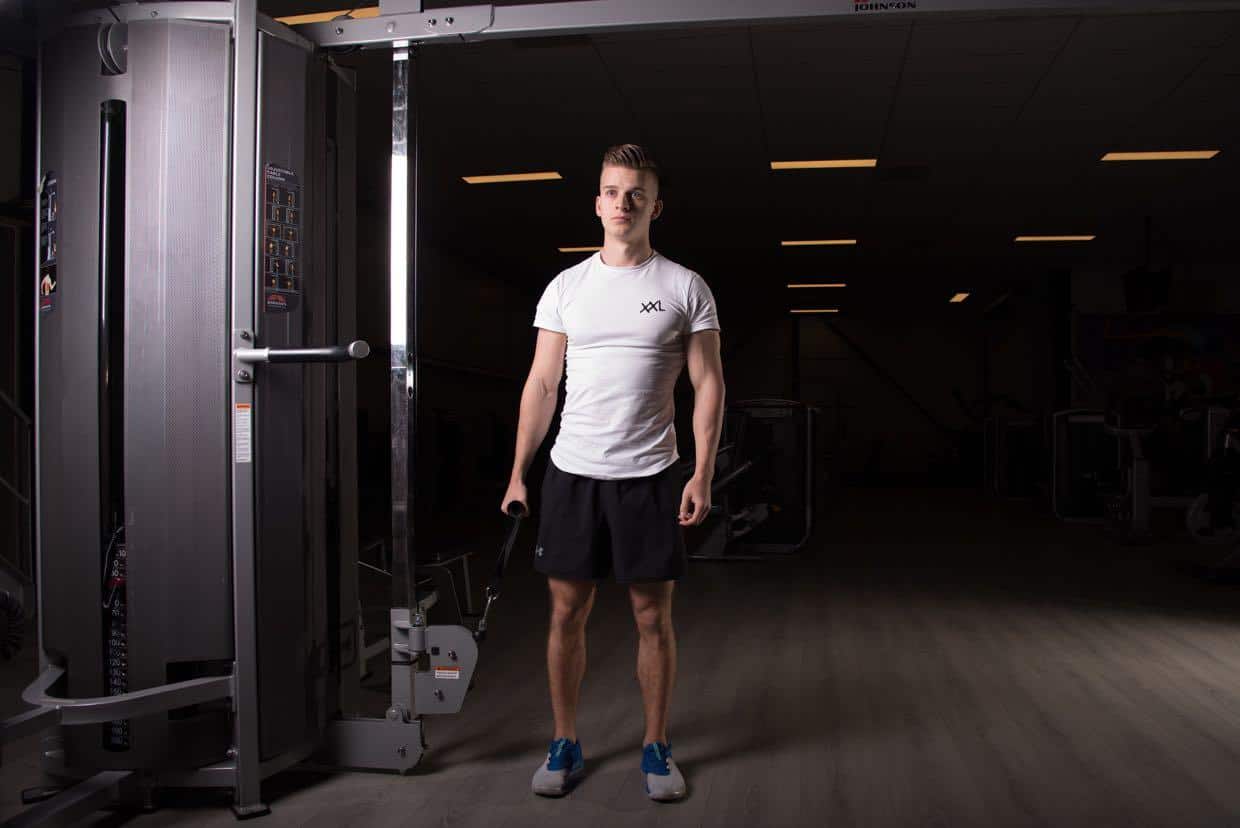
Cable side bend execution
-
1
Bend your torso as far away from the machine as possible by bringing your shoulder toward your side
-
2
Straighten your torso again.
-
3
Repeat.
Cable side bend
Active muscles:
- External oblique (obliquus externus abdominis)
- Internal oblique (obliquus internus abdominis)
Stabilizing:
- Transversus abdominis (transverse abdominal muscle, or ‘corset muscle’)
- Rectus abdominis (rectus abdominal muscle)
- Erector spinae
Cable side bend setup
- Set the cable machine pulley to the lowest position and select the desired weight. Attach the single handle.
- Stand next to the cable machine with your feet hip-width or shoulder-width apart.
Cable side bend technique
Side bend exercises are quite popular, although their effectiveness is disputed. The exercise is popular, often because it is thought to help create a slimmer waist. This is not the case. Stronger and thicker muscles at the sides do not create a slimmer waist, but can actually increase the circumference of the waist. Localized fat burning is also not possible, so this exercise will not burn fat specifically at the sides of the abdomen.
The primary function of these muscles is to stabilize the torso and keep it upright. You therefore train them for a healthy core and to prevent complaints and injuries. However, even for this purpose, side bends are not undisputed as an exercise. Repeatedly bending sideways could potentially be dangerous for the intervertebral foramina through which the spinal nerves pass. Exercises that focus more on stabilization would therefore be recommended over the side bend.
Some of these complaints may be prevented by performing the exercise correctly. Focus on contracting the side (shoulder toward the hip) and avoid bending sideways from the hips. This prevents unnecessary pressure on the lower part of the spine, which is primarily built for stabilization. In addition, tilting the torso adds little to the load on the muscles you want to work.
Alternatives
- Side plank
- Side plank crunch
Run your fitness business with more structure
- Planning, member management and coaching in one platform
- Built for coaches, studios and gyms
- Fewer separate tools, more overview