Barbell Rollout
Wheel roller, or rollout, exercises engage a large number of different muscles, including the abdominal muscles. To keep the torso in position, the rectus abdominis must work hard to prevent the back from overextending.
The obliques at the sides stabilize the core by resisting lateral flexion and rotation. The transversus abdominis (beneath the obliques) draws the abdominal wall inward, thereby acting like a natural weightlifting belt to stabilize the core. In the back, the erector spinae also helps stabilize the spine.
The latissimus dorsi and pectoralis major perform a movement similar to the pullovers encountered in chest and back workouts. Both pull on the upper arms to bring them back from the overhead extended position to beneath the body. The triceps must work to keep the arms extended. The deltoids and rotator cuff muscles must stabilize the shoulder joint.
Muscles in the thigh and pelvis are involved in bringing the knees toward the chest. The glutes and hamstrings must then engage to push the body forward again and extend the legs.
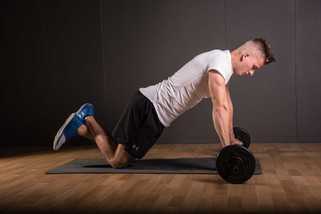
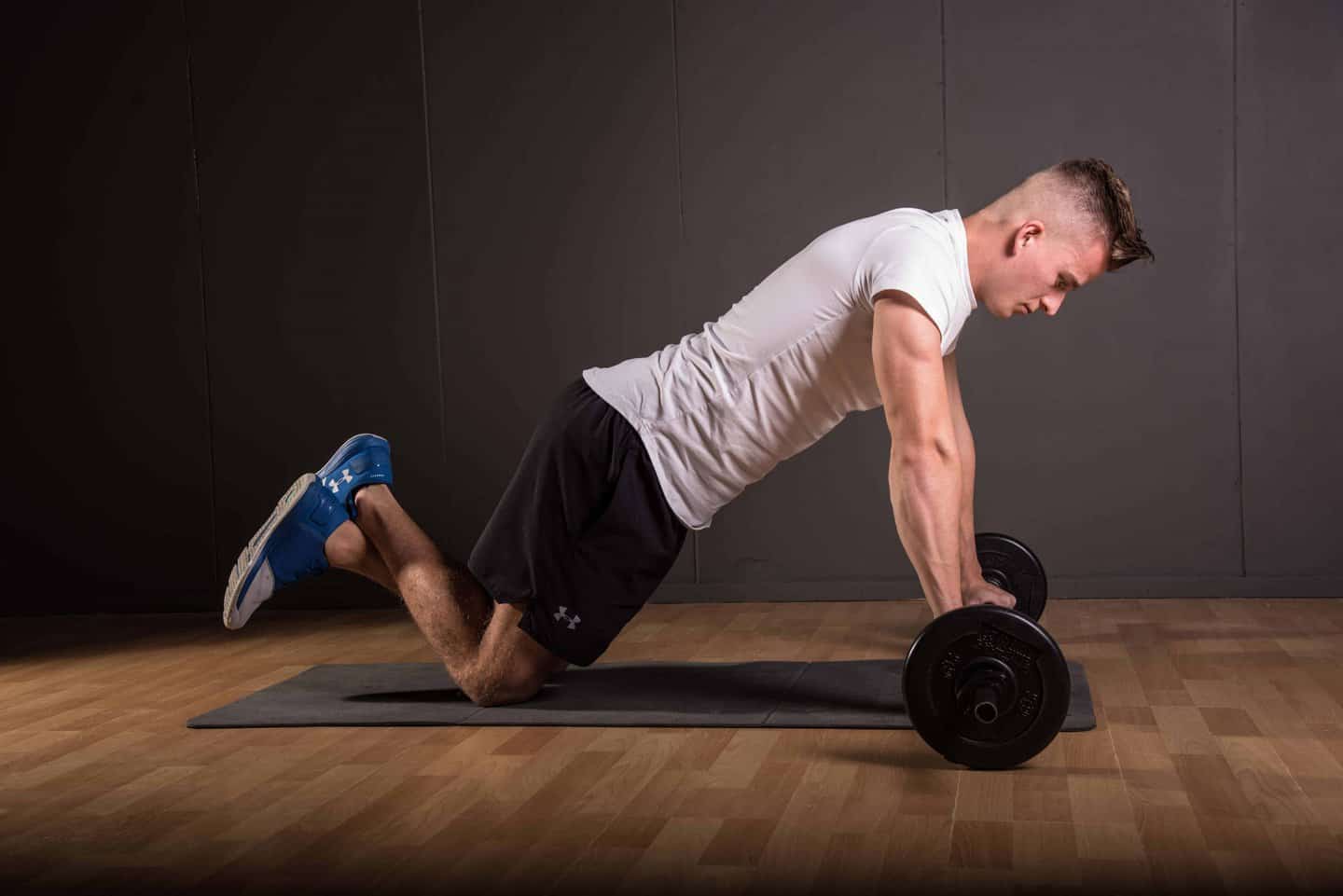
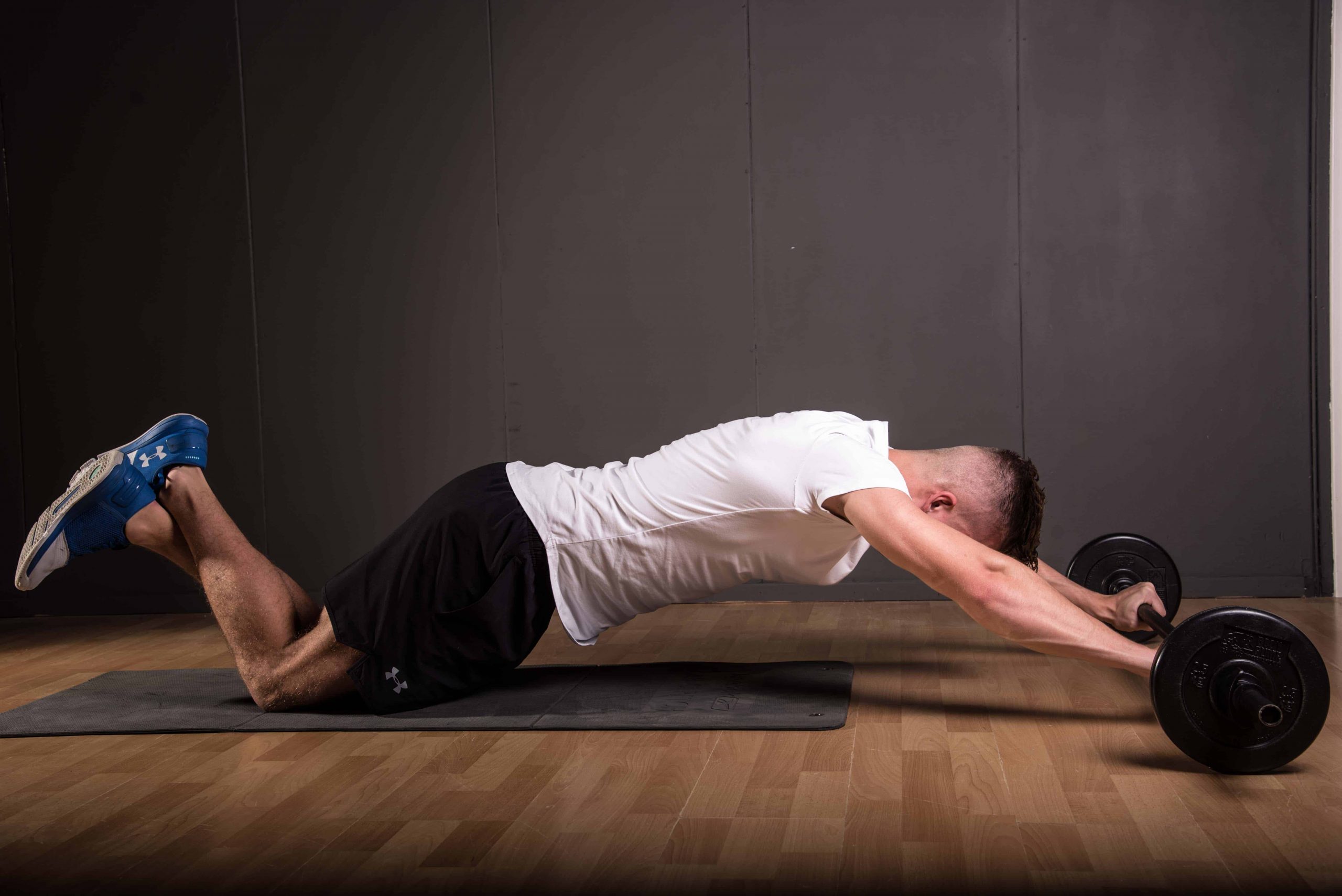
Barbell Rollout
Active muscles:
- Rectus abdominis
- External oblique
- Internal oblique
- Transversus abdominis (the corset muscle)
- Serratus
Back:
- Latissimus dorsi
- Erector spinae
- Pectoralis major
- Deltoid
- Rotator cuff (muscles stabilizing the shoulder joint)
Arms:
- Triceps
Pelvis:
- Psoas major
- Iliacus
Legs:
- Rectus femoris
- Sartorius
- Hamstrings
Glutes:
- Gluteus
Barbell Rollout Instructions
- Get onto your hands and knees with your hands supporting your weight on a barbell. Place your hands approximately shoulder-width apart. Cross your feet.
- Slowly and under control, push yourself forward from your legs and knees. As you do this, extend your arms forward.
- Try to extend your arms and (upper) legs as far as possible.
- Push down forcefully through your hands to bring your arms back beneath your body in an extended position.
Barbell Rollout Technique
Perform the exercise on a firm mat that still allows the barbell to roll properly and provides a comfortable surface for your knees. Alternatively, perform the exercise on a hard surface with a folded towel placed under your knees.
If the exercise proves very difficult, you can perform it toward a wall so that the barbell cannot roll farther than the point at which you still have enough strength to come back up.
Alternatives
- Wheel Rollout
- Stability Ball Rollout
Run your fitness business with more structure
- Planning, member management and coaching in one platform
- Built for coaches, studios and gyms
- Fewer separate tools, more overview