Dumbbell Squats
Dumbbell squats are a fantastic way to train your lower body, with extra focus on the quadriceps, hamstrings, and glutes. This exercise offers the benefits of improved balance, flexibility, and overall strength without requiring a barbell.
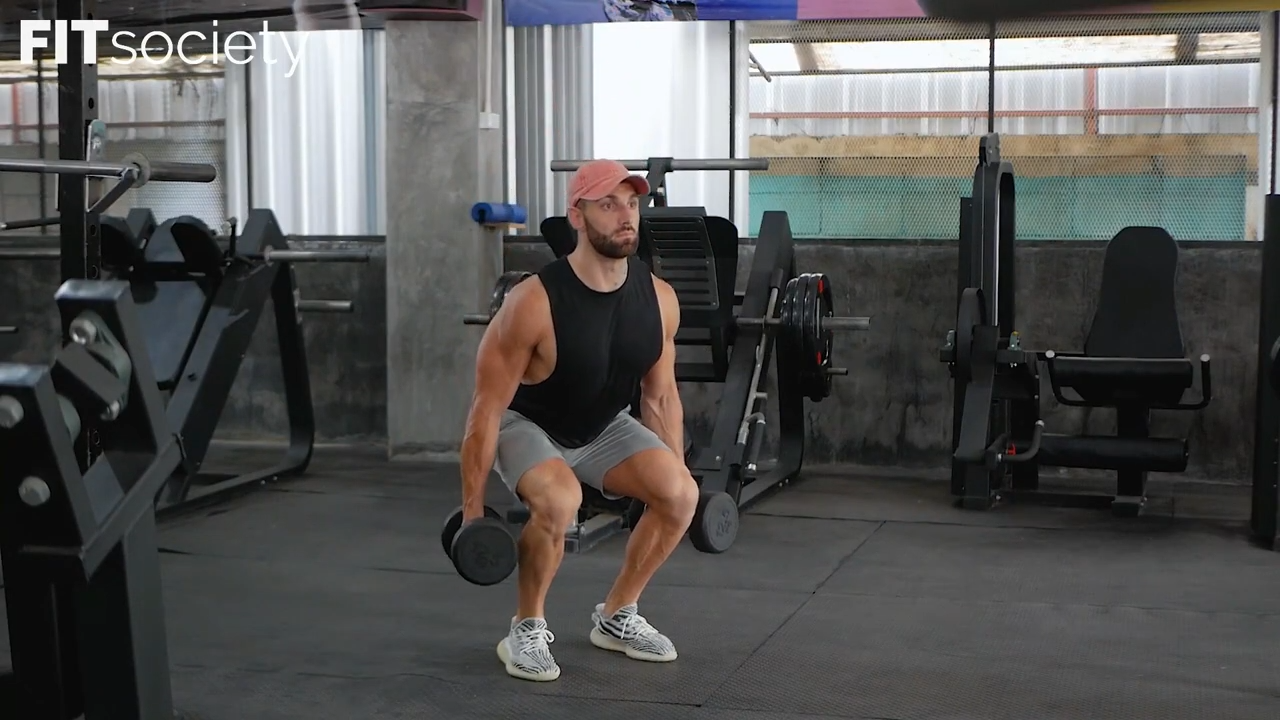
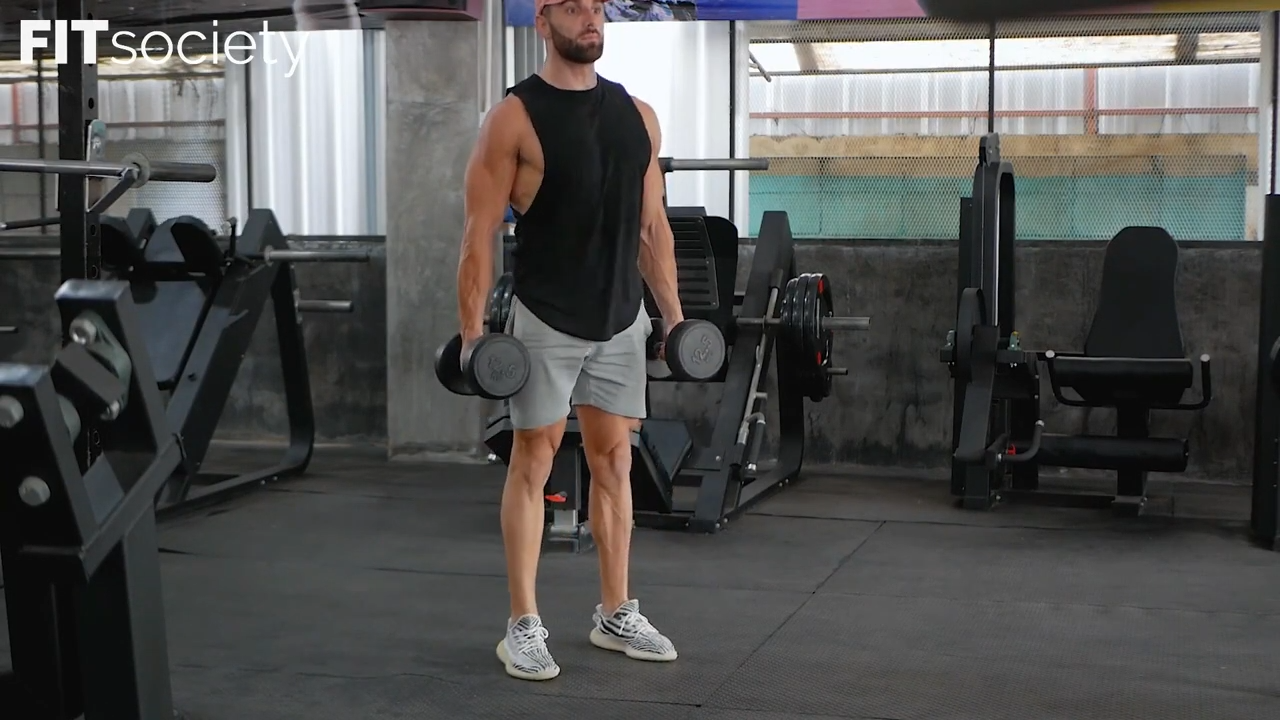
Execution
-
1
Stand with your feet shoulder-width apart.
-
2
Hold a dumbbell in each hand, with your arms at your sides.
-
3
Inhale and slowly bend your knees while pushing your hips back as if you were sitting on a chair.
-
4
Keep your chest lifted and your back straight throughout the movement.
-
5
Lower yourself until your thighs are parallel to the floor, but do not let your knees extend past your toes.
-
6
Exhale and push yourself back to the starting position by pressing your heels into the floor.
Benefits
In addition to building muscle mass and strength in your legs, dumbbell squats also improve your posture and balance. They place less strain on your back than barbell squats and can easily be performed at home.
Common Mistakes
- ! Descending or standing up too quickly: Move in a controlled manner to effectively load the muscles and prevent injuries.
- ! Rounding your back: Keep your back straight and chest forward to avoid pressure on your lower back.
- ! Knees too far forward: Make sure your knees do not extend past your toes to reduce pressure on your knees.
Key Muscles
The primary muscle groups trained with dumbbell squats are the quadriceps, hamstrings, and glutes. Your core is also engaged for stability.
Possible Alternatives
If you want to adjust the intensity of the exercise, you can vary the weight of the dumbbells. Beginners may want to start with lighter weights or even without weights. Advanced trainees can use heavier dumbbells or switch to a barbell squat for an additional challenge.
```Run your fitness business with more structure
- Planning, member management and coaching in one platform
- Built for coaches, studios and gyms
- Fewer separate tools, more overview