Dumbbell Split Squat
The Dumbbell Split Squat is a powerful exercise targeting the lower body, with a particular focus on the quadriceps, hamstrings, and glutes. This exercise offers the unique benefit of improving your balance and stability while also helping to build muscle mass and strength in your legs.
Execution
-
1
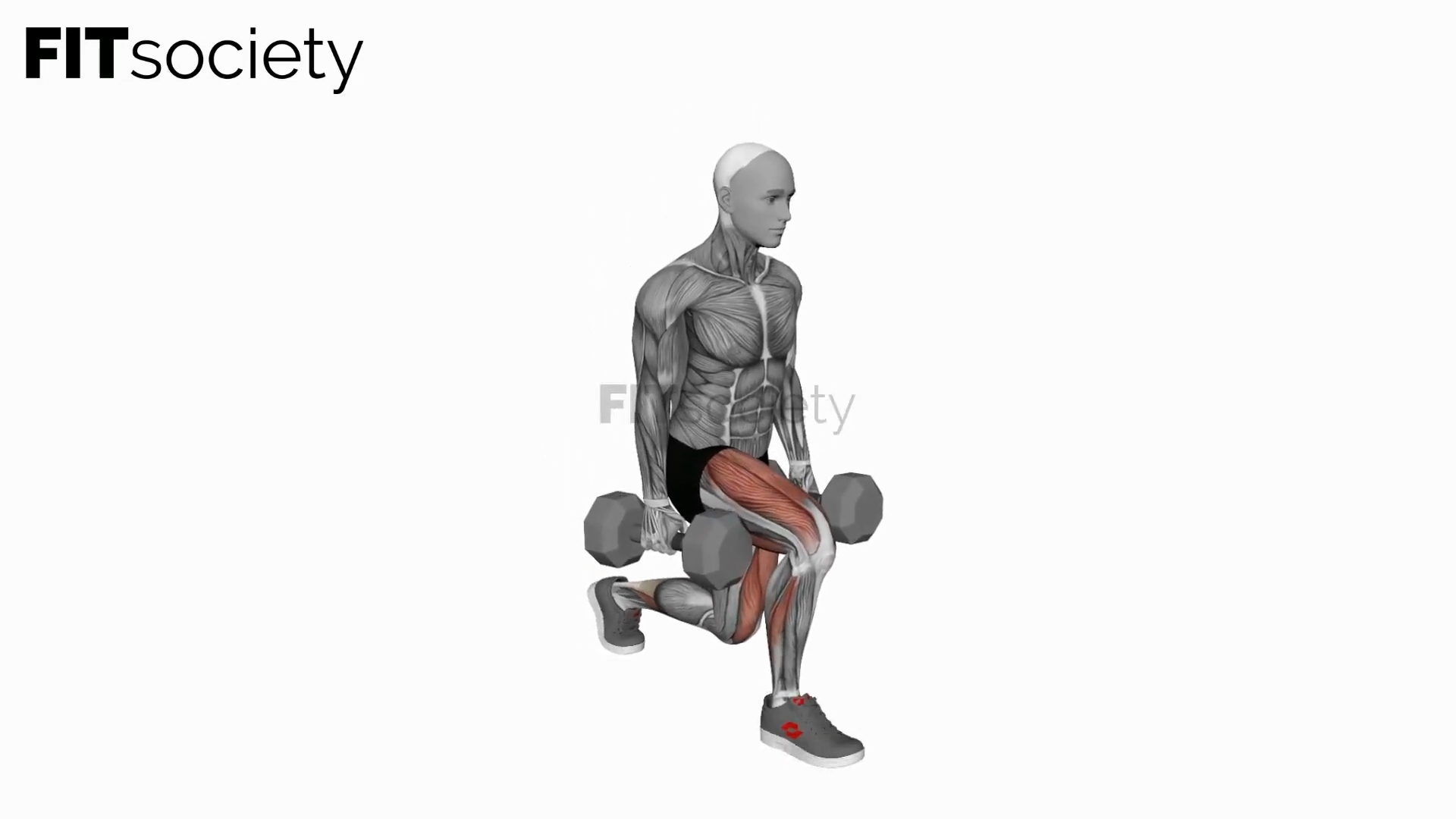
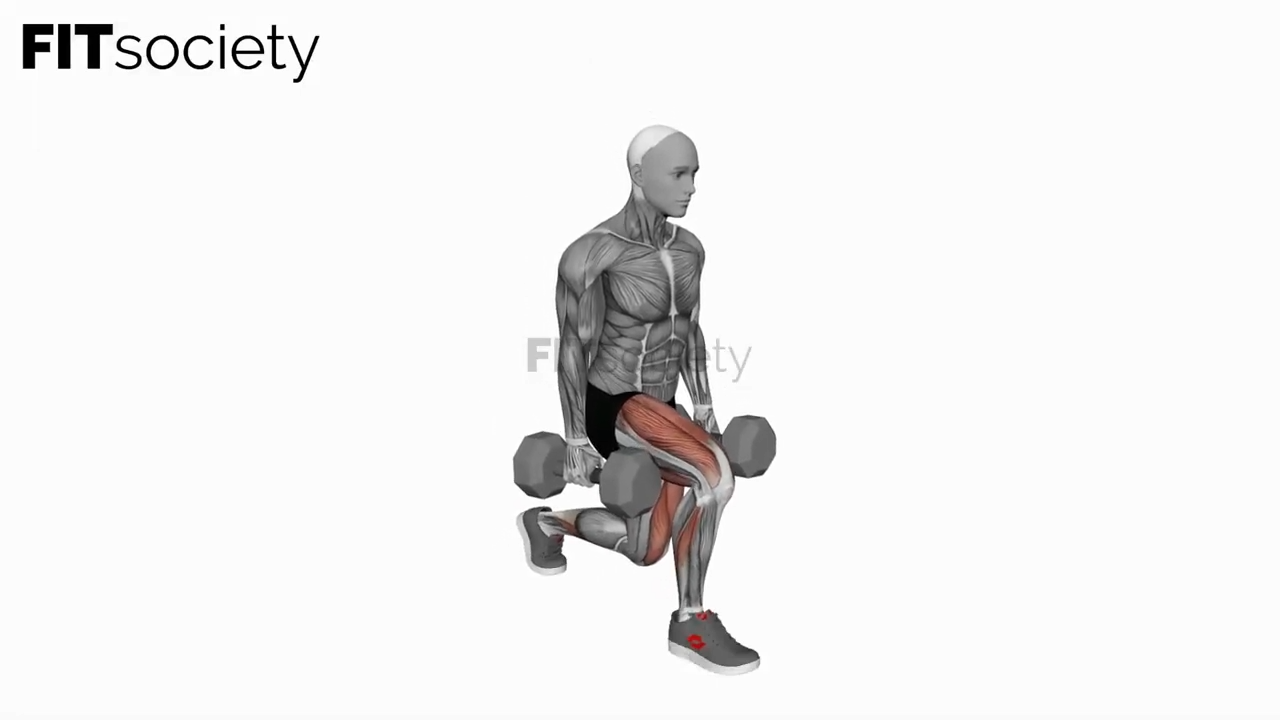
Begin by holding a dumbbell in each hand, with your arms at your sides.
-
2
Step forward approximately one metre with one foot.
-
3
Make sure your front foot is flat on the floor and your back foot is supported on the toes.
-
4
Slowly lower your body by bending your knees until your back knee nearly touches the floor. Make sure your front knee does not move past your toes.
-
5
Push yourself back up to the starting position by pressing your front heel into the floor.
-
6
Repeat the movement for the desired number of repetitions, then switch legs.
Benefits
- Improves balance and coordination through the unilateral nature of the exercise.
- Helps build muscle mass and strength in the lower body.
- Improves hip mobility and flexibility.
- May help reduce muscle imbalances between the legs.
Common Mistakes
- ! Leaning too far forward, which can place pressure on the knees.
- ! Allowing the front knee to move too far past the toes.
- ! Not lowering deeply enough, reducing the effectiveness of the exercise.
- ! Not keeping the back straight during the exercise.
Primary Muscles
The primary muscle groups trained with the Dumbbell Split Squat are the quadriceps, hamstrings, and glutes. The calves and core muscles are also engaged for stability.
Possible Alternatives
- To increase the intensity, you can replace the dumbbells with a barbell.
- Beginners can first perform the exercise without weights to practise proper form.
- Add a plyometric component by jumping at the end of the movement.
- Use an elevated platform for your back foot to increase the depth of the squat.
Run your fitness business with more structure
- Planning, member management and coaching in one platform
- Built for coaches, studios and gyms
- Fewer separate tools, more overview