Dumbbell Kneeling Squat
The Dumbbell Kneeling Squat is a powerful exercise that targets the lower-body muscles while also promoting core stability and strength. This variation of the traditional squat offers a unique challenge through the kneeling position, activating your muscles in a different way.
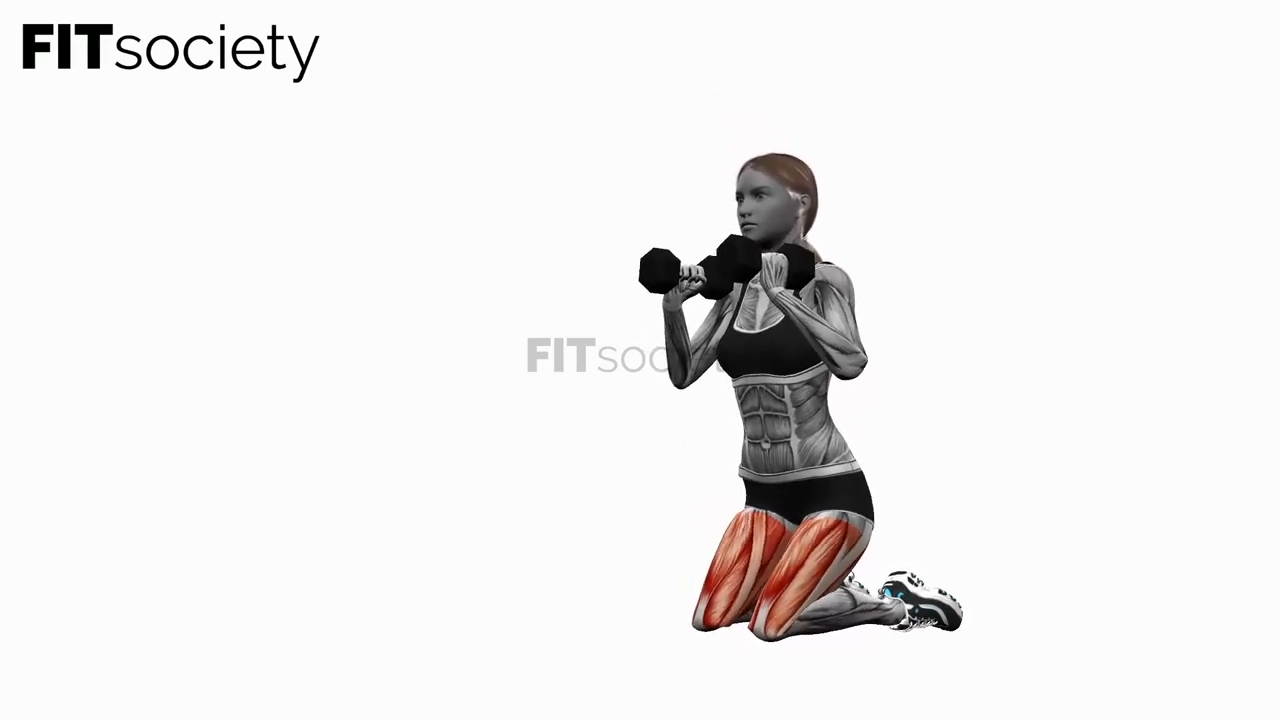
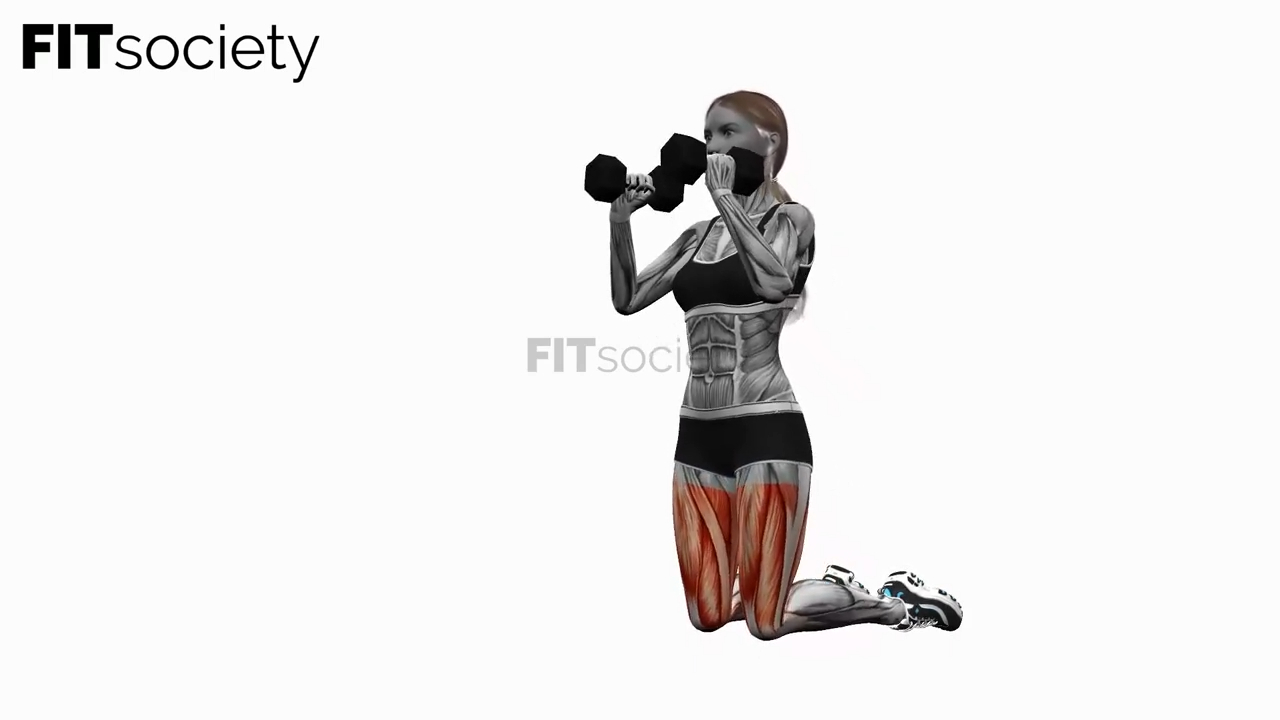
Execution
-
1
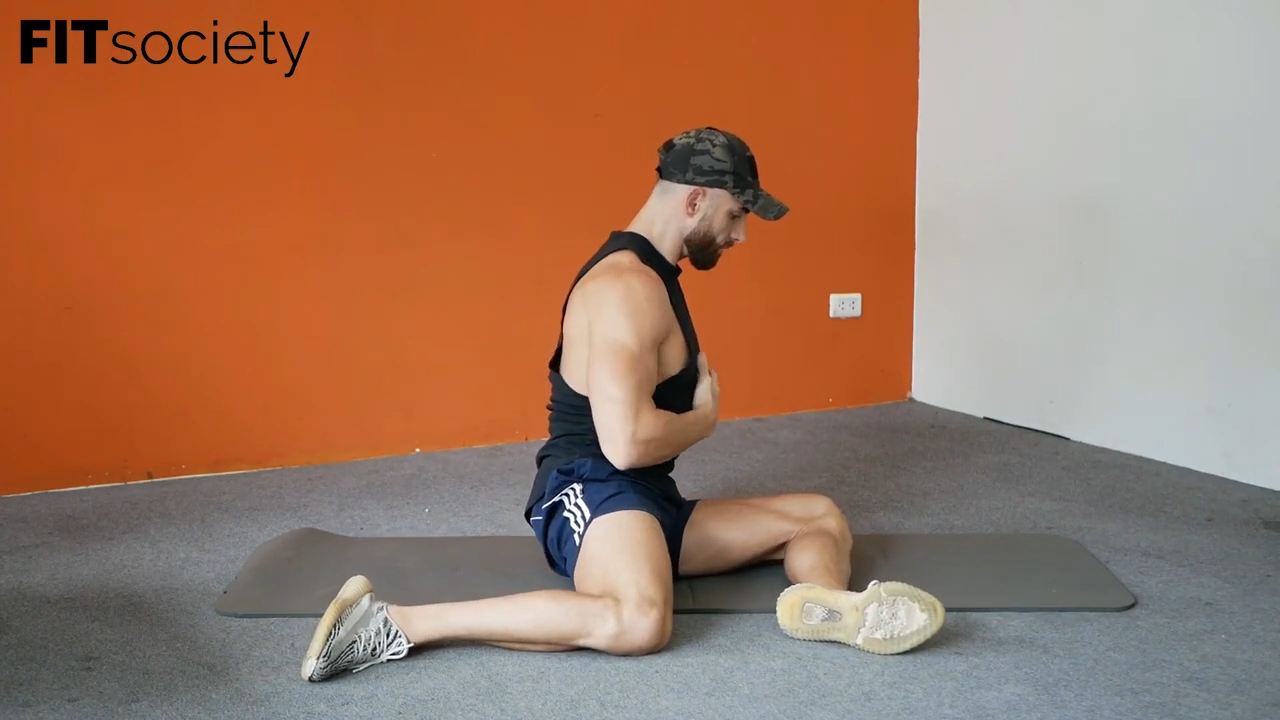
Begin by kneeling with your feet behind you and your toes on the floor. Hold a dumbbell in each hand at your sides.
-
2
Inhale and begin by pushing your hips back as if you are going to sit down, while keeping the dumbbells at your sides.
-
3
Slowly lower yourself until your glutes almost touch your heels. Make sure your back remains straight and your core is engaged.
-
4
Exhale and push yourself back to the starting position by driving your hips forward and contracting your quadriceps.
Benefits
- Improves hip flexibility and mobility.
- Strengthens the muscles around the knees, contributing to better knee health.
- Provides a safe way to practice the squat movement for people with back pain.
- Helps build a strong core, which is essential for overall physical performance.
Common Mistakes
- ! Too fast on the descent: This can lead to loss of control and increase the risk of injury. Focus on a controlled movement.
- ! Not keeping your back straight: A rounded back can put pressure on the lower back. Make sure your back remains straight throughout the entire exercise.
- ! Pushing the knees too far forward: This can place unnecessary pressure on the knees. Make sure your hips move backward.
Key Muscles
This exercise primarily targets the quadriceps and gluteus maximus. The hamstrings, core, and stabilizing muscles around the hips and lower back are also trained.
Possible Alternatives
- To increase the intensity, you can use a heavier dumbbell or switch to a barbell.
- For a lighter variation, you can perform the exercise without weights or with a resistance band around your knees.
- If you want to focus on stability and balance, try performing the exercise on one leg.
Run your fitness business with more structure
- Planning, member management and coaching in one platform
- Built for coaches, studios and gyms
- Fewer separate tools, more overview