Dumbbell Jumping Squat
If you're looking for a dynamic exercise that improves both your strength and explosiveness, the Dumbbell Jumping Squat is for you. This exercise combines the traditional squat with an explosive jump, making it an excellent choice for building muscle strength and raising your heart rate.
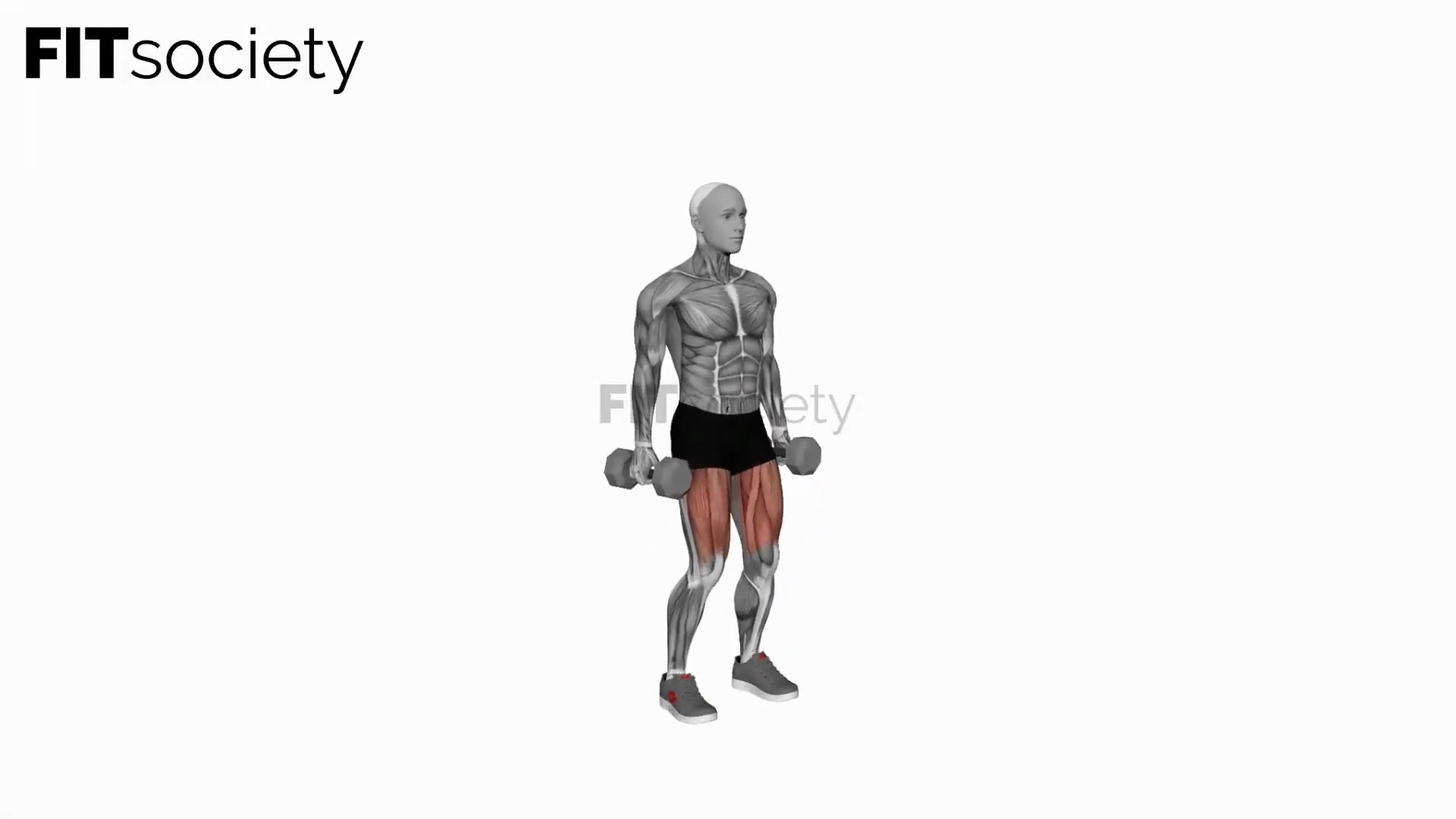
Execution
-
1
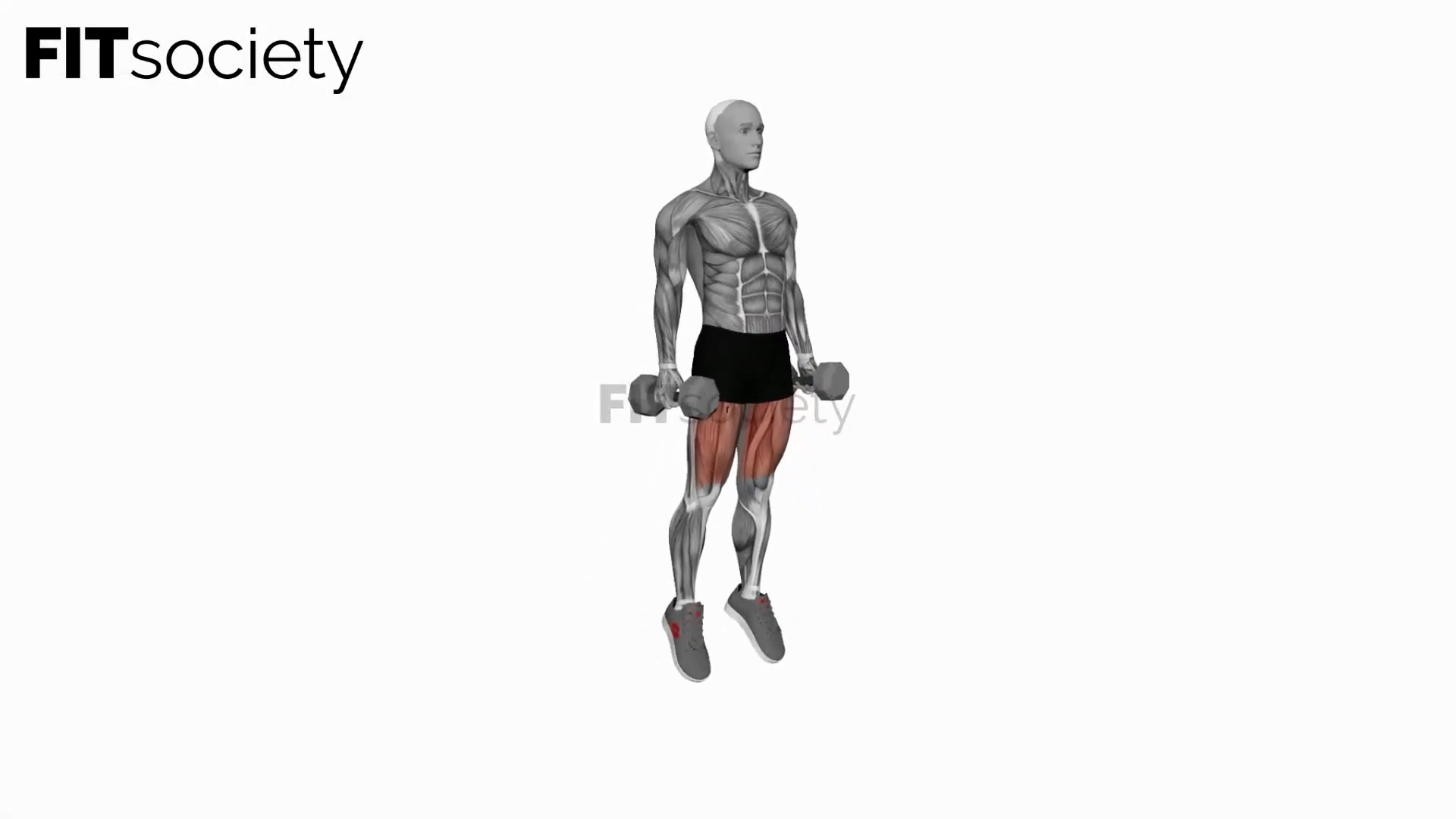
Begin by standing with your feet shoulder-width apart while holding a dumbbell in each hand at your sides.
-
2
Lower into a squat position by pushing your hips back and bending your knees. Keep your chest up and your back straight.
-
3
From the squat position, explode upward into a jump while keeping the dumbbells at your sides.
-
4
Land softly back in the squat position to complete one repetition.
-
5
Repeat for the desired number of repetitions.
Benefits
- Improves both strength and explosiveness.
- Raises your heart rate, contributing to fat burning.
- Strengthens multiple muscle groups simultaneously.
- Improves coordination and balance.
Common Mistakes
- ! Landing too quickly: Make sure you land softly to minimize the impact on your joints.
- ! Arching your back: Keep your back straight throughout the entire exercise to prevent injuries.
- ! Using dumbbells that are too heavy: Start with lighter weights to ensure proper form.
Main Muscles
The Dumbbell Jumping Squat targets a wide range of muscle groups, including the quadriceps, hamstrings, glutes, calves, and core. The shoulders and arms are also trained by holding the dumbbells.
Possible Alternatives
- For lower intensity, perform the exercise without the jump.
- Use a kettlebell instead of dumbbells for variation.
- Increase the intensity by jumping higher or using heavier dumbbells.
Run your fitness business with more structure
- Planning, member management and coaching in one platform
- Built for coaches, studios and gyms
- Fewer separate tools, more overview