Barbell Lunges On The Spot
Barbell Lunges On The Spot is a dynamic exercise that focuses on strengthening and toning your lower body. This exercise offers a unique combination of strength, balance, and flexibility, making it an excellent addition to your fitness routine.
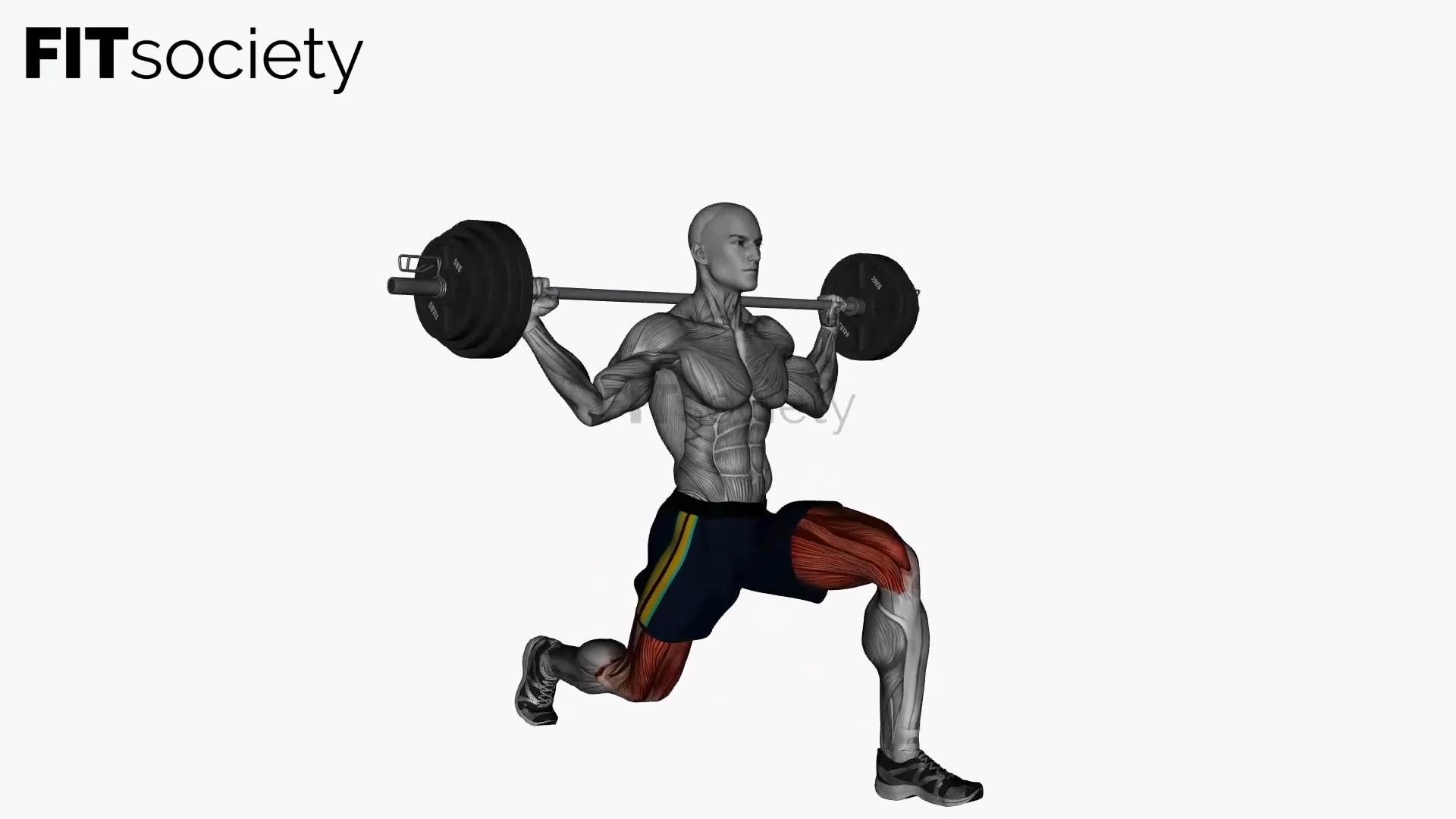
Execution
-
1
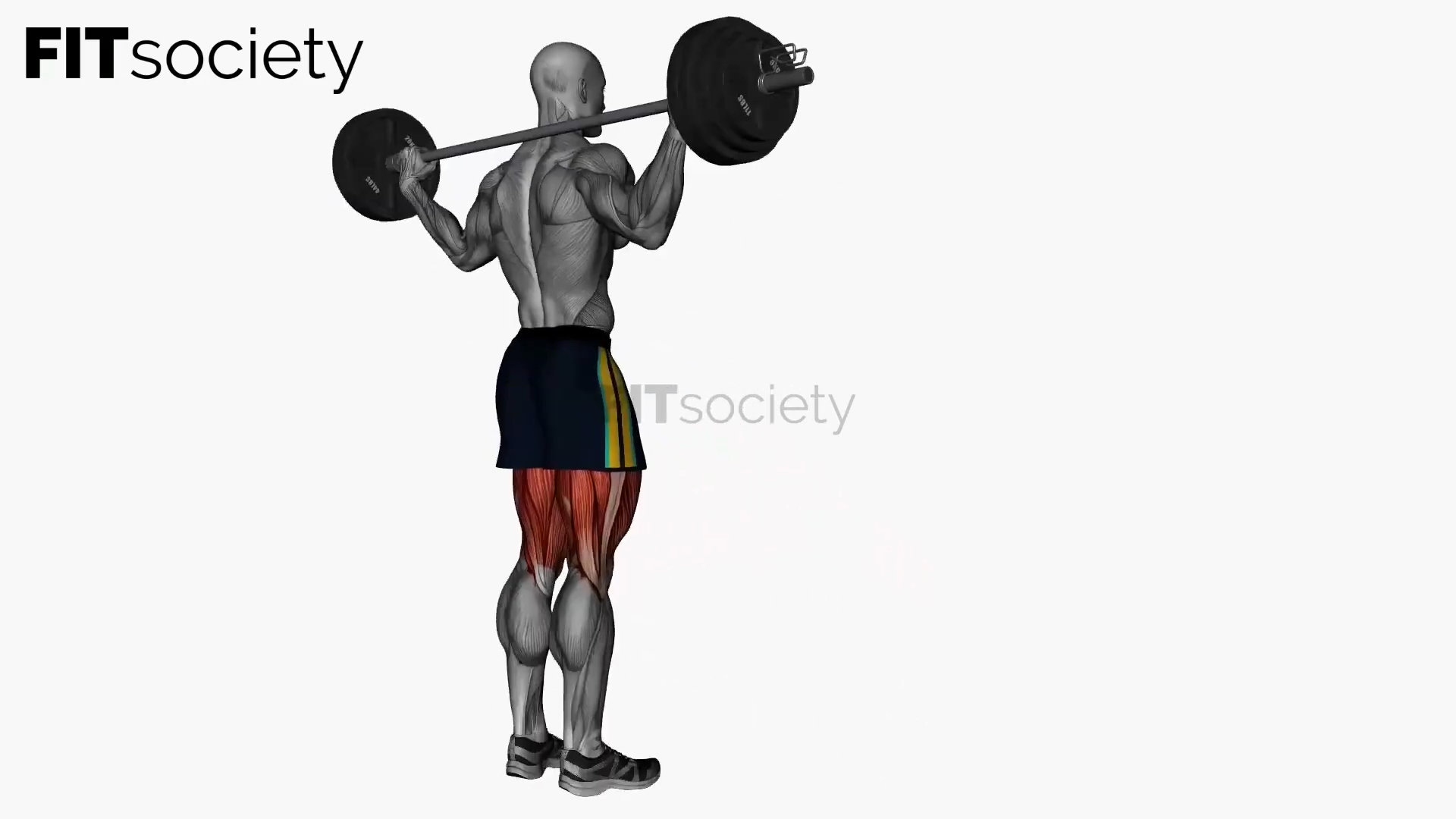
Begin by placing the barbell on your upper back, just below your neck. Make sure your feet are shoulder-width apart.
-
2
Step forward with one leg while ensuring that your knee does not go past your toes.
-
3
Slowly lower your hips until your rear knee almost touches the ground. Make sure your front thigh is parallel to the ground.
-
4
Push yourself up through the heel of your front foot and return to the starting position.
-
5
Repeat the movement with the other leg.
Benefits
- Improves lower-body strength and muscle mass.
- Increases stability and balance.
- Helps improve hip flexibility.
- May contribute to better posture and reduced back pain.
Common Mistakes
- ! Leaning too far forward, which can put pressure on the lower back.
- ! Allowing the knees to move too far past the toes, which can lead to knee injuries.
- ! Not lowering deeply enough, which reduces the effectiveness of the exercise.
Primary Muscles
This exercise primarily targets the quadriceps (front of the thighs), hamstrings (back of the thighs), and glutes, and to a lesser extent the calves and core.
Possible Alternatives
- For beginners: Lunges without weight or with dumbbells at the sides of the body.
- To increase the intensity: Add more weight to the barbell or perform the lunges on an elevated platform.
- For variety: Try side lunges or walking lunges to target different muscle groups.
Run your fitness business with more structure
- Planning, member management and coaching in one platform
- Built for coaches, studios and gyms
- Fewer separate tools, more overview