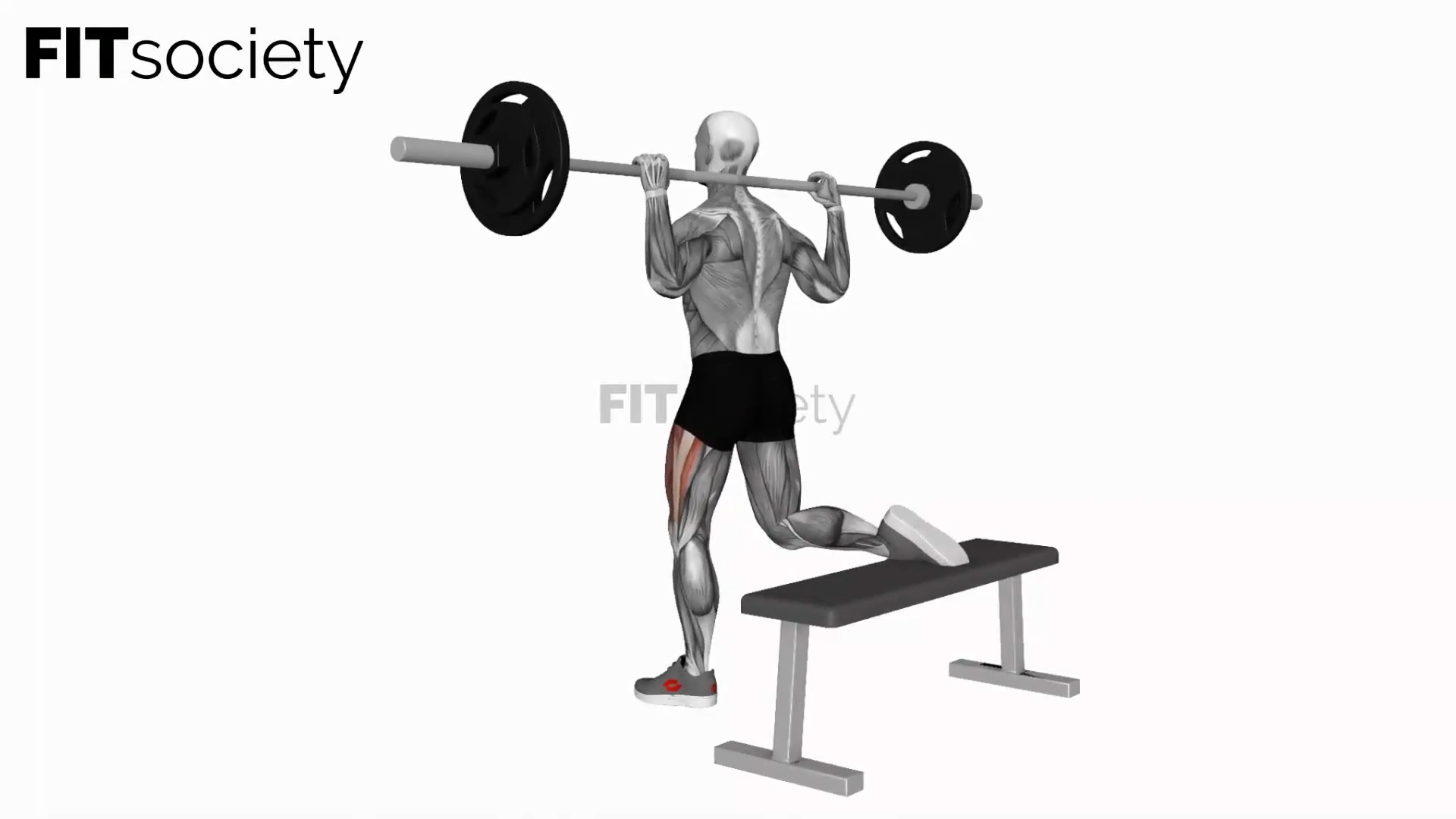
Barbell Bulgarian Split Squat
The Barbell Bulgarian Split Squat is a powerful exercise that targets the lower-body muscles, with a unique variation on the traditional squat. By placing one foot on an elevated surface behind you, the focus shifts to one leg at a time, providing an intense workout for balance, strength, and stability.
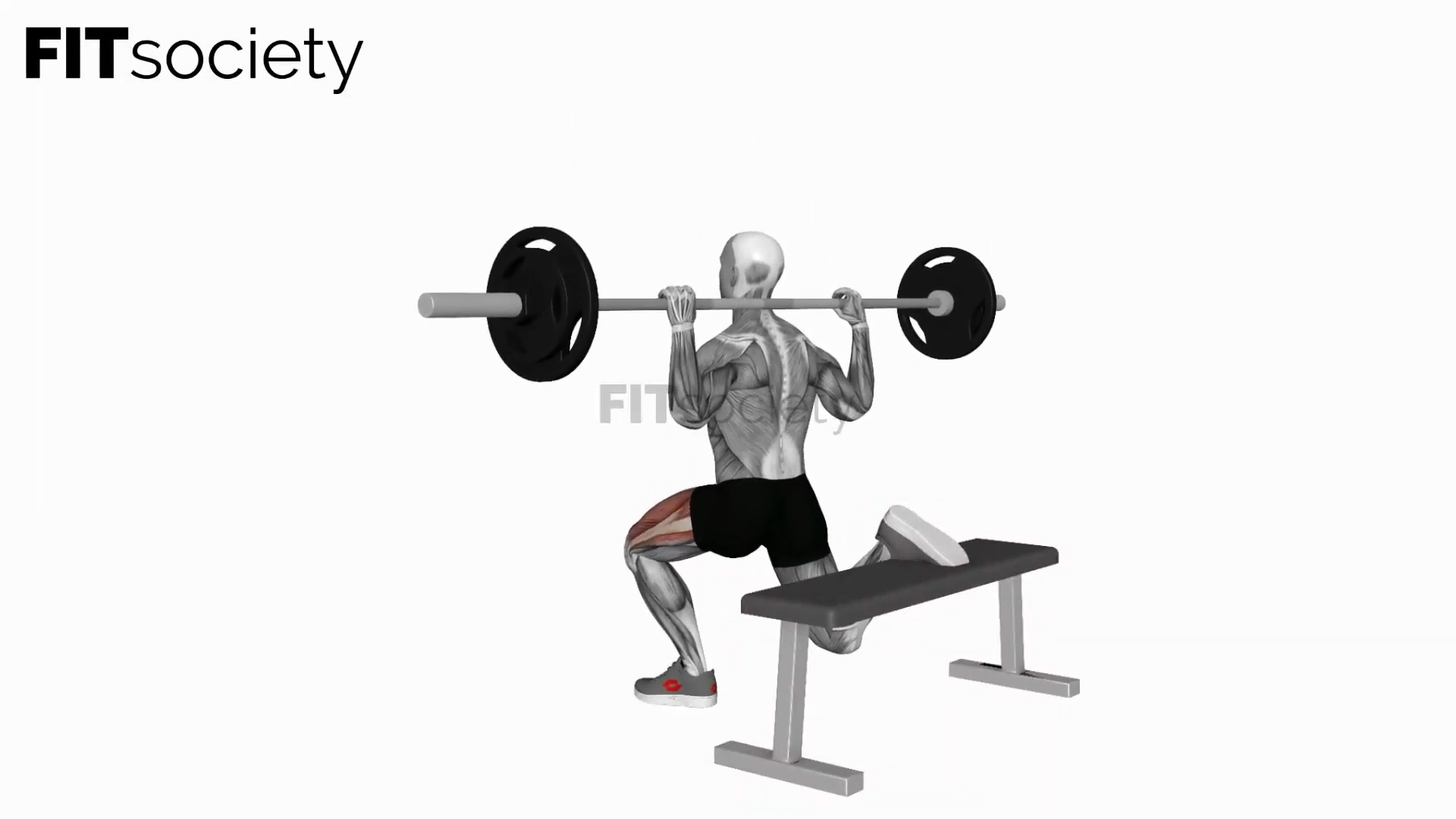
Execution
-
1
Find an elevated surface, such as a bench or sturdy platform, where you can place your rear foot.
-
2
Stand facing away from the elevated surface and place the top of your rear foot on it.
-
3
Hold a barbell across your upper back, just below your neck, and make sure your grip is comfortable.
-
4
Slowly lower yourself through your front leg, ensuring that your knee does not move past your toes.
-
5
Lower until your thigh is parallel to the floor, or as low as is comfortable for you.
-
6
Drive yourself explosively back to the starting position.
-
7
Repeat the movement for the desired number of repetitions, then switch legs.
Benefits
- Improves balance and coordination by training one leg at a time.
- Increases strength and stability in the lower-body muscles.
- Helps correct muscle imbalances between the legs.
- Improves hip-flexor flexibility.
Common Mistakes
- ! Leaning too far forward, which can put pressure on the knees.
- ! Placing the rear leg too high or too low, which can affect execution.
- ! Failing to keep your back straight, which can lead to unnecessary strain on the lower back.
Primary Muscles
This exercise primarily targets the quadriceps and gluteus maximus, while also training the hamstrings, calves, and core for stability.
Possible Alternatives
- Use dumbbells instead of a barbell for a different weight distribution.
- Perform the exercise without weights if you are new to this movement or are working on your technique.
- Increase the intensity by raising the elevated surface for your rear leg.
Run your fitness business with more structure
- Planning, member management and coaching in one platform
- Built for coaches, studios and gyms
- Fewer separate tools, more overview