Dumbbell Glute Bridge
The Dumbbell Glute Bridge is a powerful exercise aimed at strengthening your glutes and improving core stability. Adding a dumbbell increases the intensity, resulting in greater muscle activation and faster progress.
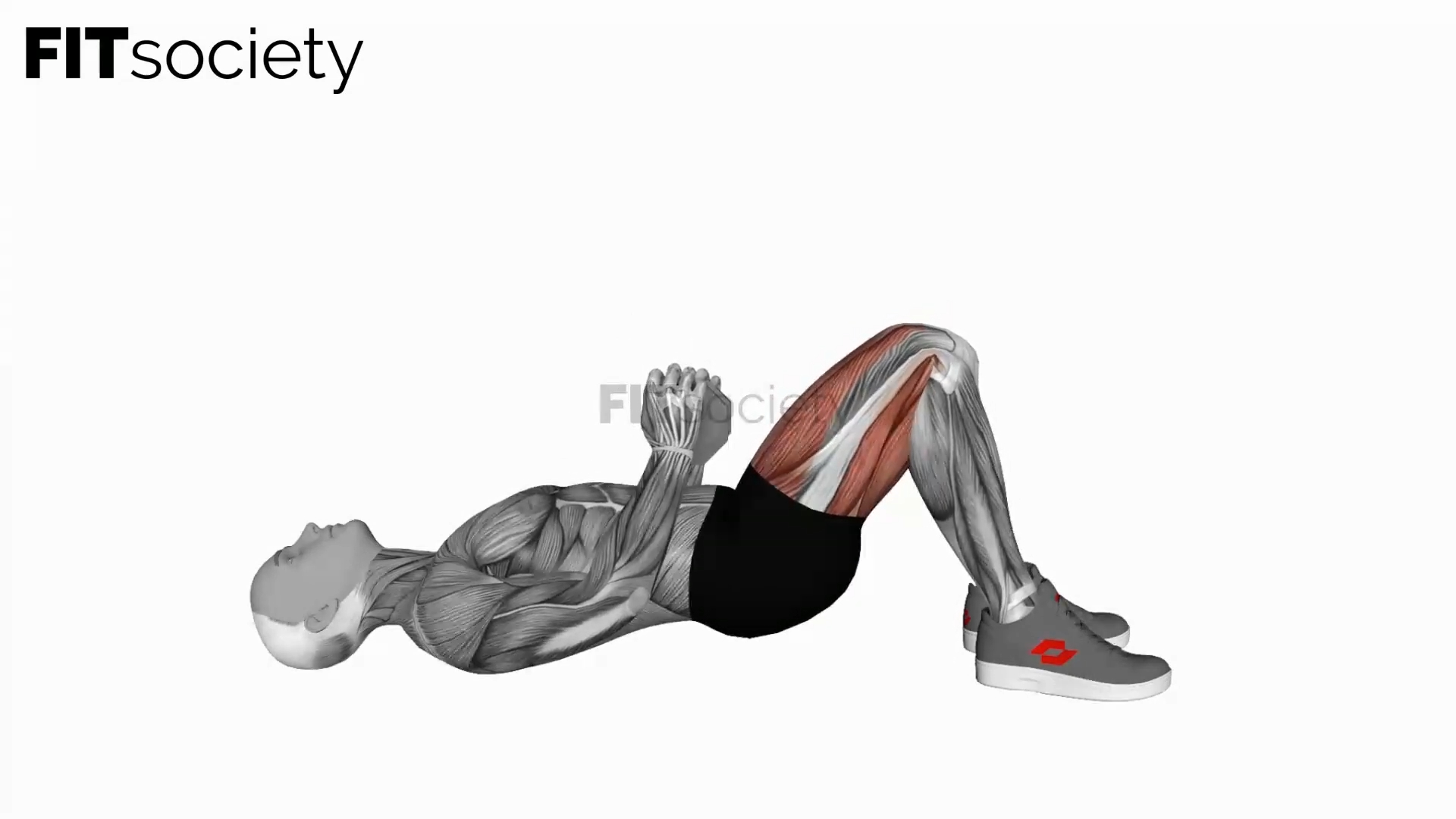
Execution
-
1
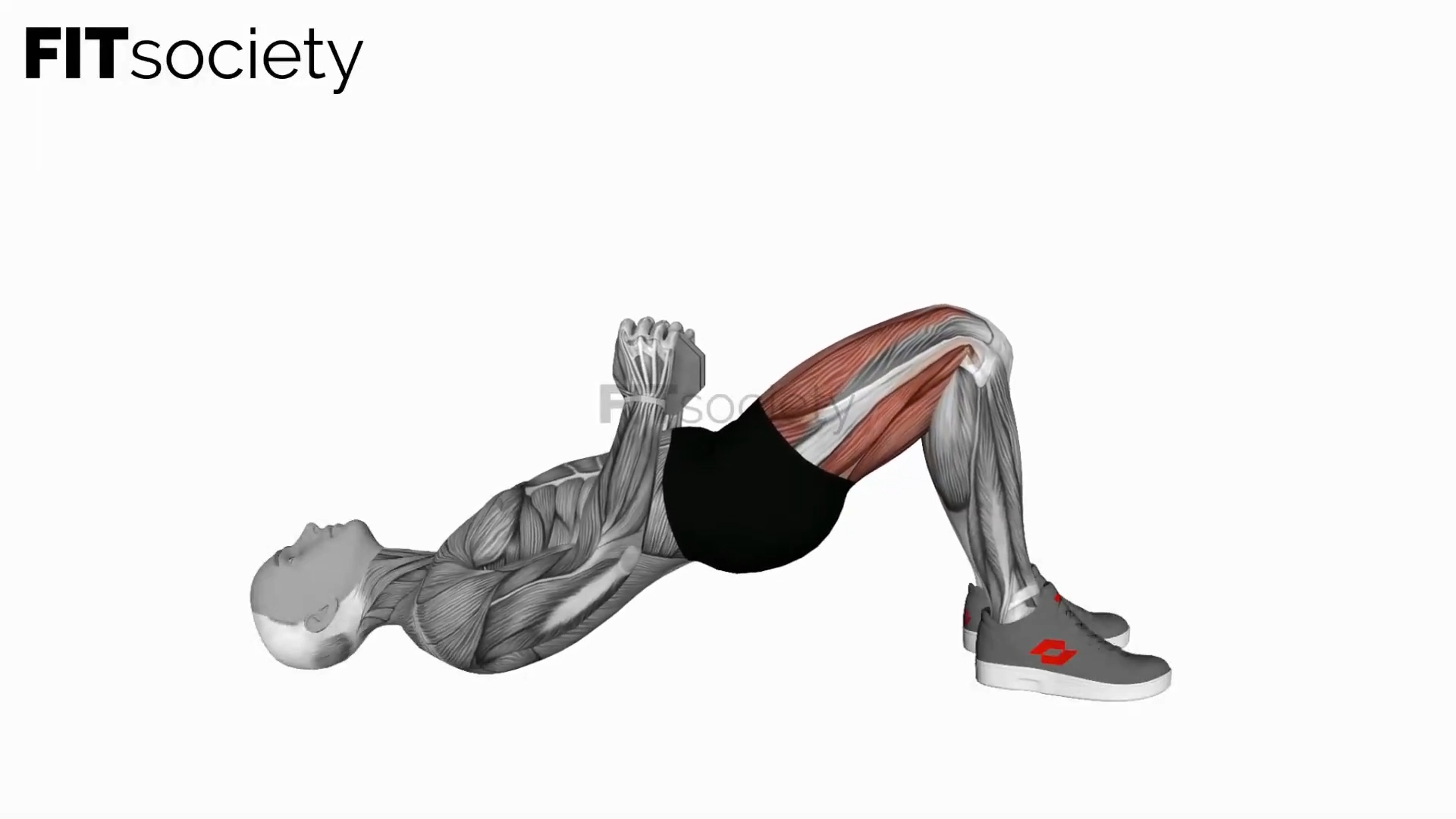
Lie on your back on a fitness mat with your knees bent and your feet flat on the floor. Place a dumbbell on your hips and hold it with both hands.
-
2
Brace your abdominal muscles and drive through your heels to lift your hips toward the ceiling. Ensure your body forms a straight line from your shoulders to your knees.
-
3
Hold this position for a few seconds, then slowly lower your hips back to the starting position.
-
4
Repeat the movement for the desired number of repetitions.
Benefits
- Strengthens and shapes the glutes.
- Improves core stability and strength.
- May help reduce lower back pain by strengthening the lower back and core.
- Improves posture and supports better performance in other exercises and daily activities.
Common Mistakes
- ! Lifting the hips too high, which can lead to overloading the lower back.
- ! Failing to hold the dumbbell, allowing it to shift and affect the execution.
- ! Allowing the knees to collapse too far outward or inward during the exercise.
Key Muscles
The primary focus is on the glutes (gluteus maximus, medius, and minimus). The hamstrings and core, including the lower back, are also trained for stability and support.
Possible Alternatives
- Without weight for beginners or as a warm-up.
- Single-leg Glute Bridge for an increased challenge and focus on individual glutes.
- Glute Bridge with a resistance band around the knees for additional resistance and activation of the abductors.
Run your fitness business with more structure
- Planning, member management and coaching in one platform
- Built for coaches, studios and gyms
- Fewer separate tools, more overview