Choosing gym software is rarely about a feature checklist alone. Operators compare platforms like Virtuagym and FITsociety because both promise member apps, booking, payments, and day-to-day club tools, yet they shine in different operating models. This page is a practical compare for boutique studios, personal trainers, online coaches, and hybrid clubs that want clarity before a demo, not a sponsored ranking table.
If you already run Virtuagym, treat this as a decision framework: where Virtuagym tends to feel strong, where FITsociety is built to fit, and which questions to ask before you migrate anything. Pricing, packaging, and roadmaps change. Verify commercial details in a live demo rather than trusting any static claim on a blog.
Who this compare is for
This article is for owners and ops leads who sell coaching or memberships (or both), including:
- Boutique studios and small multi-coach teams that need branding in the member app plus solid booking and billing.
- Personal trainers and online coaches who live in training plans, check-ins, messaging, and progress tracking every day.
- Hybrid businesses that mix floor visits with remote coaching and want one member truth instead of a spreadsheet plus three apps.
- App-first or lightly staffed setups where members self-book, self-check-in, and manage membership without a permanent front desk as the default.
- Clubs evaluating Virtuagym alternatives because coaching depth, white-label feel, or multi-location workflows have become the bottleneck.
Decision criteria that matter more than brand names
Before you pit FITsociety against Virtuagym feature by feature, score your own business on these axes. The better platform is the one that matches how you sell and deliver value.
- Member experience and branding. Do members need a white-label app that feels like your studio, or is a shared platform brand acceptable?
- Coaching depth. How central are training plans, nutrition guidance, measurements, habits, and coach-client communication?
- Club operations. How heavy are memberships, class booking, check-in, access control, and staff workflows?
- Payments and subscriptions. Do you need recurring memberships, packs, one-off products, failed-payment follow-up, and clear member status?
- Multi-location and roles. Will you grow to more sites, more coaches, or franchise-like permissions soon?
- Self-service readiness. Can members complete the journey in-app when staff are coaching on the floor or when you run without a staffed desk?
- Migration cost. What hurts more: staying put with workarounds, or moving members, plans, and billing history?
Neither vendor wins every axis. Virtuagym has a long track record as club and engagement software across many European and international gyms. FITsociety is designed so coaching workflows and club operations can live in one stack, which matters when your product is coaching quality, not only access hours.
Member app and branding
Both platforms invest in member-facing apps. Virtuagym is widely known for club member engagement: schedules, community features, and a polished consumer experience that many traditional clubs already recognize. That familiarity can reduce onboarding friction when members expect a large-platform style app.
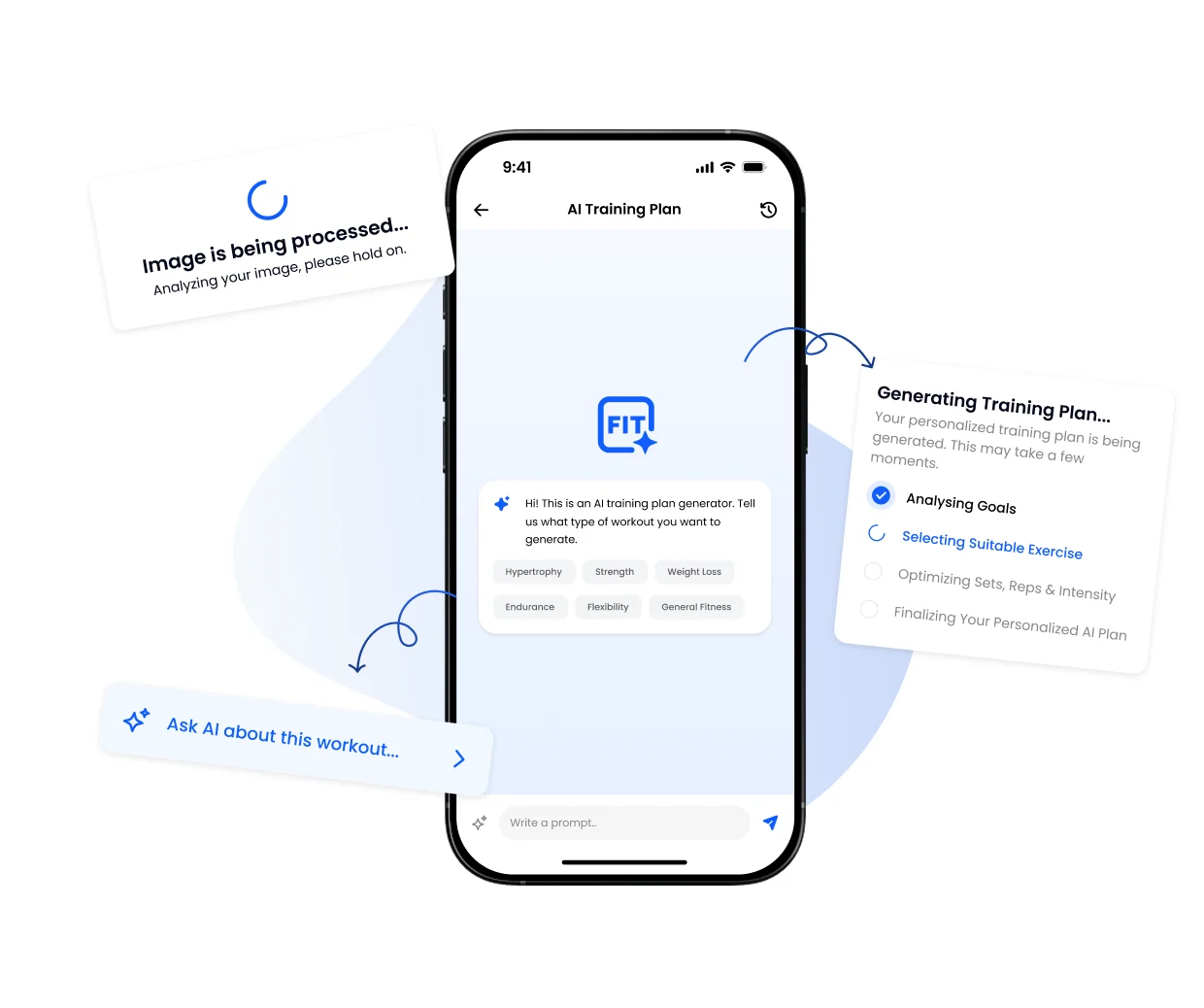
FITsociety leans into white-label coaching app experiences so your brand stays front and center. For boutique and PT brands, that often matters commercially: members search and open your name, not a generic platform label. Branding alone is not a retention strategy, but it does affect trust when the rest of the product delivers.
Ask in demos: how far white-label goes (in-app branding versus store listing), what members can do without staff help, and how notifications stay under your voice. See also FITsociety’s broader set via view all features.
Coaching depth: plans, nutrition, progress
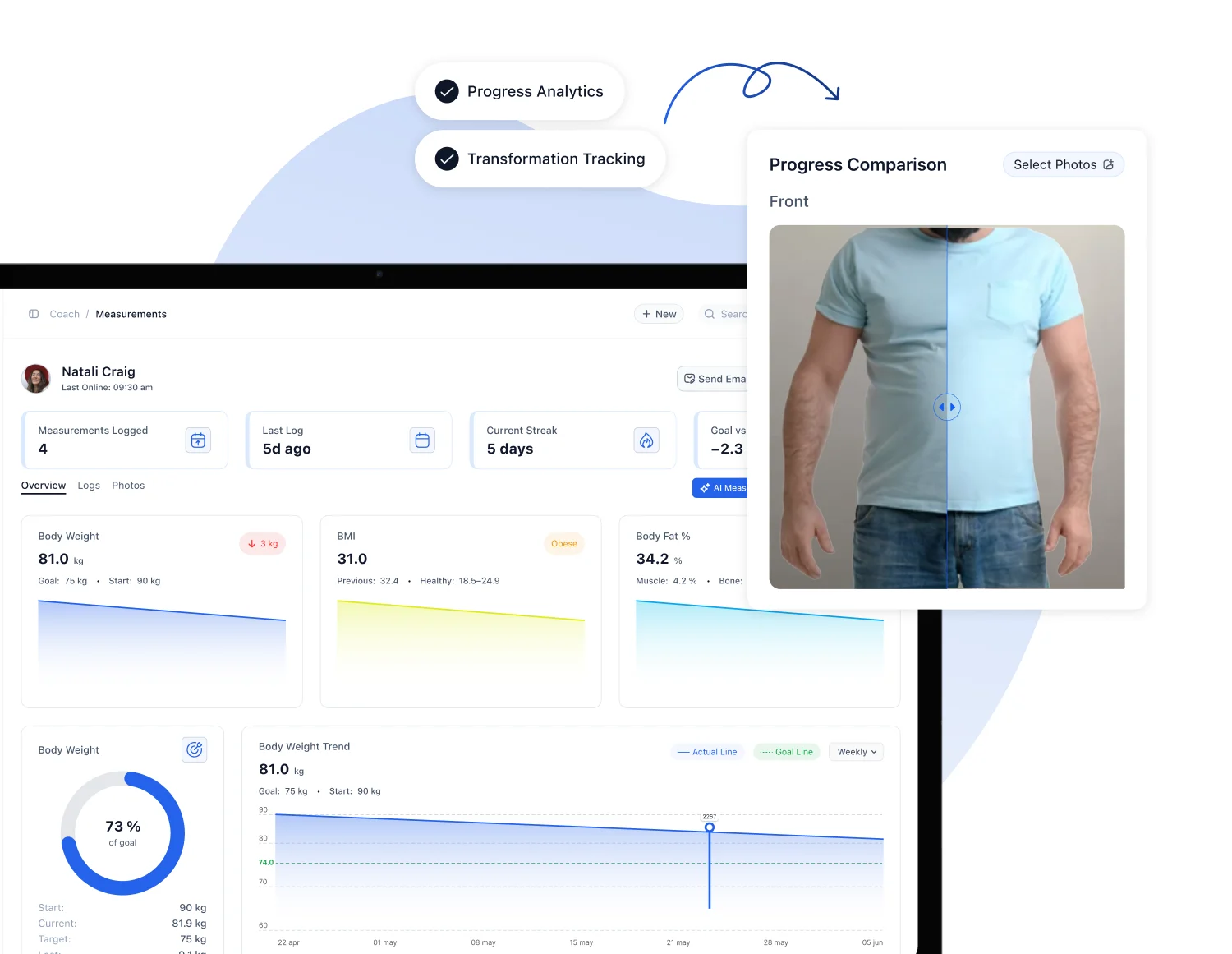
This is often where FITsociety differentiates for operators who sell coaching, not only door access. Coaches need assignable training plans, meal plans, measurements, progress visibility, habits, and chat that do not live in WhatsApp forever. If your weekly rhythm is program delivery and adherence, evaluate coaching tools with the same seriousness you give billing.
Virtuagym also supports workouts and member activity tracking as part of a broader club engagement suite. Many clubs use it successfully when the primary job is membership engagement plus facility operations. The fair question is not who has a workout module, but whether coaches can run a full client journey without exporting to another coaching app.
Practical test: pick one real client journey (intake, plan, week-two check-in, measurement update, payment change) and walk it end to end in both demos. Gaps show up faster than marketing pages.
Club ops: booking, check-in, access, CRM
Virtuagym’s reputation is strong on classic club operations: class and appointment booking, memberships, and tools that scale with busy floors. If your pain is high-volume scheduling and established club admin patterns, that maturity is a legitimate reason to stay or shortlist Virtuagym.
FITsociety covers the operational layer clubs expect as well: calendar and booking, membership management, check-in style flows, access control, documents, and CRM-style member context. The intent is to keep coaching data and membership status in one place so the floor, the app, and the coach screen do not disagree.
Include app-only and self-service scenarios in your evaluation. Many boutiques and hybrid coaches do not run a permanent reception desk. Members should be able to book, pay, update details, and prove access from the phone.
Payments, subscriptions, and multi-location
Recurring revenue is where software mistakes become cash-flow problems. Compare how each platform handles membership products, trials, pauses, upgrades, failed payments, and reporting. FITsociety documents payments and subscriptions as first-class workflows; Virtuagym likewise centers membership billing for clubs.
Do not invent price winners from blog posts. Ask for a quote against your real product mix. Confirm tax settings, local payment methods, and who owns dunning when a card fails. If you plan a second location soon, model permissions early: who can edit plans, refund, see other sites’ members, or change branding.
Where Virtuagym is often the better fit
- You run a traditional club where class volume, membership engagement, and established club-admin workflows dominate over deep 1:1 coaching delivery.
- Your team already knows Virtuagym well, members are onboarded, and switching cost outweighs coaching-stack benefits.
- You need ecosystem breadth or partner integrations already validated in a Virtuagym demo for your country and hardware.
- Your buying committee prioritizes a long-standing gym-management brand presence over a coaching-first operating model.
Those are operator realities. Software that matches your model beats software that wins a generic feature matrix.
Where FITsociety tends to fit
- PT, boutique, and online coaching businesses where plan quality, nutrition, measurements, and client communication are the product.
- Hybrid clubs that want club ops and coaching depth without bolting a separate coaching app onto membership software.
- Brands that need a white-label member experience tied to real coaching jobs, not only logo placement.
- Teams that run app-first or self-service heavy days and cannot rely on a staffed desk as the default path.
Explore how those pieces connect in product docs for the coaching app, membership management, and payments. Then validate with your own data in a demo.
Switching considerations
Migration is rarely export CSV and done. Plan for members and status (active, paused, arrears, trial), every live product and price, schedule freeze windows, coaching templates and progress history, access hardware and payment providers, and clear member communication. Wrong status on day one creates support tickets. Quiet migrations create churn stories.
If you stay on Virtuagym, still document the same map. Clarity helps either way. If you evaluate FITsociety as a Virtuagym alternative, ask what gets migrated for businesses like yours and what you must rebuild. Prefer a phased cutover over a heroic weekend.
FAQ
Is FITsociety a Virtuagym alternative?
Yes, for many boutique, PT, and hybrid operators comparing gym software. Alternative does not mean identical. Score coaching depth, branding, club ops, and payments against your model, then confirm in demos.
Does Virtuagym still make sense for large traditional clubs?
Often yes when class volume, membership engagement, and familiar club-admin patterns are the priority. Longevity and ecosystem familiarity are real assets. Revisit the choice if coaching delivery is now your growth engine and lives outside the core system.
Can I run without a front desk on either platform?
Test self-service explicitly: booking, payments, profile updates, and check-in or access from the member app. App-only and lightly staffed studios should refuse any workflow that silently assumes permanent reception coverage.
Who wins on price?
Nobody on this page. Packaging differs by seats, modules, locations, and add-ons. Ask both vendors for quotes on the same product mix and include admin time in the comparison.
What should I prepare for a FITsociety demo?
Bring your membership products, a sample coaching journey, your booking rules, and whether white-label is a must. Soft next step: book a demo and walk your real scenarios, including a week where the desk is empty and the app has to carry the day.
Bottom line
Virtuagym and FITsociety both serve fitness businesses that need apps, memberships, and operations. Virtuagym is frequently strong for club-scale engagement and established gym-management patterns. FITsociety is built so coaching depth and club ops can sit together, which tends to fit PT, boutique, online, and hybrid teams that refuse to run two truths for the same member.
Use the criteria above, run honest demos, and decide on fit, not on slogans. When you are ready to pressure-test FITsociety with your own products and coaching workflow, start at fitsociety.io/demo.