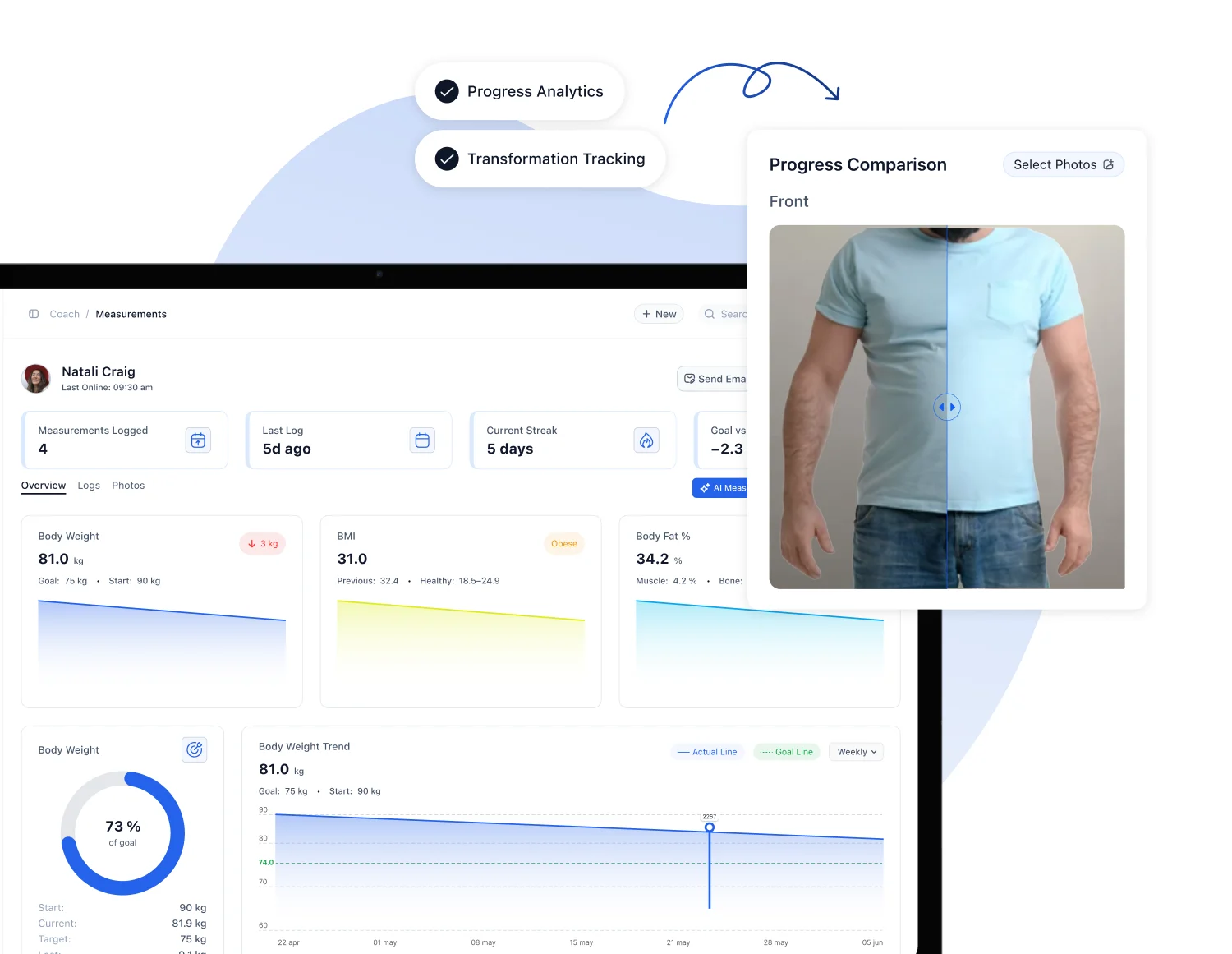
An online store for trainers is a coach-facing webshop for selling memberships, sessions, digital plans and related products directly to clients. The most reliable setup combines webshop, booking, payments and client delivery in a single platform rather than stitching together separate tools. Checkable options exist, including FITsociety, which trainers can evaluate against their own feature needs before committing.
TL;DR:
- A trainer online store must integrate membership sales, booking management, client delivery, and payment processing in a single platform to avoid workflow gaps.
- Setting clear product tiers, booking rules, and refund policies beforehand reduces disputes and streamlines the launch process.
- Tiered pricing typically includes premium coaching, group sessions, and digital plans, with rules on trial periods, renewals, and session expiry from the start.
- Necessary legal disclosures include accurate service delivery details, transparent cancellation policies, and data privacy notices to prevent chargebacks.
- Key integrations like calendar sync and reliable payment gateways significantly reduce administrative time and improve client experience.
Core feature checklist: prioritized capabilities your trainer store must have
A trainer webshop is not a generic ecommerce cart. The checkout sits next to scheduling, client data and recurring billing, so the feature list looks different from a typical online retailer’s.
Before comparing vendors, confirm the platform covers these areas:
- Membership and session sales: subscriptions, single sessions and bundles with clear access rules tied to each product.
- Booking and calendar management: scheduling for one-to-one sessions, group classes and small-group training, with sync to Google Calendar and Outlook/Microsoft 365.
- Client portal or app: a place to deliver training and nutrition plans, collect check-ins and track progress over time.
- Payment mechanics: processing, receipts, tax handling and a defined refund path.
- Admin tools: client records, automated reminders and basic reporting so you are not tracking renewals by hand.
- Extensibility: a public API or MCP support for teams that need custom reporting or integrations with outside systems.
Platforms increasingly build AI assistance and app-based delivery into these workflows, a trend reflected in the growth of app and AI-powered fitness delivery. When you compare tools, check each item against your actual client mix: a studio running group classes needs calendar depth more than a solo online coach selling digital plans, while a coach selling only recorded content may never touch the booking module at all.
Step-by-step setup: launch your trainer webshop from product to first sale
Launching a trainer store is a sequence, not a single setup screen. Skipping a step here usually shows up later as a billing dispute or a missed booking.
- Define your products and tiers. Decide what each membership or package includes, how long it lasts and what happens when it expires.
- Build the product and checkout pages. Write plain descriptions of inclusions, session counts and renewal terms.
- Set booking rules. Configure capacity for group and small-group classes, buffer times for one-to-one sessions, and sync your calendar.
- Test the booking flow end to end. Book, cancel and rebook a class as a client would, to catch capacity or sync errors.
- Connect your payment gateway. Confirm receipts, invoices and refunds all process correctly before going live.
- Prepare intake forms and disclaimers. Collect health history, goals and consent before the first session.
- Run a soft launch. Invite a small group of real or existing clients to buy, book and receive a plan before opening broadly.
Pro Tip: Test a full refund and a full cancellation yourself, as a customer would experience them, before your first public sale.
Session expiry and transferability deserve attention at this stage, not after a client complains. Platforms often fail to separate who actually supplies the service, the software platform or the independent coach, and that line should appear in both your coach agreement and your customer terms, as legal guidance for online coaching businesses points out. Mismatches between what your product settings allow and what your checkout copy promises are a common root of disputes.
Pricing and packaging advice: tiered structures that scale for trainers
Tiered pricing lets you serve different budgets and commitment levels without building separate products from scratch. Most trainer stores land on some combination of premium one-to-one coaching, mid-tier group or small-group sessions, and a lower-cost digital subscription for plans and check-ins alone.
U.S. Chamber of Commerce.
When you design tiers, decide these rules upfront:
- Trial length and conversion: how long a free or discounted trial runs before full billing starts.
- Auto-renewal and pause options: whether memberships renew automatically and whether clients can pause instead of canceling.
- Upgrade and downgrade paths: how a client moves between tiers mid-cycle, and whether that changes billing dates.
- Session expiry and no-show handling: when unused sessions lapse and what a missed booking costs the client.
Bundling a digital plan or nutrition add-on onto a session package is a straightforward way to raise average revenue per client without adding new delivery hours.
Legal, privacy and payments essentials: the items that commonly cause disputes
Website terms and privacy pages for coaching platforms should match how you actually deliver the service, whether that is live, recorded, hybrid or marketplace-style; generic templates commonly miss booking, refund and recording issues specific to coaching, as guidance for UK coaching platforms notes.
A clear cancellation and refund policy shown before purchase reduces disputes and chargebacks, according to the same Sprintlaw guidance, which is reason enough to put that policy on the checkout page itself rather than buried in a footer link.
Cover these points in your terms and privacy documents:
- Service delivery: state clearly whether sessions are live, recorded or hybrid, and who supplies the coaching.
- Checkout visibility: display booking, cancellation, refund and auto-renewal rules before the client pays.
- Data collection: declare what personal data you collect, including health information or session recordings, and how long you keep it.
- Payments and complaints: confirm how receipts and taxes are handled and give clients a clear way to raise a billing issue.
Subscription-specific disclosures matter here too: trial terms, auto-renewal and pause rights should be stated plainly at the point of purchase, not just in a separate terms document.
Integrations and tools to prioritize: reduce friction for you and your clients
A few integrations do most of the work in reducing admin time for appointment-heavy coaching businesses.
- Calendar sync: connecting Google Calendar and Outlook/Microsoft 365 keeps bookings visible without double entry, a small technical step with an outsized payoff for scheduling-heavy coaches.
- Reliable payment processing: a gateway that handles subscription billing, receipts and tax correctly avoids manual correction work later.
- Client portal or mobile app: a dedicated place for plan delivery, check-ins and messaging keeps communication out of scattered text threads.
- Public API or MCP support: useful once a studio or team needs to sync membership data, reconcile billing or build custom reports against an outside CRM or accounting system.
Prioritize these in roughly that order: scheduling and payments affect every transaction, while API access matters most once you outgrow a single admin dashboard.
Launch checklist and copy templates to speed your first sales
Before announcing your store publicly, confirm each item below works as a real customer would experience it.
- Product and membership pages are complete and accurate.
- Checkout processes a real payment and issues a correct receipt.
- Booking and calendar sync work for both one-to-one and group sessions.
- Intake form captures health history and goals before the first session.
- Terms, refund policy and cancellation rules are visible at checkout.
Refund policy template: “Refunds are available within [X] days of purchase for unused sessions. Sessions already delivered or booked within [X] hours are non-refundable.”
Cancellation and no-show template: “Cancel or reschedule up to [X] hours before your session with no charge. Cancellations after this window, or no-shows, forfeit the session.”
For your soft launch, invite a handful of current clients first, watch for booking errors and payment failures, and track completed purchases versus abandoned checkouts before opening to the public.
How long the setup process typically takes from start to launch
Setup time depends mostly on how many product tiers and booking rules you need, not on the platform itself. A solo coach selling a single digital subscription with no live scheduling can often configure products, checkout and intake forms in a few focused sessions over a few days.
A studio running group classes, small-group training and one-to-one sessions across multiple coaches takes longer, since each class type needs its own capacity rules, calendar sync testing and staff permissions. Expect that work to stretch over one to two weeks when you include a soft launch with real clients before a public announcement.
The slowest parts are rarely technical. Writing clear product descriptions, defining session expiry and cancellation rules, and drafting intake forms and disclaimers usually take longer than configuring the checkout itself. Building in time to test the full purchase, booking and delivery flow as a customer would experience it, rather than rushing straight to a public launch, is what separates a smooth rollout from one that generates early support tickets.
Total cost breakdown including platform fees, payment processing, and maintenance
Three cost categories apply to any trainer webshop: the platform subscription, payment processing fees charged by your gateway, and ongoing maintenance such as updating product pages or adjusting booking rules as your offers change.
Platform subscription pricing varies by vendor and by how many clients, coaches or features you need. As one reference point, FITsociety’s pricing page lists monthly plans for Coach, Team and Club tiers, with lower per-month pricing available on an annual billing option; pricing should always be checked on the live page before you budget, since plan limits and features differ by tier.
Payment processing fees are set by your payment gateway, not your coaching platform, and typically apply as a percentage of each transaction plus a fixed fee per charge. These vary by provider and region, so confirm the exact rate with your chosen processor rather than assuming a flat figure.
Maintenance costs are mostly time rather than money: updating product descriptions, adjusting tier pricing, and reviewing booking rules as class schedules change. Budgeting a small recurring block of admin time each month, rather than treating setup as a one-time task, keeps the store accurate as your offers evolve.

How to promote and market the online store effectively to attract trainer clients
The store itself does not generate clients; it converts interest that already exists. Promotion works best when it points directly at a specific product or tier rather than a generic “check out my store” message.
Share direct links to individual membership tiers or session packages on social platforms, in email, and in your existing client communications, so prospects land on the exact offer rather than a general homepage. Highlight concrete inclusions (session count, plan length, check-in frequency) rather than vague benefit language, since specifics convert better than general claims.
Existing clients are a reliable source of referrals when you make sharing easy: a referral discount or simple “forward this link” prompt costs little to set up. Bundling a limited-time offer, such as a discounted first month for a new membership tier, can help validate a new product before you promote it widely.
Keep your checkout and booking flow genuinely frictionless, since a broken link or a confusing booking step undoes any marketing effort that brought a prospect to the page in the first place.
Security measures and compliance requirements specific to trainer online stores
Trainer stores handle more than payment data: health history, progress photos, session recordings and messaging all carry privacy obligations beyond a standard retail checkout.
Declare clearly what personal data you collect, including health information or recordings, and how long you retain it and with whom you share it, as outlined in guidance on privacy for online coaching platforms. This disclosure belongs in your privacy policy, not buried in a separate document clients never see.
Payment security is typically handled by your payment processor rather than your coaching platform directly, but you remain responsible for confirming receipts, tax handling and a visible complaints path for billing issues. Avoid storing payment card details yourself; rely on a processor that handles that compliance burden.
Client account access deserves attention too: use role-based permissions so staff only see the client data relevant to their role, particularly once a studio has multiple coaches working from the same system. Review who can edit pricing, issue refunds or export client lists, and limit that access to the people who actually need it.
Why FITsociety is a direct option for an online store for trainers
We built FITsociety as community-driven fitness software, shaped by ongoing feedback from the personal trainers, online coaches and studio owners who use it, without promising that every request becomes a feature. We bring bookings, memberships, client delivery and payments into one dashboard instead of several disconnected tools.
- Our coaching platform covers client management, plan delivery and progress tracking in one workflow.
- Calendar integrations with Google Calendar and Outlook/Microsoft 365, AI-assisted features for drafting plans and forms, and public API or MCP support are available capabilities worth checking against your own setup needs.
- We publish plan details and pricing openly on our pricing page so you can verify tiers before you commit.
Check our nutrition software page if digital plans and check-ins are part of your product mix, and start a direct comparison against the checklist above at Fitsociety.
FAQ
What should an online store for trainers include at minimum?
At minimum, it should handle membership and session sales, booking with calendar sync, a client portal for plan delivery, and payment processing with receipts. Without these core pieces, you end up managing bookings or payments manually outside the platform.
How do refund and cancellation policies affect a trainer’s store?
A clear, visible cancellation and refund policy shown before purchase reduces disputes and chargebacks, according to Sprintlaw’s guidance for coaching platforms. Policies should match your actual delivery method, since generic ecommerce templates often miss session-specific issues like no-shows and recordings.
Do I need calendar integration for a trainer webshop?
Calendar integration is not strictly required but reduces administrative overhead significantly for any business running scheduled sessions or classes. Syncing with Google Calendar or Outlook/Microsoft 365, as available through FITsociety’s calendar feature, keeps bookings visible without manual double entry.
What pricing tiers work best for trainers selling online?
Common structures combine a premium one-to-one tier, a mid-tier group or small-group option, and a lower-cost digital subscription, letting you serve different budgets without building separate products. The constraint on scaling is usually how offers are packaged rather than the platform itself, per tiered pricing guidance from the U.S. [U.S. Chamber of Commerce.
How long does it take to launch a trainer online store?
A solo coach selling a single digital product can often launch within a few days, while a multi-coach studio with group classes and several tiers typically needs one to two weeks including a soft launch. Drafting clear product terms and testing the full purchase-to-delivery flow usually takes longer than the technical setup itself.
Sources
- Website Terms & Privacy for UK Coaching Platforms | Sprintlaw UK
- Legal tips for online coaching businesses — Sprintlaw Australia
- Online/Virtual fitness market report — The Business Research Company