Nutrition adherence tracking means recording how closely a client follows a coach-prescribed plan: meal logs, photo logs, habit check-ins and adherence scores captured inside coaching software. The goal is not clinical precision. It is a coaching signal: a pattern you can see, name and adjust before a client drifts off track.
TL;DR:
- Maintaining a logging adherence rate above 70 percent over 14 days prompts a check-in to prevent drift.
- Preferred tracking methods include photo-based logging or pattern journaling for clients prone to rigidity or emotional eating.
- Review adherence data weekly or biweekly using simple prompts focused on logged patterns and progress.
- Use software with features like mobile input, automated reminders, and integrated dashboards to simplify tracking and review processes.
- Stop quantitative tracking if clients experience distress or restrictive behaviors, and refer them to a qualified specialist.
Key adherence metrics coaches should track
Good tracking produces numbers you can act on in under a minute. Start with these five.
- Days logged versus expected entries: divide logged days by expected days over a rolling 14-day window, not a single day, to smooth out noise.
- Meal completion rate: planned meals eaten as prescribed, flagged separately from meals skipped or swapped.
- Time consistency: how regularly meals land in the expected windows, a proxy for routine stability.
- Pattern flags: recurring events like late-night snacking, skipped breakfasts or missed protein targets across three or more days.
- Engagement signals: missed check-ins and slow response times, which often predict adherence drops before the food log does.
Pro Tip: Set a simple trigger, such as under 70% logging over 14 days, to prompt a check-in rather than waiting for a review meeting.
Self-reported logs carry known accuracy limits. Coaching guidance built on behavior change treats tracking numbers as directional rather than exact, which is why ranges and rolling averages beat single-day snapshots when you decide whether to intervene, according to coaching-focused guidance from ACE Fitness. A threshold is a conversation starter, not a verdict on the client.
Practical tracking methods and when to use each
No single logging method fits every client. Match the method to the person first, the goal second.
- Food diary or calorie and macro logging: best for clients who want precision and are comfortable with numbers and apps.
- Photo-based logging or plate photos: lower effort, strong for building portion awareness and spotting patterns at a glance.
- Pattern journaling: short notes on hunger, mood, stress and sleep, useful for clients prone to perfectionism or emotional eating.
- Periodic 3 to 7 day audits: a short burst of detailed logging to reset portion awareness without asking for ongoing detail.
Diary preference itself affects outcomes. Research on self-monitoring in a weight management program found that adherence and weight-loss results were tied to whether participants preferred paper or electronic logging, which argues for giving clients a format they will actually use rather than the format that looks most rigorous, according to research on diary preference and adherence.
Move a client between methods when:
- Logging has dropped for two consecutive weeks despite reminders.
- The client reports tracking fatigue or rigid, all-or-nothing thinking about food.
- A quick audit would answer the open coaching question faster than another month of daily logs.
Pattern journaling and periodic audits tend to be more sustainable for clients who struggle with constant logging, practical coaching upgrades described by ACE Fitness note that coaching signal matters more than calorie precision for many clients.
Coach workflow: onboarding, check-ins, review meetings and escalation
A tracking plan only works if it is built into a repeatable workflow.
- Screen first: ask intake questions that surface rigidity around food or signs of disordered eating before assigning any logging method.
- Pick the method: choose diary, photo log or pattern journal based on the client’s comfort, not the coach’s preference.
- Set cadence and goals: define how often the client logs and what a successful week looks like in plain terms.
- Brief the client: show how to measure portions and take a useful food photo, a step CDC lifestyle coaching materials build into structured practice sessions with measuring cups and scales, per the CDC’s Track Your Food coach training module.
Pro Tip: Run one practice session on portion measuring during onboarding rather than explaining it once in a message thread.
Daily or weekly check-ins should stay short:
- A two-line automated prompt asking what was logged and one pattern worth flagging.
- A manual scan for missed days, repeated flags and tone shifts in client replies.
At review meetings, show the client their rolling adherence percentage and one or two pattern notes, then agree on a single micro-goal for the next period rather than a full plan rewrite.
Escalation and safeguards matter as much as the metrics. Red flags include sudden restriction, obsessive logging, or distress tied to numbers. When these appear, stop quantitative tracking and refer to a qualified specialist rather than adjusting the plan yourself.
Two reusable prompts:
- “Your logging dropped to 50% this week. What got in the way, and what’s one thing we can simplify?”
- “Nice run, four straight weeks above 80% adherence. What’s working that we should keep doing?”
Technical checklist: software features and integrations that improve tracking
The right software reduces client effort and speeds up coach review. Prioritize features that do both.
- Mobile logging: text and photo entries clients can submit in seconds from a phone.
- Templated check-ins: repeatable prompts so clients know exactly what to report.
- Habit trackers: simple yes/no or scale-based fields for recurring behaviors.
- Automated reminders: nudges tied to missed entries rather than a blanket daily alert.
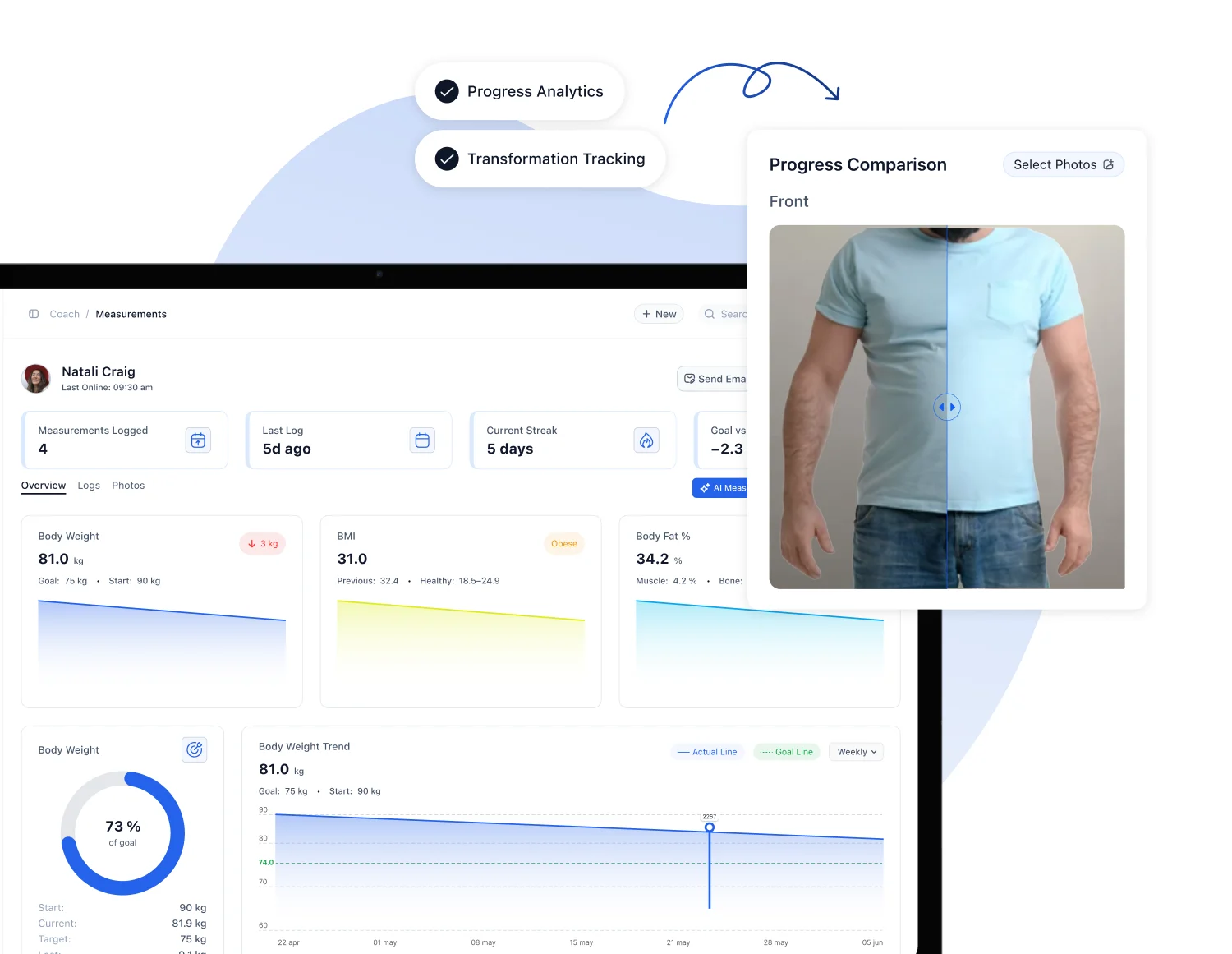
- Progress dashboard: a single view of adherence trends instead of scattered messages.
- Exportable reports: data you can review offline or share at a review meeting.
| Feature area | What to look for | Why it matters |
|---|---|---|
| Client logging | Mobile text and photo entry | Lowers the barrier to daily use |
| Scheduling | Google Calendar and Microsoft Outlook/365 sync | Keeps check-ins and sessions aligned |
| Automation | Public API access | Connects tracking to other coaching tools |
| Reporting | Exportable adherence data | Supports review meetings and audits |
Treat self-reported entries as approximate: timestamps and a clear audit trail help you spot gaps, but the number itself is a starting point for a conversation, not a final grade. A dedicated nutrition tracker that logs meals and macros in one place makes this review faster without adding fields clients have to fill out by hand.
Ready-to-use templates and a one-week audit coaches can assign
These templates are built to paste directly into your intake forms or messaging.
Intake checklist
- Screen for restrictive eating patterns or anxiety around food.
- Confirm preferred tracking format: diary, photos or pattern journal.
- Set logging cadence and the first micro-goal.
Daily check-in (4 fields max)
- What did you eat today?
- Hunger level before and after the main meal (1 to 5).
- One pattern note, good or bad.
- Anything that got in the way today?
One-week audit, based on CDC coach training activities for building portion awareness, the CDC’s Track Your Food module:
- Day 1: brief the client on measuring tools and photo habits.
- Days 2 through 6: client logs photos plus one quick note per meal.
- Day 7: coach reviews the week and sends short feedback.
Example feedback lines: “Three skipped breakfasts this week, let’s build a two-minute option.” “Adherence held steady above 80%, keep the current routine.” “Late-night snacking showed up four nights, want to look at dinner timing together?”
How FITsociety supports nutrition adherence tracking
We built FITsociety as community-driven software, shaped by ongoing feedback from the personal trainers and coaches who use it daily, and the workflows above map directly onto what the platform already handles. Intake forms, plan delivery, client logging and progress dashboards sit in one place, so a client’s daily check-in and your review notes stay connected instead of scattered across apps.
Clients log meals and habits through their own portal and mobile app, while we sync your bookings with Google Calendar and Microsoft Outlook/365 so review meetings and online PT sessions never clash with the rest of your schedule. Public API support allows connection of tracking data to other tools and automations beyond the dashboard.
If you want to see how meal plans, macros and check-ins work together in one workflow, our nutrition software for online coaches page walks through the setup.

FAQ
What counts as good nutrition adherence for a coaching client?
There is no universal percentage, but a consistent logging rate over a two-week period combined with steady meal completion is a reasonable working target for most clients. Treat the number as a trend indicator and look at pattern notes alongside it rather than judging a single day.
How often should coaches review adherence data?
A short scan after each check-in and a deeper review every one to two weeks works for most coaching relationships. Weekly reviews catch drift early without turning tracking into a daily grading exercise.
Should coaches use calorie counting or photo logging?
Calorie and macro logging suits clients who are comfortable with precision and enjoy data, while photo logging lowers the burden and still reveals portion and pattern issues. Diary preference itself affects adherence and outcomes, so matching the method to the client matters more than picking the most detailed option, according to research on diary preference.
What are warning signs that tracking is causing harm?
Rigid, all-or-nothing thinking about food, distress tied to logging, or signs of restriction are reasons to pause quantitative tracking and refer the client to a qualified specialist. Coaches are not equipped to treat disordered eating, and screening for these signs belongs in onboarding, not after a problem appears.
Does FITsociety support nutrition adherence tracking?
Yes, our platform connects client meal logging, habit check-ins and progress dashboards inside one coach and client portal. Specific plan features and pricing are listed on our nutrition software page.
Sources
- Stop counting, start coaching: 4 simple nutrition upgrades for clients
- CDC Lifestyle Coach Training Module 5: Track Your Food
- Adherence and weight loss outcomes associated with food-exercise diary preference in a military weight management program