Migrate clients safely by treating the move as a short project: run discovery, pilot early adopters, then roll out in waves with a tested rollback plan. Start now with two actions: a full inventory of client records and a complete backup or export of that data. Aim for a tested rollback path and minimal disruption to bookings, payments and communication.
TL;DR:
- Running a migration in phases with clear exit criteria minimizes risks and prevents the need for costly rollbacks due to skipped steps.
- Accurate inventory and cleanup of client records, attachments, and custom fields before migration are essential to avoid issues during the transfer.
- Using automation tools that batch records, respect rate limits, and employ dedicated accounts ensures a reliable and reversible data transfer process.
- Pilot testing with a small client subset and defining specific rollback triggers help identify problems early and reduce disruption during full rollout.
- Clear roles, timelines, and communication plans increase accountability and help prevent common errors like data mismatches and scheduling conflicts.
Migration checklist: phases you can paste into a runbook
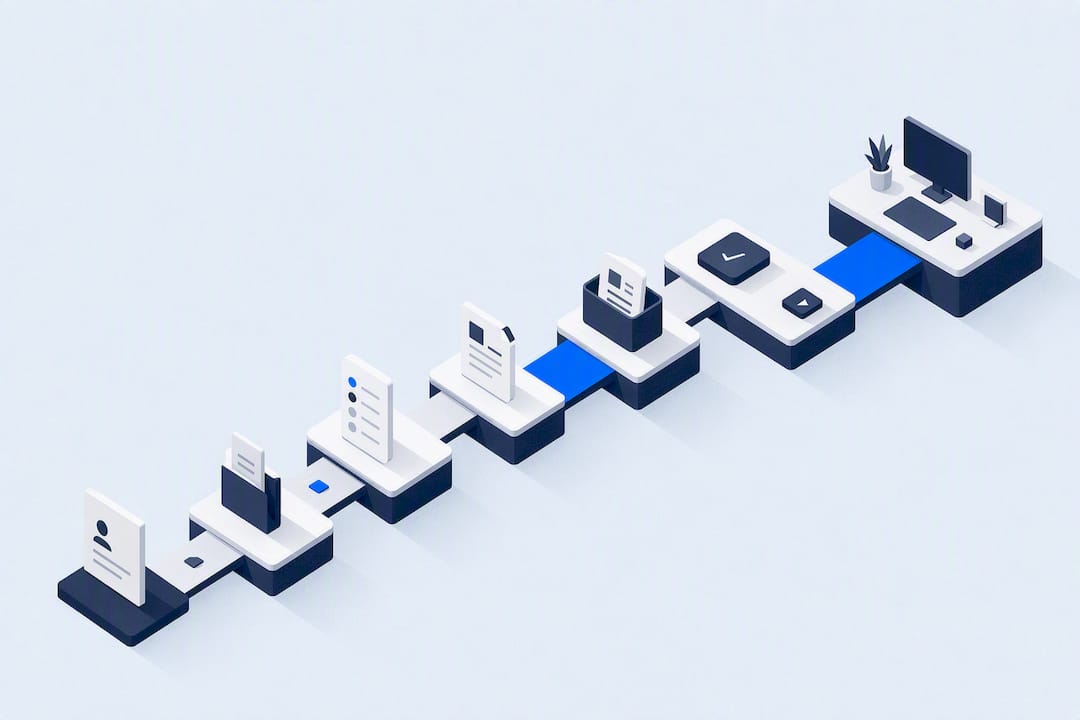
A structured transition plan moves through five phases. Each phase has a clear exit condition before work continues to the next one.
- Discovery. Inventory client records, bookings, payment data and custom fields. Confirm scope and constraints.
- Mapping. Build the field-mapping matrix. Flag fields with no clean target.
- Pilot. Migrate a small client set. Test bookings, payments, calendar sync.
- Wave rollout. Migrate remaining clients in scheduled batches. Monitor each wave before starting the next.
- Stabilization. Confirm data integrity. Close support tickets. Decommission the old system.
Acceptance criteria for moving forward: backups verified, pilot data matches source records, and no unresolved critical defects. Skipping a phase to save time is the most common cause of rollback later.
Assess and prepare source data and workflows
Inventory scope includes client records, attachments, booking rules, payment records and custom fields. Missing one category here means discovering it mid-migration, which is harder to fix.
- List every client-facing data type: profiles, session history, payment methods, recurring charges, notes.
- Flag mandatory fields, duplicate accounts and stale or inactive clients before export.
- Check export formats: CSV or JSON, character encoding, timestamp format, timezone.
- Decide what to archive versus import. Old cancellation notes may not need to move.
Data migration tasks commonly include cleanup, mapping and testing, and timelines vary with complexity.
Pro Tip: Export a small sample first and open it in a spreadsheet before running the full extract. Formatting problems show up faster in ten rows than in ten thousand.
Choose a migration method and tools
The right method depends on scale and how much the source and target systems differ.
- Bulk import tools suit simple moves with clean, matching fields.
- API-driven pipelines handle complex mappings, attachments and conditional logic.
- Vendor connectors or partner migration services reduce manual work for larger client bases; vendor and partner-led migrations are commonly used for complex conversions.
- In-house ETL scripts give the most control but need engineering time and testing.
Automation should batch records, respect API rate limits and be idempotent so a rerun does not duplicate data. Use a dedicated, least-privilege service account for migration jobs, and rotate its credentials once the migration closes.
Map fields, transform data, and preserve auditability
A canonical field list anchors the whole migration. Build a mapping matrix with three columns: source field, target field and transformation rule. This becomes the reference document for QA and for anyone troubleshooting later.
- Reconcile client identities with deterministic matching: email plus a secondary ID first, manual review for anything ambiguous.
- Log every transformation with a run ID so an import batch can be traced and, if needed, reversed.
- Handle timestamps with explicit timezone conversion, not an assumed default.
- Map custom fields and attachments individually. Generic fields rarely capture studio-specific data cleanly.
Deterministic matching over fuzzy heuristics avoids the duplicate-record problem that manual merges tend to create. An immutable audit trail, keyed by source file and run ID, lets a team replay or roll back an import without re-importing records that already landed.
Test, validate, and plan rollback
Pilot testing needs a representative sample, not just the easiest accounts.
- Select early adopters and a small set of complex or edge-case records.
- Verify bookings, payment processing, recurring memberships and calendar sync end to end.
- Define rollback triggers in advance: data mismatch rate, failed payment sync, broken calendar events.
- Write the rollback procedure as steps, not intent: restore backup, notify affected clients, re-run corrected batch.
- Run post-migration smoke tests against every core workflow before declaring the wave complete.
Pilot cohorts of about 5 to 10% of clients are a common approach for exercising every workflow before a full rollout, covering bookings, payments, recurring charges and reporting across different client types.
Roles, timeline, and risk management
Clear ownership prevents the most common migration failures: missing fields, payment mismatches and scheduling conflicts that nobody catches until a client complains.
- Discovery lead: owns the inventory and scoping document.
- Migration engineer: builds and runs the mapping and import jobs.
- QA lead: owns pilot testing and sign-off criteria.
- Client communications owner: manages notices, training and support during rollout.
A typical cadence runs discovery for one to two weeks, pilot for one week, then staged waves over two to four weeks depending on client count, followed by a stabilization period before decommissioning the old system. Formal client migrations run as projects with clear roles, timelines and documentation, which is what keeps a multi-week rollout from drifting. Sign-off happens when data integrity checks pass and support tickets from the pilot are closed, at which point ownership transitions to normal business-as-usual operations.
Drive client adoption: training, communication templates, and support plans
Segment clients by how ready they are for change, and use early adopters as informal references for the harder cases later in the rollout.
- Offer a mix of formats: a 20 to 30 minute webinar, a quick-start checklist and a role-based cheat sheet.
- Send staged communications: pre-migration notice, pilot invitation, then a post-migration message with support hours.
- Monitor login and feature usage after each wave to catch drop-off early.
- Collect feedback from the pilot group and adjust training materials before the next wave.
Staging by readiness and refining the process with early adopters before larger waves reduces support load later in the rollout.
Pro Tip: Keep the first post-migration email short: what changed, where to log in, and who to contact. Long explanations get skimmed, not read.
How FITsociety supports migrations
FITsociety is community-driven fitness software, developed with ongoing input from personal trainers, coaches and studio teams.
- Booking calendar supports group classes, small-group sessions, one-to-one appointments and online PT.
- Google Calendar and Outlook and Microsoft 365 integrations are available for schedule sync.
- An API and connected platform capabilities support workflows for teams migrating data or building integrations.
- Full feature details and plan-level availability should be verified before setup.
Confirm current plan limits and setup steps directly with FITsociety before migrating a client base.
Moving your studio to FITsociety
Studios weighing a move away from spreadsheets, generic booking apps or a patchwork of tools get one coordinated environment: bookings, online PT, memberships, payments and client communication in a single dashboard, with client-facing portals and apps on the other side.
Read the switching checklist for gym software for member and payment-facing steps specific to fitness businesses, and review coaching workflows to see how training plans and sessions map into the platform. For migrations involving a large client base or complex payment history, contact FITsociety support to discuss migration assistance before starting the wave rollout. Check current plans and pricing at Fitsociety.

Sources
Configuration Manager migration planning covers inventory and compliance data handling. Xero’s cloud migration guide and QuickBooks migration versus conversion guidance cover staging and cleanup practices.
- What Software Transition Plan Represents and Steps to Upgrade to New Software - Avenga
- Moving Clients to the Cloud | Xero
- Data conversion vs data migration for accountants | QuickBooks
FAQ
What is client migration?
Client migration is the process of moving client records, schedules, payment data and workflows from one software system to another. It typically includes discovery, data mapping, a pilot test and a staged rollout, following a structured transition plan.
Can you give me an example of software migration?
A fitness studio moving from a spreadsheet and a separate booking app into one platform is a common example. The team would inventory client and payment records, map fields to the new system, pilot with a small client group, then roll out in waves while testing bookings and payment sync before full cutover.
What are the top data migration tools?
Tool choice depends on scale and complexity: bulk import tools work for simple, clean-field moves, while API-driven pipelines and vendor connectors handle attachments and complex mappings. Vendors and partners often provide migration tools or specialist services for larger or more complex conversions, so check with your target platform’s support team for what it offers.
What is a software migration?
A software migration is the planned transfer of data, configurations and workflows from an old system to a new one, usually run as a project with defined phases and sign-off criteria. It differs from a simple data conversion, which mainly reformats data rather than restructuring workflows and mappings.