Macro tracking means logging grams of protein, carbohydrate and fat instead of only total calories. Coaches use it as a teaching tool and a data source. It is optional, and it suits some clients better than others. This guide covers setup, accuracy, review cycles, wellbeing limits and the software features that support the workflow.
TL;DR
- Macro tracking is a tool, not a requirement. NASM frames it as one way to estimate and monitor intake.
- Start with targets as a range, then adjust from trends, not single days.
- Teach estimation: portions, restaurant meals and flexible days matter more than decimal-level accuracy.
- Watch for rigidity or anxiety. Pause tracking and refer to a registered dietitian or physician when needed.
- Software should keep targets, logs, check-ins and messages in one place. FITsociety covers this alongside bookings and payments.
What macro tracking is and why coaches use it
Macros are protein, carbohydrate and fat. Tracking them shows food composition, not just energy. A client who eats 2,000 calories from mostly refined carbohydrate and a client who eats 2,000 calories with balanced protein, fat and fiber-rich carbohydrate have different days, though the calorie total is identical.
Coaches use macro data for three reasons:
- Teaching. Clients learn what portions look like and where protein comes from.
- Adjusting. Logged intake gives a coach something concrete to change.
- Flexibility. Targets leave room for varied food choices without rigid meal plans.
NASM describes macro counting as a tool for estimating and monitoring intake, not a mandatory step toward fitness or weight goals. That framing shapes everything below. The coach decides whether tracking fits the client, not the other way around.
When tracking fits and when a simpler method works
Not every client needs grams. Match the method to the person.
| Client profile | Likely fit |
|---|---|
| Detail-oriented, specific goal (physique, performance) | Full macro tracking |
| Wants to learn portions, no strict goal | Short tracking phase, then hand portions |
| Busy, inconsistent logging | Calories and protein only |
| Anxious around food numbers | Plate composition or food-quality habits |
| History of disordered eating | No tracking. Refer to a qualified professional |
NASM notes that tracking suits detail-oriented clients pursuing a specific goal, while hand portions, plate composition or food quality can work better for clients who do not need precision or for whom counting causes anxiety. Many clients use tracking as a temporary education phase, then move to less detailed methods.
Three levels of detail
A practical way to scale tracking up or down:
- Calories only. Lowest effort. Good for beginners.
- Calories and protein. Adds the one number most clients under-eat.
- Full macros. Protein, carbohydrate and fat targets. Highest effort, most data.
Start at the lowest level that serves the goal. Move up only when the client can sustain it and the data answers a real question.
Setting targets
Targets are a starting hypothesis. They are revised from real client data.
Gather inputs first
- Goal (fat loss, muscle gain, maintenance, performance)
- Current body weight and training load
- Typical food intake from a short food diary
- Schedule, food preferences, cultural and dietary needs
- Health history and any medical conditions
A food diary at intake gives a realistic baseline. FITsociety’s site describes a workflow where a new client fills in a food diary and the platform calculates calories and macronutrients from it, which shortens the baseline step.
Reference ranges
The ACSM position statement on nutrition and athletic performance (2009, United States and Canada) gives general ranges:
- Fat: generally 20% to 35% of total energy intake.
- Carbohydrate: depends on training demands and energy expenditure, often 6 to 10 grams per kilogram of body weight for active individuals.
These are population-level figures for athletes. They are education, not a prescription. The same statement says qualified sports nutritionists should give personalized guidance after a comprehensive nutritional assessment. A coach who is not a registered dietitian should keep targets general, label them as estimates and avoid individualized meal plans or advice tied to medical conditions.
Setting the targets in order
- Set the calorie target for the goal.
- Set protein first, since it is the priority number for most training clients.
- Set fat within a reasonable range.
- Let carbohydrate fill the rest, higher on heavy training days if the plan uses it.
- Express targets as ranges where possible, for example protein within a band rather than one exact number.
- Optionally set separate rest-day and training-day values.
Ratios such as 30/30/40 are only one way to split a calorie target. A ratio is a convenience, not a rule. Check any split against body weight, training and preference.
Teaching clients to track accurately enough
Perfect accuracy is not available. Food labels allow variation, restaurant portions differ and home cooking changes weights. The aim is consistency good enough to see trends.
Core habits to teach
- Weigh when possible. A food scale for staples (rice, oats, meat, oils) removes the largest errors.
- Log before eating. Planning the meal first prevents end-of-day guessing.
- Use the same entries. Saving frequent foods and meals keeps data comparable week to week.
- Log oils, sauces and drinks. These are the most common omissions.
- Log everything or flag the gaps. A day marked “estimated” is more useful than a day left blank.
Eating out
Restaurant meals teach estimation, not exactness. Useful coaching rules:
- Check the menu in advance. Many chain restaurants publish nutrition information online.
- Pick the closest database entry and log it, rather than skipping the meal.
- Use plate composition as a fallback: a palm of protein, a fist of vegetables, a cupped hand of carbohydrate, a thumb of fat.
- Assume sauces, dressings and cooking oil add fat. Ask for them on the side when the goal calls for it.
- Balance across the day only when the client is comfortable doing so. Do not turn it into a penalty system.
One estimated meal rarely changes a weekly trend. Say so to clients directly.
Flexible days
Social events, travel and holidays happen. Agree in advance on a plan:
- Track loosely or switch to the plate method for the day.
- Return to normal targets at the next meal.
- Review the weekly average, not the single day.
This keeps adherence high and keeps the food relationship neutral.
Database errors
User-submitted food entries can be wrong. Tell clients to prefer verified or barcode-scanned entries, to compare against the label and to ignore entries with implausible values. If a client uses MyFitnessPal, the company’s own help pages are the reference for how its food database and logging work.

Reviewing data and adjusting
A review cycle turns logs into decisions. Weekly or biweekly works for most coaching relationships.
What to look at
| Data point | What it tells the coach |
|---|---|
| Average intake vs. target | Whether the plan is being followed |
| Protein consistency | The most important adherence marker for training clients |
| Logging frequency | Whether the method is sustainable |
| Body weight trend | Direction over weeks, not daily moves |
| Measurements, photos | Changes the scale misses |
| Training performance | Fuel adequacy |
| Hunger, energy, sleep, mood | Context numbers cannot show |
The ACSM statement says weight and body composition should not be the sole criteria for assessing performance or health, and daily tracking of those metrics is not encouraged. Use trends over several weeks and pair them with subjective notes.
Adjustment rules of thumb
- Check adherence first. If the client hit targets less than most days, change habits before changing numbers.
- Change one variable. Adjust calories or one macro, then wait a full cycle.
- Make small changes. Large cuts invite rebound and fatigue.
- Record the reason. A note on why a target changed makes the next review faster.
- Plan an exit. Decide when tracking steps down to calories and protein, then to hand portions.
Weekly review checklist
- [ ] Logged days this week
- [ ] Average calories and protein against target
- [ ] Weight trend and any measurements
- [ ] Training notes (performance, recovery)
- [ ] Client comments on hunger, energy, sleep
- [ ] Wellbeing check: any stress or rigidity around food
- [ ] One adjustment, or none
- [ ] Next review date
Protecting client wellbeing
Tracking changes how some clients relate to food. The coach watches for:
- Distress when a day cannot be logged
- Refusing meals that cannot be measured
- Compensating with restriction or extra exercise after higher days
- Obsessing over small decimals
- Withdrawal from social eating
NASM’s guidance is to step away from tracking when these signs appear and encourage the client to speak with a qualified professional. Individualized meal plans and nutrition for medical conditions belong with a registered dietitian or physician.
Coaching scope in practice:
- In scope: general education, habit coaching, portion teaching, trend reviews.
- Out of scope: diagnosing, treating disease, prescribing therapeutic diets, managing eating disorders.
- Referral wording: name the concern plainly and suggest a registered dietitian or the client’s physician. Pause tracking meanwhile.
Add a brief health screen at intake. Record any conditions, medications and history that affect whether tracking is appropriate. The coach, not the software, remains responsible for these decisions.
Features that support macro tracking in coaching software
A spreadsheet and a chat app can run macro coaching for a handful of clients. It gets harder with volume. These are the capabilities that matter:
- Intake forms with a food diary and health questions
- Nutrition plans with calorie and macro targets
- Client-side logging through an app or portal
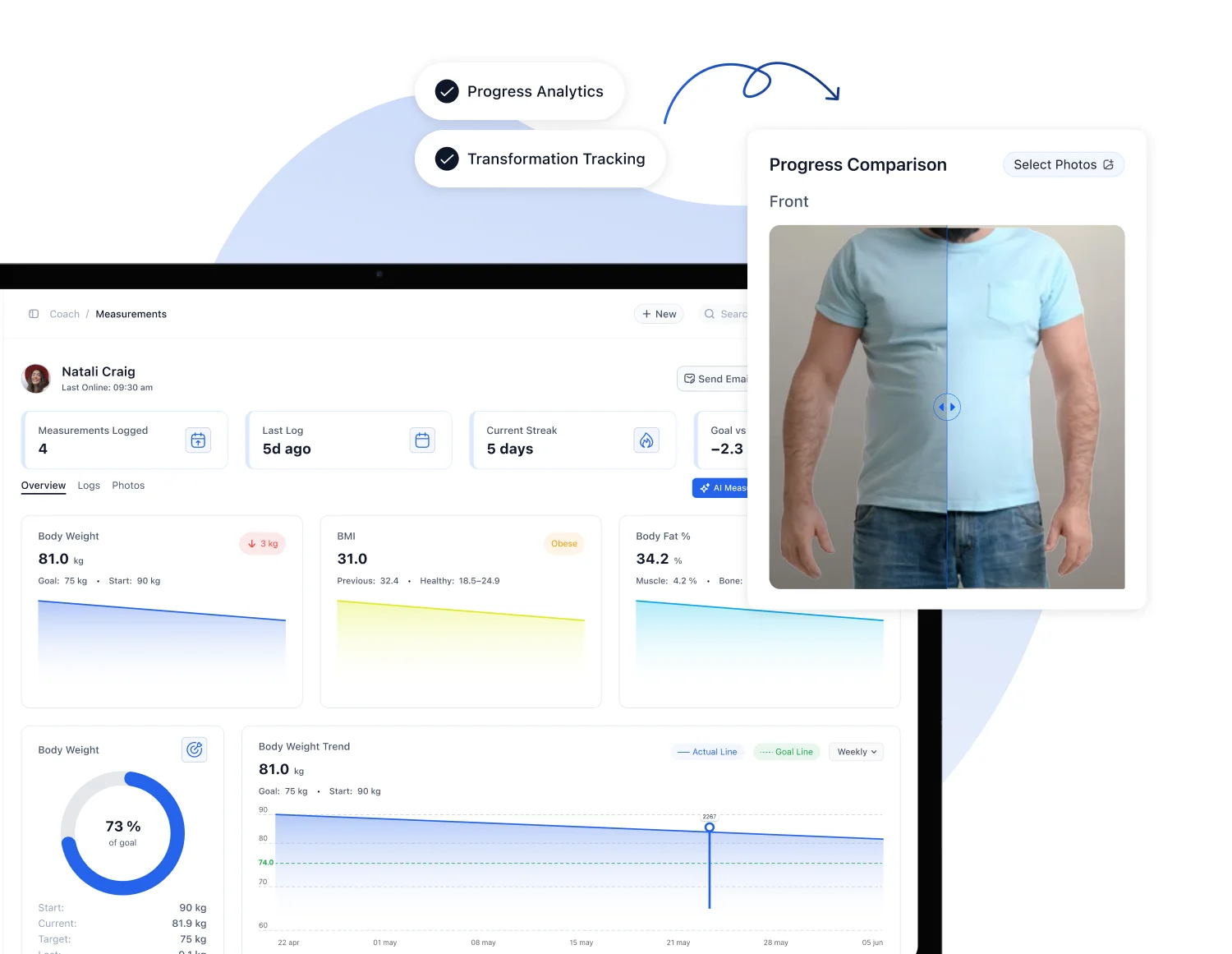
- Progress tracking for weight, measurements and photos
- Check-ins and reminders on a set schedule
- Chat for quick questions between reviews
- Training and nutrition together, so fuel and workload are read side by side
- Bookings and payments in the same system as the coaching data
If the software uses AI to draft content, treat output as a draft. The coach reviews and edits before a client sees it.
How FITsociety fits
FITsociety is community-driven fitness software for personal trainers, online coaches, studios and gyms. Features are developed with feedback from fitness professionals. Feedback informs the roadmap, though not every request is built.

For macro-focused coaching, the relevant pieces are intake forms and check-ups, training and nutrition plans, progress tracking, communication, bookings, memberships and payments. Coaches work in a dashboard. Clients use a portal and mobile apps. CoachAI can draft training plans, forms and recipes for the coach to review.
Published plans, as listed on fitsociety.io:
| Plan | Price |
|---|---|
| Coach | €179 per month |
| Team | €289 per month |
| Club | €489 per month |
Check the site for current plan contents before choosing a tier.
Client onboarding template for macro coaching
Copy and adapt.
1. Intake
- Goal and timeline
- Training schedule
- Three-day food diary
- Health history and medications
- Past experience with tracking
- Comfort level with numbers (1 to 5)
2. Method choice
- Calories only / calories and protein / full macros / no tracking
- Reason for the choice
- Planned review of the method: week 4
3. Starting targets
- Calories: range
- Protein: range
- Fat: range
- Carbohydrate: range
- Rest-day and training-day variation: yes or no
4. Rules of engagement
- Log before eating when possible
- Mark estimated days
- Flexible-day plan agreed
- Check-in day and time
5. Wellbeing flags
- Signs that pause tracking
- Referral contacts: registered dietitian, physician
FAQ
Do all clients need to track macros?
No. Macro tracking is a tool that suits detail-oriented clients with specific goals. Simpler methods such as hand portions, plate composition or food-quality habits work well for many others. The coach chooses the method per client.
How accurate does macro tracking need to be?
Accurate enough to show trends. Weighing staple foods, logging oils and sauces, and marking estimated days gives usable data. Chasing exact numbers at restaurants or on holidays adds stress without improving results.
What is the 30/30/40 rule for macros?
It is a split of 30% protein, 30% fat and 40% carbohydrate. It is a convenient starting ratio, not a standard. Coaches should check any split against body weight, training demands and the client’s preferences.
When should a coach stop tracking and refer out?
When the client shows rigidity, anxiety or signs of disordered eating, or when the case involves a medical condition. Pause tracking and refer to a registered dietitian or physician. Individualized meal plans for medical needs are outside coaching scope.
What should coaching software do for macro tracking?
It should hold intake forms, nutrition targets, client logs, progress data, check-ins and messages in one place. It should also connect to bookings and payments so the coach manages the whole client relationship from one dashboard.
Sources
- NASM: how to count macros
- ACSM: nutrition and athletic performance position statement
- FITsociety: software for coaches, studios and gyms