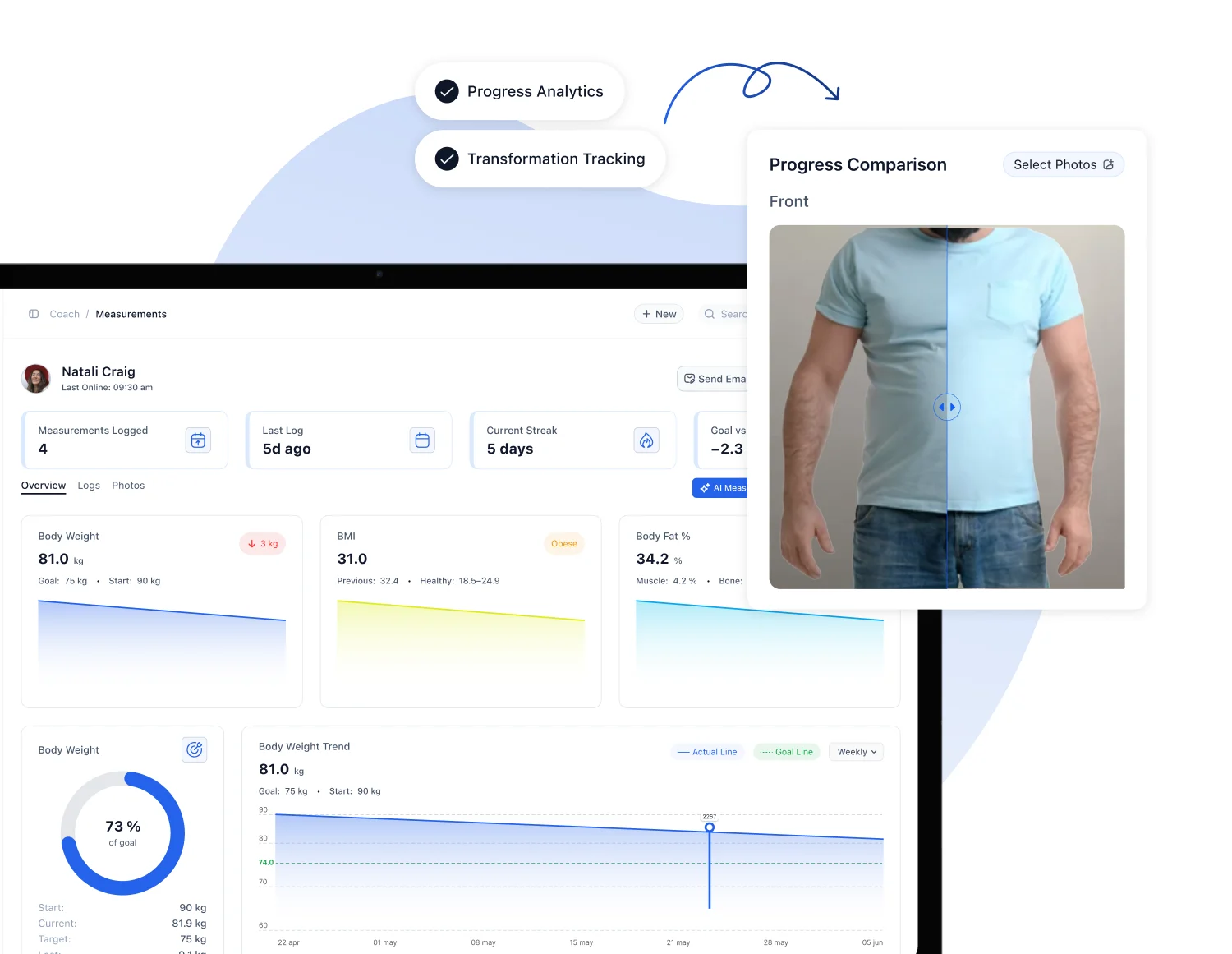
GDPR typically applies to a fitness app the moment it serves or monitors people located in the EU, regardless of where the company is based. Most fitness metrics, including heart rate, sleep, and step counts, qualify as data concerning health under Article 9, which raises the bar beyond a standard lawful basis. Immediate priorities: map data flows, fix consent screens, check DPIA triggers, and confirm breach response is ready.
TL;DR:
- Most fitness apps targeting EU users must map all data flows and document processing activities to meet GDPR requirements, especially for health-related metrics.
- Processing biometric or sleep data requires explicit consent and pairing of Article 6 lawful bases with Article 9 health data restrictions, including re-asking consent for scope expansions.
- Technical controls such as local storage, encryption, pseudonymization, and granular access are essential for privacy by design and comply with GDPR security standards.
- Apps should conduct DPIAs for continuous monitoring and large-scale health data processing and appoint a DPO if systematic, high-volume data handling is involved.
- Maintaining a detailed record of processing activities, consent, subject-rights workflows, and secure deletion processes is crucial for ongoing GDPR compliance in fitness applications.
TL;DR: technical and legal checklist your team can act on this week
GDPR compliance for a fitness app is not a single project. It is a sequence of concrete, testable tasks.
Priority order for the first sprint cycle:
- Map every data flow that touches an EU user, and flag which fields count as health data.
- Create or update Records of Processing Activities (RoPA) under Article 30.
- Rebuild consent screens so health-data consent is separate from general terms acceptance.
- Decouple OS-level permissions (camera, HealthKit, Bluetooth) from GDPR consent logic; they are not the same thing.
- Run a DPIA screening question set for any large-scale or continuous sensor monitoring.
- Decide whether a DPO is required, or whether a privacy lead can cover the role for now.
- Draft and rehearse a 72-hour breach notification workflow before you need it.
What each item unlocks:
- Data mapping exposes hidden processors, like analytics SDKs, that most teams forget until an audit.
- RoPA documentation becomes the reference an authority or a DPO will ask for first.
- Granular consent reduces the risk of the entire lawful basis for a feature collapsing later.
- DPIA screening tells you early whether a feature launch needs legal review before code review.
None of these are one-time fixes. Each ties to a recurring engineering or product habit, covered in the sections below.
How GDPR applies to fitness apps: territorial scope and core principles
Article 3 of the GDPR sets territorial scope on two tests, not one. A company established in the EU is in scope automatically. A company established outside the EU is in scope when it offers goods or services to people in the EU, or when it monitors their behavior, including through wearables and fitness sensors.
A US-based fitness app with no EU office is still in scope if it lets EU residents create accounts, log workouts, or sync a wearable, and it markets or prices in a way that targets EU users. Monitoring behavior through step counts, GPS routes, or sleep tracking counts as monitoring under Article 3, even without a subscription price in euros.
Core GDPR principles translate directly into engineering and operational habits:
- Lawfulness, fairness, and transparency mean every data flow needs a documented legal basis and a plain-language explanation in the privacy notice.
- Purpose limitation means a step counter built for progress tracking cannot quietly feed an ad-targeting model without a new basis.
- Data minimization means collecting GPS at meter-level precision when postal-code precision would do is a design flaw, not just a policy risk.
- Storage limitation means every table holding health metrics needs a retention rule, not an indefinite default.
- Integrity and confidentiality mean encryption and access control are baseline, not optional hardening.
- Accountability means you can prove all of the above, on request, with documentation.
That last principle is why Article 30 Records of Processing Activities exist. A RoPA is a structured inventory: what personal data you process, why, who has access, how long you keep it, and where it goes. For a fitness app, this typically spans account data, workout and biometric logs, payment records, and any data shared with analytics or coaching integrations. Building the RoPA early makes every later obligation, from DPIA to breach response, faster to complete because the groundwork already exists.
Why fitness and wearable metrics are often ‘health’ data and the legal effect
Heart rate, sleep stages, VO2 max estimates, menstrual cycle tracking, and even step counts are commonly treated as data concerning health under Article 4(15) of the GDPR, because they reveal information about a person’s physical or mental health status. This classification is not limited to clinical data. A resting heart rate trend or a sleep score can indicate a health condition just as clearly as a diagnosis field would.
That classification changes what a fitness app is legally allowed to do. Article 9 prohibits processing special-category data, which includes health data, unless one of the conditions in Article 9(2) applies. For consumer fitness apps, explicit consent is the condition used most often, because the other Article 9(2) grounds (employment law obligations, vital interests, substantial public interest) rarely fit a workout tracker or coaching platform.
This means a fitness app processing biometric or activity data needs two things stacked together: an Article 6 lawful basis for the processing generally, and an Article 9(2) condition, typically explicit consent, for the special-category elements specifically. A basis like “legitimate interest” under Article 6 does not, on its own, authorize processing health data. It has to be paired with an Article 9 condition.
Borderline cases deserve attention rather than assumption:
- Derived inferences count too. A model that infers “likely overtraining” or “possible sleep disorder” from raw sensor data is processing health data, even if the raw inputs looked neutral.
- Aggregated or anonymized signals, if truly stripped of the ability to re-identify a person, fall outside GDPR entirely. Pseudonymized data, where a key could reverse the process, stays in scope.
- Basic activity counts, like a daily step total with no health framing, sit in a gray zone that regulators tend to resolve in favor of treating it as health data given the population using fitness apps and the wearable ecosystem context around them.
Treat anything sensor-derived as health data by default and require a specific reason to classify it otherwise, not the other way around.
Choosing lawful bases and designing valid consent flows for fitness apps
Because most fitness app data qualifies as health data, the practical question for product teams is rarely “what’s our lawful basis” in the abstract. It is “which Article 6 basis pairs with explicit consent under Article 9, and how do we build a consent flow that actually holds up.”
Consent under GDPR has to be freely given, specific, informed, and easy to withdraw. A single checkbox covering “terms, privacy policy, and health data processing” fails on specificity: it bundles distinct purposes into one yes/no choice, which is the opposite of what regulators expect from valid consent for special-category data, as research on consent management in fitness apps has examined directly.
A defensible consent flow separates:
- Account creation and basic service delivery (often a contractual necessity basis under Article 6).
- Health and biometric data processing for coaching or progress tracking (Article 9 explicit consent, asked separately and clearly labeled).
- Optional extras like sharing anonymized data for research, or connecting a third-party analytics SDK, each with its own toggle.
- Marketing communications, kept entirely separate from any of the above.
Pro Tip: Ask for health-data consent using a screen that names the specific data types (heart rate, sleep, weight) rather than a general “health data” label. Specificity is what regulators check first.
Every consent event needs a record: who gave it, what version of the consent text they saw, what scope it covered, and when. Store a timestamp for withdrawal too. Regulators and DPOs will ask to see this history, and “we assume users agreed” is not an answer that survives a review. Version your consent language whenever wording changes, and treat any new data type or feature as a trigger to ask again rather than relying on old consent, since expanding collection scope resets the transparency obligation.
Practical privacy-by-design and privacy engineering controls for apps
Article 25 of the GDPR requires privacy by design and by default, which means privacy decisions belong in architecture reviews, not just in the privacy policy. The EDPS mHealth guidance frames this as a set of concrete engineering choices, not a legal abstraction.
Default settings should collect the minimum needed for the feature a user actually enabled. A workout logging feature does not need continuous background location by default. Nonessential features, like social sharing of workout stats or leaderboard visibility, should ship opt-in, not opt-out.
Technical controls worth building early:
- Local-only storage options for users who want to log workouts without syncing sensitive metrics to a server, an approach the EDPS mHealth guidance recommends explicitly.
- Pseudonymization of biometric identifiers in analytics pipelines, so a data scientist working on churn models never sees a raw user ID next to a heart rate log.
- Encryption in transit and at rest for anything classified as health data, with key management separated from the application layer that reads the data.
- Field-level access control so a support agent can see a subscription status without seeing a client’s sleep history.
Pro Tip: Run a lightweight privacy threat model at the start of any feature that touches sensor data, the same way you’d run a security threat model. Ask what happens if this data leaks, who could misuse it, and whether the feature needs the full data granularity it’s requesting.
Privacy engineering resources like the European Union Agency for Cybersecurity (ENISA) guidance on privacy-enhancing technologies give concrete patterns: differential privacy for aggregate reporting, secure enclaves for on-device inference, and data masking for support tooling. None of this replaces legal review, but it turns “privacy by design” from a compliance slogan into a checklist a developer can act on during sprint planning rather than after a launch.
When to run a DPIA and when a DPO is required for fitness apps
A Data Protection Impact Assessment is not optional once your processing meets certain criteria. The EDPB and member-state authority lists identify processing types that typically require a DPIA, and fitness apps frequently hit more than one:
- Large-scale processing of health data, which most fitness apps with an active EU user base reach quickly.
- Systematic monitoring through IoT sensors, which covers continuous wearable tracking almost by definition.
- Use of new technologies, like novel biometric inference models, applied at scale.
If your app processes wearable data continuously for a meaningful EU user base, assume a DPIA is required rather than waiting for a definitive trigger to appear.
A DPIA does not need to be a heavyweight legal document. It needs to answer four questions in writing: what data you process and why, whether the processing is necessary and proportionate to that purpose, what risks it creates for users, and what measures reduce those risks. Document the sensor types involved, the consent mechanism, retention periods, and any third parties (SDKs, cloud processors) with access. Update it whenever a feature changes the data footprint meaningfully, such as adding a new sensor integration or a profiling feature.
A Data Protection Officer becomes obligatory under Article 37 when core activities involve large-scale, regular, and systematic monitoring, or large-scale processing of special-category data, both of which describe a mainstream fitness app with real usage. A DPO’s job includes auditing the RoPA, reviewing DPIAs before launch, advising on consent design, and acting as the contact point for supervisory authorities. Smaller teams sometimes assign this to an existing privacy lead or outside consultant rather than a full-time hire, but the function needs to exist and be documented, not just implied.
Implementing subject rights: access, portability, rectification, erasure, objection
Data subject rights are not a policy statement. They are workflows that need to work under a deadline, typically one month from a verified request under GDPR.
Access and portability require an export that a user can actually reuse elsewhere. A structured JSON or CSV export covering workout history, biometric logs, and account data satisfies portability better than a PDF summary, because portability under GDPR means machine-readable format, not just readable format. Build an API endpoint that assembles this export on demand rather than a manual process someone runs from a database console, which does not scale and introduces human error into a compliance-critical task.
Rectification needs a user-facing edit path for anything they can correct themselves (name, email, logged weight) and an internal process for corrections that require staff verification.
Erasure is the most operationally complex right, because deletion has to reconcile with backups, logs, and any legal retention obligation, like financial records tied to a subscription payment.
A defensible workflow follows this order:
- Verify the requester’s identity before processing any subject right, using the same authentication the app already relies on for login.
- Throttle and log every subject-rights request, including who handled it and when it closed, to build an audit trail for a DPO or supervisory review.
- Apply a soft-delete flag immediately, then schedule a hard purge that also reaches backups on their normal rotation cycle rather than requiring an immediate backup wipe.
- Notify any processor holding a copy of that user’s data (an analytics vendor, for instance) that erasure has been requested, since your obligation extends to data you have shared.
Document response times. If your team consistently takes three weeks to close an access request, that is useful information before a regulator asks, not after.
Security baseline and breach response: meeting the 72-hour notification duty
Health data justifies a stronger security baseline than a typical consumer app, both because of Article 32’s requirement for appropriate technical measures and because the consequences of a leak are more personal than a leaked email address.
Baseline controls worth treating as non-negotiable for any app processing biometric or health data:
- TLS for all data in transit, with certificate pinning on mobile clients where feasible.
- Encryption at rest for biometric and health tables, with key management isolated from general application secrets.
- Multifactor authentication for any staff account with access to raw user health data, not just admin accounts.
- Network segmentation so a breach in a marketing or support tool cannot reach the database holding biometric logs.
- Regular penetration testing focused specifically on the API endpoints that serve health data, not just the login flow.
Fitness apps carry a few risk vectors that generic web apps do not:
- Third-party SDK telemetry that phones home more data than the feature needs, often without the product team fully auditing what leaves the device.
- Device sync processes (wearable to phone to cloud) that create multiple copies of the same sensitive data across systems with inconsistent retention.
- Insecure local caches, where a workout history sits unencrypted on a device because “it’s just local storage.”
Pro Tip: Audit every SDK in your mobile app for what it actually transmits, not what its documentation claims. A network traffic capture during a normal workout session will show you the real picture.
When a breach happens, Article 33 of the GDPR requires notifying the relevant supervisory authority without undue delay, and within 72 hours of becoming aware where feasible. The notification needs to describe the nature of the breach, the categories and approximate number of people and records affected, the likely consequences, and the measures taken or proposed. If the breach creates a high risk to individuals, affected users need to be told directly, in plain language, not buried in a policy update.
Rehearse this before you need it. A response plan that exists only as a document nobody has read under pressure is not a response plan. Assign who declares an incident, who drafts the regulator notification, and who owns user communication, before the clock starts.
Practical steps for lawful international transfers of EU user data
Fitness apps routinely run infrastructure outside the EU: cloud hosting, analytics processors, customer support tools. Any transfer of EU user data outside the EEA needs a lawful mechanism under GDPR Chapter V.
The main mechanisms are an adequacy decision, meaning the destination country is deemed to offer equivalent protection, Standard Contractual Clauses (SCCs) between the exporting and importing parties, or, in narrow cases, a specific derogation, such as explicit user consent for a one-off transfer that isn’t systematic.
Operational tasks that make this real rather than theoretical:
- Map every processor and sub-processor that touches EU user data, including where each one physically hosts it.
- Document which transfer mechanism applies to each one, and keep the signed SCCs or adequacy reference on file.
- Restrict data access by location where feasible, so a support team member in one region cannot pull records processed under a different mechanism without a documented reason.
EU-US data transfer frameworks have changed more than once in recent years, and whatever framework is current at the time you read this needs its own verification against official EU and US government sources before you rely on it for a specific vendor relationship. Treat any transfer mechanism as something to reconfirm at renewal time, not something you set once and forget.
Managing analytics, telemetry and third-party SDK risk
Third-party SDKs, especially analytics and crash-reporting tools, are a common source of accidental over-collection. A crash reporter that captures a full device log may inadvertently sweep up biometric values displayed on screen at the moment of the crash. An analytics SDK set to “verbose” mode in development sometimes ships that way to production.
This matters more for a fitness app than for most categories, because the data sitting in memory or on screen during normal use is frequently health data by the classification covered earlier. Research and applied guidance on consent management in fitness apps consistently flags third-party integrations as a weak point separate from the app’s own first-party design.
Mitigations that are practical to implement, not just theoretical:
- Proxy telemetry through your own backend rather than letting an SDK talk directly to a third-party server, so you control exactly what leaves your environment.
- Aggregate or sample data server-side before it reaches an analytics vendor, instead of sending raw per-event health data.
- Maintain an allowlist of fields each SDK is permitted to receive, enforced in code review, not just in a policy document.
- Sign a Data Processing Agreement (DPA) with every processor that touches personal data, and confirm what sub-processors they use.
Include every third-party SDK explicitly in your DPIA scope, and test data flows in a staging environment with traffic capture before shipping a new integration, not after a user or a regulator notices something unexpected leaving the app.
Retention schedules, backups, and secure deletion for fitness apps
Storage limitation means every dataset needs an expiration plan tied to why you collected it, not an indefinite default because deleting data felt risky to build.
Define retention per purpose, not per table. Account data might need to persist as long as the subscription is active. Workout logs might have a different retention window than payment records, which often carry their own separate legal retention requirement. Document each of these windows in the RoPA so the retention policy and the compliance record are the same document, not two versions that can drift apart.
Implementation typically follows a soft-delete pattern: flag a record as deleted immediately so it disappears from the app and any active processing, then run a scheduled hard purge that removes it permanently, including from backups on their normal rotation. Backups complicate this because most systems cannot selectively edit a backup snapshot without expensive engineering, so the practical answer is usually a defined backup retention window (backups older than that window are rotated out entirely, taking the deleted record with them) rather than surgical removal from every historical backup.
Keep a deletion audit log separate from the data itself: which record was deleted, when the soft-delete flag was set, when the hard purge ran, and which backup generation it cleared from. This log is what a DPO or supervisory authority will ask to see if a user later disputes whether their erasure request was honored.
Concrete developer patterns: consent ledger, scoped tokens, export APIs, deletion flows
Turning the obligations above into working code comes down to four recurring patterns.
Consent ledger. Store consent as an append-only log, not a single boolean field that gets overwritten. Each entry should include the pseudonymized or hashed user identifier, the exact consent text and its version, the specific scope (which data types and purposes it covers), the timestamp it was given, and a nullable withdrawal timestamp. This structure is close to what research on fitness-app consent management recommends for audit-ready consent design.
Scoped API tokens. Health-data endpoints should require a token scope distinct from general account access, so a third-party integration granted access to workout summaries cannot pull biometric detail it was never authorized for. Least-privilege access at the API layer is what turns a data breach in one integration into a contained incident instead of a full account compromise.
Export API shape. A minimal, reusable structure:
- Account metadata: user ID, email, account creation date.
- Health and activity records: dated entries with the metric type, value, and unit.
- Consent history: pulled straight from the consent ledger.
- Processing purposes: a plain-language list matching the RoPA entries relevant to that user.
Deletion sequence. The order matters for consistency:
- Soft-delete flag set on the primary record, immediately removing it from active views and processing.
- Dependent records (health logs, session history) flagged in the same transaction to avoid orphaned data.
- Scheduled hard purge job removes the flagged records permanently after the defined grace period.
- Backup rotation clears the record from historical snapshots once they age out of the retention window.
These four patterns cover most of what a backend and mobile team need to build once, then reuse across every new feature that touches personal data.
How FITsociety features and responsible SaaS use tie into GDPR obligations
Coaches, studios, and gyms that run their business on a SaaS platform share compliance responsibility with that provider, but the coach or studio remains the controller for their own clients’ data in most setups. That makes provider configuration and contracts part of the compliance picture, not a separate concern.
FITsociety is community-driven fitness software for personal trainers, online coaches, studios, and gyms, developed with input from the fitness professionals who use it. It brings together client management, intake forms and check-ups, training and nutrition plans, scheduling for group classes, small-group sessions, and one-to-one appointments, including online PT, communication, memberships, and payments in one dashboard, with a client portal and mobile apps on the other side.
Teams evaluating or already using platforms like this should check a few specific things rather than assuming compliance by default:
- Roles and permissions. A studio with several coaches should confirm that access to client health data (intake forms, progress logs) is scoped by role, so front-desk staff and coaching staff do not see the same fields by default.
- Calendar integrations. Where a platform connects to Google Calendar or Microsoft Outlook/Microsoft 365, confirm what event data syncs across, since appointment details can indirectly reveal health information (a “physio consult” label, for instance).
- API and automation access. Where a public API or MCP support connects to other tools in a coaching workflow, confirm which endpoints expose client health data and restrict API keys accordingly.
Regardless of provider, ask for a signed Data Processing Agreement and documentation of security measures before relying on any SaaS tool to handle client health data, and confirm current feature availability, plan limits, and integration behavior directly on the provider’s own pages rather than assuming from a feature list. FITsociety’s feature pages and platform documentation are the reference point for exactly what is configurable at each plan level.
Handling data of minors using fitness apps under GDPR provisions
Minors using a fitness app introduce a stricter consent standard. Under GDPR Article 8, where consent is the legal basis for an information society service offered directly to a child, parental consent is required below the age threshold set by each EU member state, which falls between 13 and 16 depending on the country.
For a fitness app, this matters most for youth sports platforms, school fitness programs, or family account structures where a parent manages a child’s profile. Practical implementation means age-gating account creation, routing anyone below the relevant threshold to a parental consent flow before any health data is collected, and verifying that consent through a mechanism stronger than a simple checkbox, since regulators expect proportionate verification effort.
Health data collected from a minor carries the same Article 9 special-category protections as an adult’s data, plus the added Article 8 consent layer. That means a parent’s explicit consent needs to cover the health-data processing specifically, not just general account terms, following the same granularity principle covered earlier in this article.
Because the age threshold varies by member state, an app serving users across the EU needs to apply the highest applicable threshold as a practical default unless it can reliably determine the user’s specific country and apply that country’s rule. Guessing wrong in either direction creates real risk: too lenient a threshold risks processing a minor’s health data without valid consent, while an overly strict one creates friction for users who did not need it.
Guidance on record-keeping obligations for GDPR compliance in fitness apps
Article 30 of the GDPR requires most organizations processing personal data to maintain a Record of Processing Activities. For a fitness app, this is the document that ties every other compliance obligation together, because a DPIA, a consent audit, and a breach notification all reference the same underlying inventory.
A workable RoPA for a fitness app typically lists, for each processing activity: the purpose (progress tracking, billing, coaching communication), the categories of data involved (account details, health metrics, payment data), the categories of people affected (clients, coaches, staff), who receives the data (internal teams, processors like analytics or payment vendors), retention period, and the security measures in place.
Keep the RoPA as a living document, updated whenever a new feature, integration, or vendor changes what data flows where, rather than a static file created once for a launch and never revisited. A quarterly review cadence, tied to product roadmap planning, keeps it realistic rather than aspirational.
Beyond Article 30, keep supporting records that a supervisory authority or a client’s own compliance team might request: DPIA documentation for any high-risk processing, the consent ledger described earlier, DPAs signed with every processor, and a log of subject-rights requests and how each was resolved. None of these records need to be elaborate, but each needs to exist and be retrievable on short notice.
Examples of common GDPR compliance pitfalls and enforcement actions related to fitness apps
The most frequent gap in fitness apps is treating consent as a single bundled checkbox rather than a set of specific, revocable choices tied to each purpose, which fails the specificity requirement under GDPR Article 9 for health data.
A second recurring pitfall is relying on a device-level permission, like granting an app access to HealthKit or a Bluetooth sensor, as a substitute for GDPR consent. A user tapping “allow” on an OS permission prompt has not given GDPR-valid consent to process that data for a specific purpose, since controller obligations persist regardless of where processing happens, and the two consent layers need to be handled separately in both UX and code.
A third pattern is scope creep: a feature launches with a narrow consent request, then later expands to cover a new use, like sharing anonymized data with a research partner or feeding a new AI feature, without re-asking users. Any meaningful change to what data is collected or why should trigger a fresh, specific consent request rather than relying on old consent covering a use case that did not exist when it was given.
A fourth, more technical pitfall is treating third-party SDKs as a black box. Teams frequently discover, only after an audit or a user complaint, that an analytics or crash-reporting SDK was transmitting more data than the feature required, sometimes including values that qualify as health data under Article 9.
None of these pitfalls require sophisticated attacks to become real problems. They surface through routine audits, user complaints, or a supervisory authority’s own investigation, which is exactly why the checklist and engineering patterns earlier in this article focus on prevention rather than remediation after the fact.
User profiling and automated decision-making under GDPR and its implications for fitness apps
Many fitness apps build features that infer something about a user from their data: a “recovery score,” a “risk of overtraining” flag, or a personalized plan generated by an algorithm. This qualifies as profiling under GDPR, meaning automated processing used to evaluate or predict aspects of a person, in this case aspects of their physical health or performance.
Profiling itself is not banned, but GDPR Article 22 gives users specific rights where a decision is based solely on automated processing and produces a legal or similarly significant effect on them. A fully automated decision to lock a user out of a coaching program based on an algorithmic score, with no human review available, would likely fall under this stricter regime. A recommendation that a human coach reviews and can override typically does not, because a person remains meaningfully in the loop.
Practically, this pushes toward a few design choices: keep a human able to review or override any automated recommendation that materially affects a user’s access to a service or a coaching relationship, and be transparent in the privacy notice about what data feeds any scoring or recommendation feature and how it is used. Since the underlying data feeding these models is almost always health data under Article 9, the profiling feature needs the same explicit consent covered earlier, applied specifically to the profiling purpose, not inherited from a general health-data consent that never mentioned automated scoring.
Document any profiling logic in the DPIA for that feature, since automated evaluation of health-related characteristics is exactly the kind of processing the EDPB DPIA criteria are built to catch.
Consent requirements and consent UI specifics (freely given, specific, informed, withdrawable)
Valid consent under GDPR rests on four attributes, and each one has a direct UI consequence for a fitness app.

Freely given means consent cannot be a condition of using a feature that does not actually need that data. Requiring health-data consent to create a basic account, when the core app function does not require it, fails this test.
Specific means one consent request per distinct purpose, not one broad request covering everything. A screen asking “allow us to process your health data” without naming what for and for which data types does not meet this bar, a point covered by the consent ledger design earlier in this article.
Informed means the consent screen itself, not a buried privacy policy link, has to state clearly what data is collected and why, in plain language a non-lawyer can read in the time it takes to glance at a phone screen.
Withdrawable means a user needs a control at least as easy to find as the original consent screen to revoke it, and withdrawal has to actually stop the processing it covered, not just hide a setting while the feature keeps running in the background.
A practical consent screen for a fitness app’s onboarding flow separates account terms from health-data consent, names the specific metrics involved (heart rate, sleep, weight, menstrual cycle data if applicable), links a settings screen where any of these can be withdrawn individually, and avoids pre-checked boxes, since pre-ticked consent does not count as freely given under GDPR. Every version of this consent language needs its own record in the consent ledger, so a later dispute about what a user actually agreed to has a clear, timestamped answer.
This article is general information, not a substitute for advice from a qualified doctor. Consult a qualified healthcare professional about your own circumstances before acting on anything here.
Sources
- Regulation (EU) 2016/679 (GDPR) - EUR-Lex
- Mobile health and data protection — European Data Protection Supervisor (EDPS)
- EDPB / DPA lists of processing operations requiring a DPIA
- Privacy of Fitness Applications and Consent Management — ACM
FAQ
What are the privacy concerns with fitness trackers?
Fitness trackers collect continuous biometric data, like heart rate and sleep patterns, that regulators generally treat as health data requiring Article 9 protection under GDPR. The main concerns are over-collection by third-party SDKs, weak consent design, and data staying identifiable longer than the stated purpose requires.
Is GDPR required in the USA?
GDPR is an EU regulation, so it does not apply purely to domestic US processing with no EU connection. A US-based fitness app still falls under GDPR’s territorial scope if it offers services to or monitors the behavior of people located in the EU, regardless of where the company itself is based.
What are the 7 GDPR requirements?
GDPR’s core principles, drawn from Article 5, are lawfulness and fairness, purpose limitation, data minimization, accuracy, storage limitation, integrity and confidentiality, and accountability. Each principle translates into a specific engineering or process obligation, covered earlier in the regulation’s text, such as documented retention rules and encryption for special-category data.
Does GDPR cover physical data?
GDPR covers personal data regardless of format, so paper intake forms, signed consent sheets, and printed measurement logs fall under the same rules as digital records. A fitness business keeping paper client files still needs a lawful basis, retention limits, and secure storage for that physical data.
Do coaches using a booking platform still need their own GDPR compliance?
Yes. A coach or studio using scheduling and client-management software, including features like group and one-to-one booking, remains the controller for their own clients’ data and needs its own lawful basis, consent records, and retention policy, separate from whatever the software provider secures at the platform level.