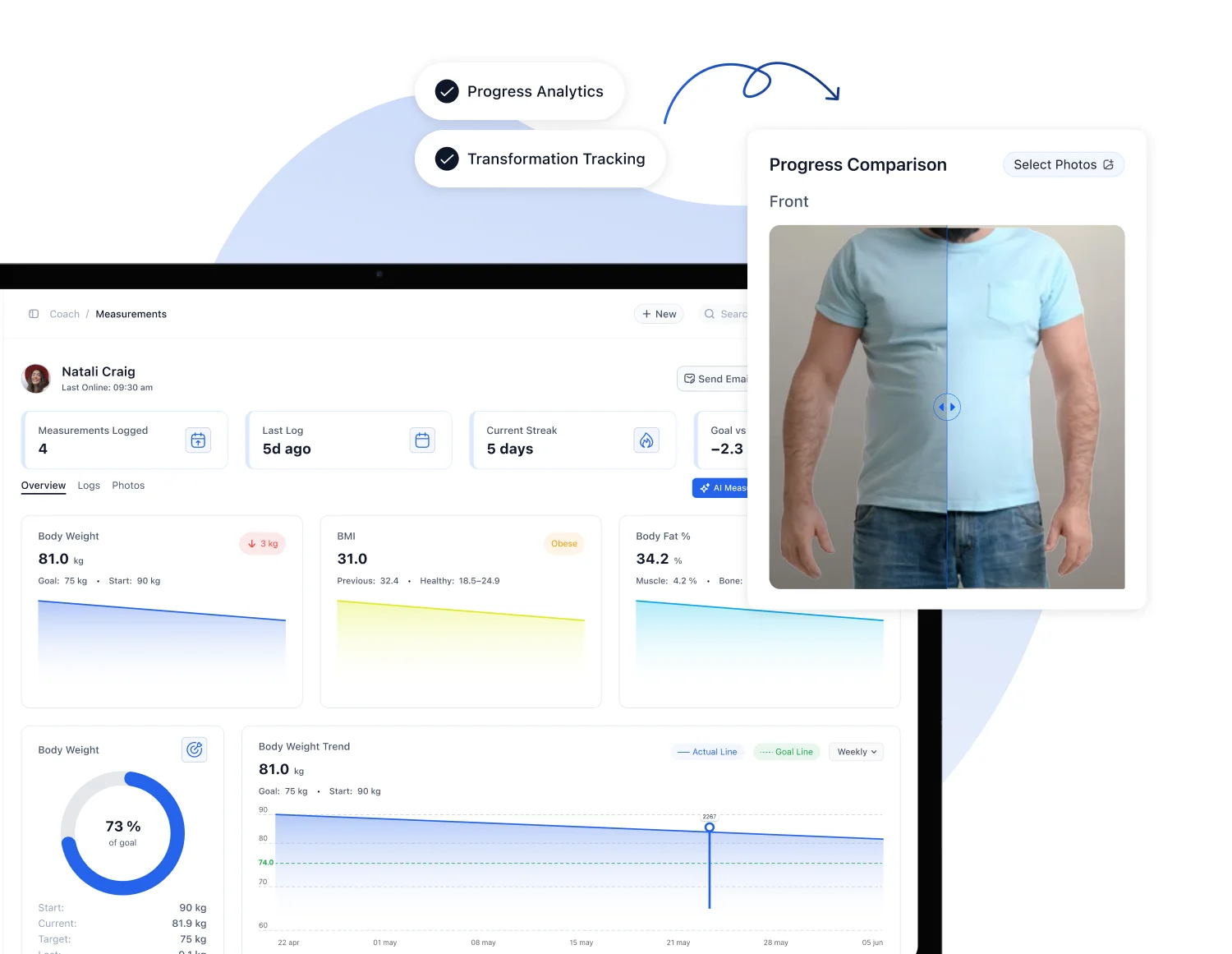
Collecting client health data securely comes down to five habits: ask only for what the service needs, explain why at the point of collection, record the client’s permission, keep the data in one access-controlled system, and have a breach plan written before you need it. FITsociety is community-driven fitness software that keeps intake forms, check-ups, plans, bookings and payments in one environment, so the data has one place to live and one set of access rules to manage.
This guide is for personal trainers, online coaches, studio owners and gym operators in the US and beyond. It covers the routine, with a checklist and a consent template you can adapt.
TL;DR
- Collect the minimum. Ask what is needed to program safely, not full medical histories.
- Explain purpose next to the question. Record consent separately for optional uses such as session recordings or testimonials.
- Keep client data in one system with named access per staff member. Avoid texts, personal email and spreadsheets on shared drives.
- Write a breach plan in advance. Most breaches are mundane: a misdirected email or a lost phone.
- HIPAA often does not apply to independent coaches, but other rules can, including the FTC’s health breach rule and state laws such as Washington’s.
What counts as health data in coaching
Coaching generates more health data than most trainers realize. Examples:
- Injuries, surgeries, pain, medications, conditions
- Pregnancy or postpartum status
- Blood pressure, resting heart rate, body measurements, weight
- Progress photos
- Nutrition logs, allergies, eating-disorder history
- Free-text notes such as “cannot train this week due to illness”
Treat all of it as sensitive. Even short notes can reveal a condition. That framing sets the standard for everything below.
Collect less: the minimum-data rule
The safest data is data you never collected. Before adding a field to an intake form, ask one question: does this change how I program or coach?
| Collect | Usually avoid |
|---|---|
| Current injuries and movement limits | Full medical records |
| Conditions that affect exercise safety (for example, high blood pressure) | Diagnoses unrelated to training |
| Medications only where they change training guidance | Complete medication lists “just in case” |
| Goals, schedule, equipment access | Insurance and government ID numbers |
| Emergency contact | Anything you cannot explain a use for |
When a client’s situation needs more information than you should hold, say what the limit of your service is and ask them to get clearance from their physician first. That is both safer for the client and a smaller data footprint for you. Ask for a medical clearance letter only where the client’s condition calls for it, and store the letter’s outcome (cleared, cleared with limits) rather than the full document where you can.
The same logic applies to progress photos, body measurements and nutrition logs. Collect them when the program uses them, and say how long you keep them.
Explain the purpose where you ask
A privacy policy on your website is not enough. Guidance for online coaches says people filling out an intake form or health questionnaire should be told why the information is collected and what will happen to it, with the explanation placed near the collection point. That guide is Australian, but the practice holds anywhere.
Put a short note above the health section of your form. It should answer:
- What are you asking for?
- Why do you need it?
- Who sees it (you, your staff, your software provider)?
- How long do you keep it?
- Is anything recorded, or are AI tools used to draft notes or plans?
Sports-science guidance from Australia adds that consent should cover who has access to the data, including coaches, administrators and technology providers, and the risks, including secondary uses such as sharing with third parties.
Get informed permission and keep a record
Consent is a conversation and a record, not a checkbox alone.
What good consent looks like
A European coaching-federation guide states that consent must be freely given, specific, informed and unambiguous. It rules out pre-ticked boxes and consent by default, asks coaches to keep a record of who consented, when, how, and the exact wording, and says withdrawing must be as easy as giving consent. These are GDPR rules for the EU, but they are a sound working standard for any coach with international clients.

Separate the core agreement from optional permissions
A coaching-ethics body recommends a written coaching agreement for the core terms, with separate permission choices for optional activities such as recording sessions or publishing testimonials. Use the same split in your onboarding:
- Core: intake data, program design, check-ins, billing
- Optional, each its own tick: progress photos for your records, session recordings, testimonials, marketing emails, sharing data with another professional
The same source suggests the teach-back method: ask the client to say in their own words what will be shared and how they would end the program. It takes two minutes and catches misunderstandings early.
Be direct about technology risk
An exercise-professionals body in Australia notes that consent should cover the digital services used, the privacy steps taken and the limitations such as technical failures and data breaches, and that it should be reviewed when new digital tools are introduced. If you add AI drafting, a new wearable integration or recorded video calls, update the consent and tell clients.
Consent template to adapt
Copy this into your intake flow and edit it to fit your business. It is a starting point, not legal advice.
Health information. We ask about injuries, conditions and measurements so we can build a safe program. We use this information only for coaching you. It is visible to your coach and, where relevant, our coaching team. We keep it while you are a client and for [period] afterward. You can ask us to correct or delete it at any time by contacting [email].
- [ ] I agree to share the health information above for coaching. (required)
- [ ] You may keep progress photos in my file. (optional)
- [ ] You may record video sessions for my review. (optional)
- [ ] You may use my results as an anonymous example. (optional)
In FITsociety, intake forms and check-ups are part of the platform, and CoachAI can help draft forms. Review any drafted form for the minimum-data rule and the purpose note before you send it.
Store and share: one system, named access
Scattered data is the most common weakness. Intake PDFs in email, check-in photos in text threads, notes in a personal cloud drive and payment details in a spreadsheet each need their own protection and each can leak separately.
Standards for exercise professionals from Australia name several baseline controls: encrypt client data stored or sent through digital platforms, use strong passwords with two-factor authentication where possible, and keep encrypted backups. The same guide advises against recording video or phone consultations unless there is a valid reason and explicit, documented consent, and suggests VPNs with strong encryption when you access client records over public networks.
Australia’s privacy regulator states that the Privacy Act requires health service providers, including gyms, to take reasonable steps to protect personal information from misuse, loss and unauthorized access, and to destroy or de-identify it once it is no longer needed. Its list of reasonable steps spans staff training, internal procedures, access security, cloud providers, breach handling, physical security and destruction.
A storage checklist
- [ ] Client health data lives in one coaching system, not in email or chat apps
- [ ] Every coach and staff member has their own login, never a shared one
- [ ] Two-factor authentication is on for every account that can see client data
- [ ] Staff see only the clients they coach; front desk staff see bookings, not health notes
- [ ] Access is removed the day a coach or contractor leaves
- [ ] Devices that open client data have screen locks and can be wiped remotely
- [ ] A retention period is set, and old client files are deleted or de-identified on schedule
- [ ] Exports and screenshots of health data are rare, and deleted after use
Teams and multiple locations
Studios and gyms add a second problem: who inside the business can see what. Define roles before you hire. A head coach, a part-time instructor and a front-desk employee do not need the same view of a client’s file. FITsociety gives coaches a dashboard and clients a portal and mobile apps, with intake, plans, progress, bookings, communication, memberships and payments in one environment. That setup means a client’s check-up, their training plan and their class bookings sit in one record instead of three tools. Confirm permission settings for your plan on the official FITsociety pages when you configure staff accounts.
Bookings and calendars
Bookings carry less sensitive data than intake forms, but a session title like “post-surgery rehab” is health data. Keep calendar entries neutral: client name and session type, with notes in the client record rather than the event description. This matters most when calendars sync outward. FITsociety’s calendar covers group classes, small-group sessions, one-to-one appointments and online PT, and Google Calendar and Microsoft Outlook/Microsoft 365 integrations are available. Before you connect a personal or shared calendar, check what details sync and who can see that calendar.
Connected tools, API and MCP
Every connection is another place client data travels. FITsociety offers a public API and MCP support for connected coaching workflows. If you or a developer connect them, grant only the access the workflow needs, and add the connection to your consent wording if client data flows through it. Check endpoints, permissions and plan access on the official FITsociety pages before building.
Check each tool in your chain
A UK physiotherapy body stresses that the main practical risk in digital practice is the software chain: exercise-programme software and electronic notes. Its guidance says to check that third parties storing patient data do so according to GDPR, use video calls that are encrypted end to end, and make regular secure backups. In the US, apply the same discipline to every tool that touches client data.
For each tool (coaching platform, video call app, wearable sync, payment processor, email), write down:
| Question | Why it matters |
|---|---|
| What client data does it hold? | Defines your exposure |
| Who can access it on your side? | Drives your role setup |
| Where is it stored? | Matters for cross-border clients |
| Is data encrypted in transit and at rest? | Baseline control |
| Can you export and delete a client’s data? | Needed for deletion requests |
| Is it covered in your consent wording? | Keeps consent accurate |
Fewer tools means fewer rows. Consolidating intake, plans, check-ins, messaging and payments in one platform shortens the list.
One caution from the same Australian guide: complete privacy cannot be guaranteed with any third-party technology. Say so to clients plainly, as part of consent.
What US rules can apply
This section is general information for US readers, not legal advice. Rules vary by state and by how you operate. For a specific situation, ask a lawyer who handles privacy law.
HIPAA
HIPAA covers health plans, health care clearinghouses and qualifying health care providers, along with their business associates. Many independent trainers and online coaches are not in those categories, particularly when clients pay directly and no insurer is billed. You might be covered if you work for or alongside a covered provider, or if you handle data on a clinic’s behalf. If you work with a clinic or physical therapy practice, ask them whether you count as a business associate.
If HIPAA does apply, the breach notification rule requires notifying affected people without unreasonable delay and no later than 60 days after discovery of a breach of unsecured protected health information.
FTC Health Breach Notification Rule
The FTC’s 2024 final rule underscores its application to health apps and similar technologies not covered by HIPAA. Whether a coaching business falls under it depends on how it handles data, so read the FTC’s page if you build or run an app that collects health information.
State consumer health data laws
Washington’s My Health My Data Act, signed in April 2023, is described by the state attorney general as the first privacy-focused law in the country to protect personal health data outside HIPAA. It is built around collecting and sharing health data only with consumer consent. If you have clients in Washington, read the attorney general’s page and check whether the Act applies to your business. Other states have their own rules, so check where your clients live.
Clients outside the US
The EU’s GDPR treats health information as special-category data and requires a legal basis plus a specific condition for processing it. Coaches with EU clients should follow the consent standard above. Australian clients bring the Privacy Act into play.
If something goes wrong
A breach is not only a hack. Australia’s regulator describes it as personal information being lost or subject to unauthorized access, modification or disclosure, with examples such as a lost device holding client information, a hacked database, or information sent to the wrong person. Ontario’s privacy commissioner notes that breaches are often mundane, such as a misdirected email or an unhidden recipient list, and that containment, notification and investigation may need to run at the same time, in its privacy handbook for small health care organizations.
That handbook’s sequence, adapted for a coaching business:
- Tell your team and whoever owns privacy in your business, immediately.
- Contain it. Work out the scope, retrieve or secure the information, confirm no copies were kept, change passwords, and suspend access for anyone responsible.
- Notify affected clients at the first reasonable opportunity, and report to the regulator where required.
- Investigate and fix. Review whether your policies and settings were adequate.
Write this plan before an incident. Put names and phone numbers in it. Where a breach involves a lot of data or may trigger legal duties, contact a privacy lawyer quickly.
A 30-minute audit
Run this once a quarter:
- [ ] Open your intake form. Delete any field you did not use last quarter.
- [ ] Check that each health question has a purpose note.
- [ ] Review the staff list and what each person can see.
- [ ] Look for client health data outside your main system: email, texts, drives, notes apps. Move or delete it.
- [ ] Confirm two-factor authentication on every account.
- [ ] Check which calendars and integrations are connected.
- [ ] Delete files past your retention period.
- [ ] Reread your consent wording against any new tool you added.
Where FITsociety fits
FITsociety is software for personal trainers, online coaches, studios and gyms. It brings client administration, intake forms and check-ups, training and nutrition plans, progress tracking, bookings, communication, memberships and payments into one dashboard, with a client portal and mobile apps. The platform is developed with input from fitness professionals, though not every request becomes a feature. Published plans: Coach at €179 per month, Team at €289 per month and Club at €489 per month. See FITsociety for current plan details. For a look at how coaches and members record training inside the platform, see the help article on logging workouts and weights. Software supports your routine; you remain responsible for what you collect, how you explain it and how you decide.
If you use AI features, keep client-identifying detail out of prompts unless your consent covers it. The help article on asking AI about workouts and exercises describes how that works for members.
FAQ
Is health data protected by HIPAA?
Only when HIPAA applies to you: health plans, clearinghouses, qualifying providers and their business associates. Many independent coaches paid directly by clients are outside it. Other laws, including the FTC’s health breach rule and state laws, may still apply, so check your own situation.
What health information should a personal trainer collect?
Collect what you need to program safely: injuries, relevant conditions, limits, goals and an emergency contact. Skip full medical records. If a client’s condition goes beyond your scope, ask them to get clearance from their physician first.
How do I get informed consent for health data?
Explain on the intake form what you ask, why, who sees it, how long you keep it and whether recordings or AI tools are involved. Use unticked boxes, keep optional uses separate, and record who agreed, when and to what wording.
How should coaches store client health data?
Keep it in one access-controlled system with individual logins, two-factor authentication and role-based access. Avoid email attachments, text threads and shared drives. Set a retention period and delete or de-identify data after it.
What should I do if client data is exposed?
Alert your team, contain the exposure, change passwords, suspend access for anyone responsible, notify affected clients and any regulator that requires it, then review what failed. Contact a privacy lawyer if the exposure is large or the legal duties are unclear.
Sources
- Privacy Rules for Online Coaching Platforms, Sprintlaw
- Informed consent, Australian Sports Commission Clearinghouse
- Key GDPR Best Practices for ICF Coaches
- Informed Consent: The Ethical Step Every Coach Must Master, ANHCO
- Digital Practice Standards Support Guide, ESSA
- Guide to Health Privacy, OAIC
- Data ethics and GDPR, Chartered Society of Physiotherapy
- A Privacy Management Handbook for Small Health Care Organizations, Ontario IPC
- What Are Covered Entities Under HIPAA?, HIPAA Journal
- A Legal Guide to Privacy and Data Security 2026, Minnesota DEED
- FTC Finalizes Changes to the Health Breach Notification Rule
- Protecting Washingtonians’ Personal Health Data and Privacy, Washington Attorney General