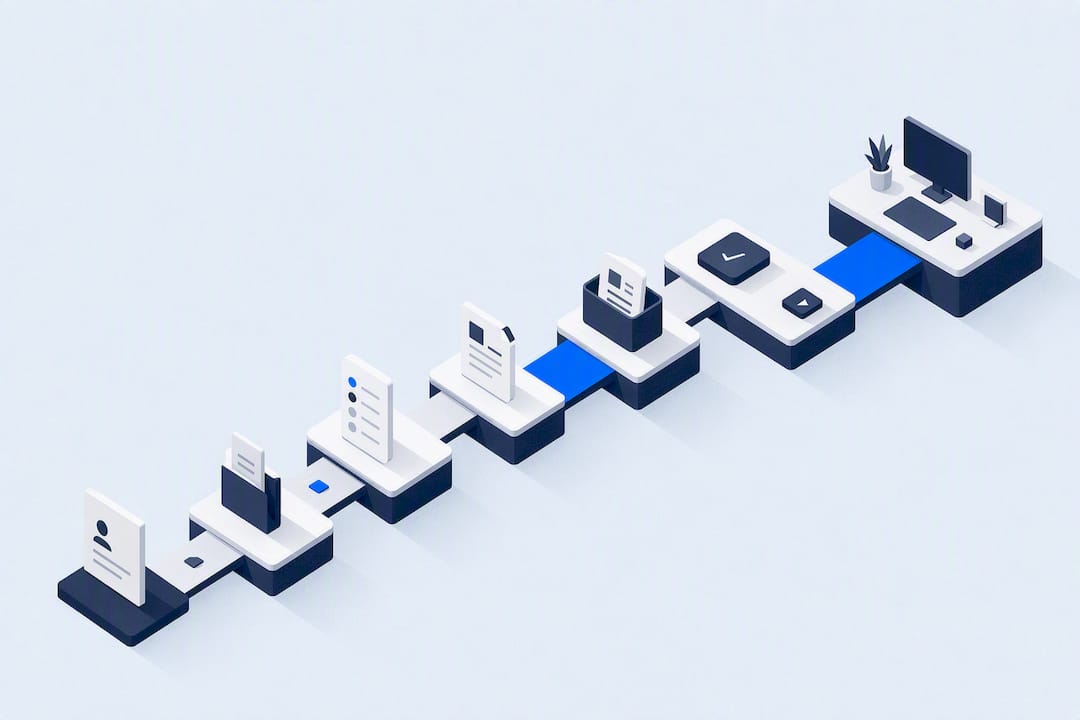
Four workflows carry most of the operational weight in a coaching business: client onboarding, session documentation, weekly check-ins, and scheduling sync. Build those first, in that order. The fastest entry point is a single 30-minute starter automation that chains payment confirmation to a welcome email, an intake form, and a scheduling prompt. Coaching platforms can run this chain natively once the triggers are mapped correctly.
TL;DR:
- Automated onboarding sequences are quick to set up and should be tested thoroughly with sandbox payments and full run-throughs before going live.
- Using a coaching platform that integrates scheduling, client data, and AI tools reduces manual work and minimizes sync errors across multiple systems.
- Payment automation should include automatic billing, real-time payment status updates, and automatic access control to prevent revenue leakage.
- Progress and goal tracking work best when clients log updates within the same system used for scheduling and communication, enabling automated alerts for potential dropout signals.
- Consistently review automation logs weekly to catch trigger mismatches, duplicate messages, or sync issues, and tailor workflows to your coaching niche’s tone and frequency needs.
Coaching Automation Workflow Templates You Can Copy
These five templates follow the same logic: a trigger fires, a set of actions runs, and a human checkpoint confirms nothing broke before it goes live with real clients. Zapier’s own coaching automation library documents auto documentation, request routing, and client engagement as the three most common patterns coaches build first.
- Onboarding welcome sequence. Trigger: payment received. Actions: confirmation email, portal access, intake form link. Tool type: coaching platform or payment processor plus email automation. Verify: send a test payment through a sandbox account before going live. Time to build: 30 to 45 minutes.
- Automated session summary. Trigger: session marked complete. Actions: AI drafts a recap from coach notes, coach reviews, summary sends to client. Tool type: AI writing assistant tied to your coaching platform. Verify: run three real sessions through it before trusting it unsupervised. Time to build: 20 minutes if notes are already structured.
- Weekly check-in. Trigger: day-of-week schedule (for example, every Sunday at 6 p.m.). Actions: short survey or habit log sent, response logged to client record. Tool type: form tool connected to CRM or coaching dashboard. Verify: test the reminder cadence for a week before rolling out to the full roster. Time to build: 15 minutes.
- Intake to scheduling to CRM. Trigger: intake form submitted. Actions: client record created, scheduling link sent, tag applied for segmentation. Tool type: intake form plus calendar plus CRM, ideally in one platform to avoid sync gaps. Verify: check that the CRM tag matches the coaching niche you assigned. Time to build: 30 minutes.
- Content repurposing. Trigger: new blog post or newsletter published. Actions: excerpt drafted for social, scheduled for posting. Tool type: automation engine connected to a content calendar. Verify: read every repurposed draft before it posts. Time to build: 20 minutes.
Before any of these go live, test with:
- A dummy client record that mimics real data fields
- At least one full run-through with a teammate acting as the client
- A rollback plan if a trigger fires twice or a message sends to the wrong tag
Start with one template, run it for two weeks, then add the next. Coaches who try to build all five at once tend to abandon the whole project when the first one breaks.
What Tools Do You Actually Need to Connect?
A coaching automation stack needs six categories, not six separate subscriptions. Overlap is fine. Redundancy is where most coaches waste money.
- Scheduling: calendar tool with client-facing booking links
- Intake forms: structured client data collection at signup
- Automation engine: the glue that moves data between tools (Zapier is the most cited example, per its own documented recipes on GitHub)
- Transcription or AI drafting: for session notes and recaps
- CRM or client record: the single source of truth for each client’s history
- Payments: invoicing and subscription billing tied to the client record
The data flow that makes this work follows one pattern every time: a trigger fires, the data gets normalized into a consistent format, it lands in storage (usually the client record), and then a notification or output goes to the client or coach. Skip the normalize step and you get mismatched fields, duplicate contacts, and a CRM full of noise within a month.
Calendar sync deserves its own line item because it is where most double-booking disasters start. If your coaching platform connects to Google Calendar and Microsoft Outlook or Microsoft 365, a booking made on your coaching dashboard should appear on your personal calendar within minutes, and a block on your personal calendar should close that slot for clients. Verify this behavior on your specific plan before you rely on it for a busy week of group classes and one-to-one sessions.
How Do You Build the Onboarding Sequence Correctly?
The onboarding sequence is the workflow most likely to make or break a new client’s first impression, and it follows a five-step timeline that industry guidance on onboarding automation lays out clearly.
- Payment confirmation fires the moment payment clears.
- Welcome email sends at the two-hour mark, not immediately. Instant delivery reads as automated and impersonal.
- Intake form request goes out at 24 hours, giving the client space to settle in first.
- Scheduling prompt triggers the moment the intake form is submitted, not on a fixed timer.
- Pre-session prep message sends 48 hours before the first booked session.
Use merge tags (first name, program name, start date) so every message reads as personal rather than template. Tag-based sequencing lets you branch: a client who books immediately skips the reminder that a client who stalls would receive. Watch two numbers here: intake completion rate and time-to-first-session. If intake completion drops, your form is probably too long or sent at the wrong hour.
Pro Tip: Cap onboarding messages at four total in the first 72 hours. Five or more and even engaged clients start marking them as spam.
Session Notes: AI Drafting vs. Recording, and How to Verify Both
Two approaches dominate AI-assisted session documentation, and they carry very different risk profiles. Generation-based workflows have the coach write a short raw summary that AI then structures into a polished recap. Recording-based workflows let AI transcribe the session audio directly, which captures more detail but exposes more of the conversation to a third-party tool.
A reusable prompt for a 150-word client-facing recap needs three elements:
- Open with the session’s stated goal and whether it was met
- List two or three specific actions or insights from the conversation
- Close with the client’s next step before the following session
Internal notes should stay separate: goal progress, coach observations, and any flags for the next session, kept out of the client-facing version entirely.
NotuDocs’s guidance on AI documentation recommends generation-based workflows specifically because they reduce confidentiality exposure. For executive or otherwise sensitive coaching relationships, skip recording-based tools altogether and use the generation approach, with a human review pass before anything gets saved to the client record.
What Belongs in Your AI Documentation Checklist?
Coaching agreements and the onboarding conversation should both disclose when and how AI assists with documentation. This is not optional paperwork. It is the baseline ICF-style ethics guidance points to for any coach using AI tools on client data.
- State AI use plainly in the coaching agreement and again during onboarding
- Default to generation-based documentation for high-confidentiality clients
- Require a human review pass on every AI output before it gets stored
- Document how long client data is retained and when it gets deleted
- Run an annual review of your workflows against current professional guidance
Pro Tip: Keep a one-page written policy on file. If a client ever asks how their session data is handled, you want an answer ready in seconds, not a scramble.
Putting These Workflows to Work in FITsociety
FITsociety connects the pieces above inside one dashboard rather than across five disconnected tools. Onboarding triggers map to payment and booking events directly. A member pays for a package, the booking calendar opens their first session slot, and the intake form centralizes their goals, history, and preferences in one client record instead of a spreadsheet.
- Calendar sync with Google Calendar and Outlook/Microsoft 365 reduces double bookings across group classes, small-group sessions, and one-to-one appointments
- The same sync can support pre-session prep reminders since the platform already knows when a session is scheduled
- CoachAI can draft session recaps, training plans, and forms from a coach’s raw notes, following the generation-based pattern that keeps confidentiality risk lower
- Every AI draft still needs a human review before it reaches a client, the same rule that applies to any AI-assisted documentation workflow
- Coaches running online PT, group bookings, and memberships side by side get one client record instead of stitching data across a scheduling app, a separate CRM, and a payment processor
Verify exact synchronization behavior, plan-specific limits, and API access on the official FITsociety features pages before building anything client-facing on top of it.
Automating Payment Processing and Invoicing
Payment automation should do three things without a coach touching a spreadsheet: charge the client on schedule, send a receipt automatically, and flag failed payments before they become an awkward conversation. A recurring membership or package that renews without a manual invoice each month is the single biggest admin-time recovery most coaching businesses see.
Set up a failed-payment retry sequence separately from your regular billing reminder. A card that fails on day one and gets retried automatically on day three, with a client-facing email in between, resolves most payment issues without you ever knowing there was a problem. Invoicing for one-off sessions or packages should generate the moment a booking is confirmed, not at the end of the month in a batch.
Tie payment status to access control where your platform allows it. A membership that lapses should automatically pause access to bookings until payment resolves, rather than relying on a coach to notice and follow up manually. This single rule prevents more revenue leakage than almost any other automation on this list.
Test your payment automation with a small real transaction before rolling it out to your full client list, since a misconfigured trigger here touches money and client trust at the same time. Check refund handling too. A client who cancels within a policy window needs a clear automated path, not a manual reversal you have to remember to process.
Tracking Client Progress and Goals Without Manual Spreadsheets
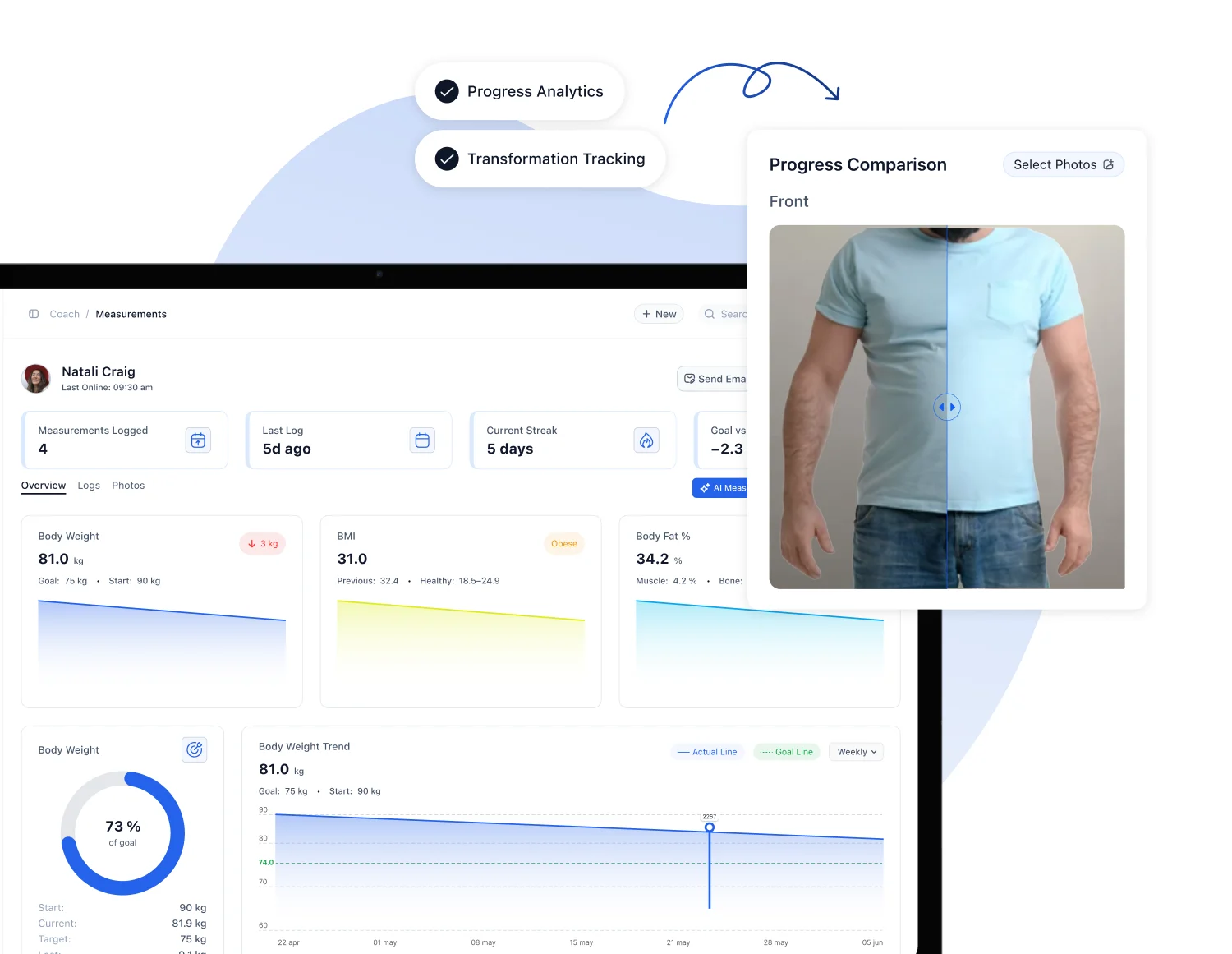
Progress tracking works best when the data capture happens where the client already is, not in a separate app they have to remember to open. A client logging a workout, a weight check-in, or a daily habit inside the same portal they use to book sessions is far more likely to keep logging than one asked to fill out a Google Form once a week.
Automated progress tracking should do the aggregation for you: turning individual check-ins into a trend line the coach can glance at before a session rather than reconstructing it from memory or old messages. Goal achievement tracking works the same way. When a client hits a target weight, a personal record, or a habit streak, an automated flag to the coach beats discovering it mid-session.
Set thresholds that trigger a nudge rather than reviewing every client’s data manually each week. A client whose check-ins stop for five straight days is a much stronger signal worth an automated alert than one who logs consistently but misses a single target. Build the alert around the behavior that actually predicts client drop-off, not the metric that is easiest to graph.
Nutrition tracking deserves its own mention here, since macro and meal-plan tracking tied to daily check-ins is one of the more detailed data streams a coaching practice manages, and it benefits the most from automatic aggregation rather than a coach manually comparing weekly logs.
Connecting Coaching Automation to Your CRM
A CRM in a coaching business is not a sales tool bolted onto client management. It is the record that everything else writes to: intake data, session history, payment status, and progress notes all need to land in one place, or you end up cross-referencing four systems to answer a simple question about a client.
The integration pattern that works is tag-based segmentation feeding into the CRM automatically. A client tagged “weight loss, beginner” at intake should trigger a different check-in cadence and content sequence than one tagged “strength, advanced,” without a coach manually sorting clients into buckets each week. Client management platforms built around this kind of segmentation show how automated tagging turns a static client list into something that actively routes communication.
Where your coaching platform includes CRM functionality natively, as FITsociety does by centralizing member and client administration in one dashboard, you avoid the sync lag that comes from bolting a third-party CRM onto a separate scheduling tool. A public API and MCP support let more technical teams extend that client record into other systems when a coaching business’s needs grow beyond what a single dashboard covers.
Test any CRM integration by tracing one client’s full journey end to end: intake, tag assignment, first session, check-in, and payment. If any step requires manual re-entry, the integration isn’t finished yet.

Collecting Client Feedback Without Chasing Responses
Feedback collection fails most often because it depends on a coach remembering to send it. Automating the trigger, tying it to a session or milestone rather than a calendar reminder, fixes that. A satisfaction survey sent automatically 24 hours after a client’s first session captures a more honest, more immediate reaction than one sent whenever a coach gets around to it.
Keep the survey itself short. A three-question satisfaction check after each session gets far higher response rates than a ten-question quarterly review, and the response data is more useful because it is tied to a specific, recent experience. Route negative responses to an immediate alert rather than a weekly report, since a client with a genuine complaint needs same-day attention, not a spot in next Monday’s summary.
Use a different survey cadence for different milestones. A post-session pulse check, a 30-day satisfaction survey, and an end-of-program review each serve a different purpose, and treating them identically wastes the automation’s real value. Log every response to the client’s record automatically so a pattern of declining satisfaction shows up before a client quietly cancels, rather than after.
Fixing the Automation Problems Coaches Hit Most
Most automation failures trace back to one of three causes: a trigger that fires on the wrong condition, a message that sends to the wrong tag or segment, or a tool integration that silently stops syncing. None of these are exotic problems, and all three are catchable with the same habit: check your automation logs weekly, not just when a client complains.
Duplicate messages usually mean two automations are watching the same trigger. Audit your triggers whenever you add a new workflow, since it is easy to build a new check-in sequence without realizing an older one still fires on the same event. Missing data in a merge tag, a message that goes out addressed to “[First Name]” instead of an actual name, almost always means the intake form field name doesn’t match what the automation expects. Fix the field mapping, not the message.

Calendar sync issues, where a booking on your coaching platform doesn’t appear on your personal Google Calendar or Outlook, are usually a permissions problem rather than a broken integration. Reauthorize the connection and confirm the correct calendar is selected as the sync target, since it is common for a sync to point at a secondary calendar instead of the primary one. When in doubt, test with a throwaway booking before assuming a client-facing workflow is broken.
Run a monthly ten-minute audit: pick one client, trace their full automated journey, and confirm every step fired as expected.
Adapting These Templates to Your Coaching Niche
A weight-loss coach and an executive leadership coach need the same underlying workflow skeleton but very different content inside it. The onboarding sequence, check-in cadence, and documentation approach all stay structurally identical. What changes is the tone, the frequency, and the sensitivity level of what gets automated.
High-touch niches, executive coaching, therapy-adjacent work, or any relationship built on deep trust, should lean toward generation-based documentation over recording-based transcription every time, and should probably reduce automated messaging frequency in favor of more personal, less templated communication. A fitness or nutrition coaching practice running group classes and high client volume benefits from the opposite: more automation, more frequent check-ins, because the operational load of managing dozens of clients individually becomes unsustainable without it.
Match your check-in cadence to how often meaningful change actually happens in that niche. A strength-training client might show measurable progress weekly. A career coaching client might not show a visible shift for a month. Sending a weekly check-in to the second client trains them to ignore your messages.
Try FITsociety for These Workflows
Coaches who want the onboarding, scheduling, and documentation templates above running inside one dashboard, rather than stitched across separate scheduling, form, and payment tools, are the exact use case FITsociety was built around. It is community-driven fitness software, actively developed with input from personal trainers, online coaches, and studio owners who use it daily, and its booking calendar for group classes, small-group sessions, one-to-one appointments, and online PT sits at the center of how coaches actually run their week. Google Calendar and Outlook/Microsoft 365 sync are already built in, and a public API with MCP support is available for teams who want to extend these workflows further.
If you run a coaching practice or fitness studio, take a look at the coaching features overview and see how intake forms, CoachAI, and the booking calendar fit into the templates above, then start with a single 30-minute automation before building out the rest.
Sources
- Coaching Services Automation
- AI Workflow for Coaches 2026: Step-by-Step Guide | ToolixLab
- AI Session Documentation for Coaches: Meeting ICF Ethics and Privacy Standards in 2026 | NotuDocs
- Automate Coaching Client Onboarding Welcome Sequence 2026
FAQ
What Is the 30-Minute Starter Automation for Coaches?
It is a single chained workflow: payment received triggers a welcome email, which leads to an intake form request, which then triggers a scheduling prompt once the client submits. ToolixLab estimates a first workflow like this takes 30 to 60 minutes to set up, and starting with one small automation before adding more is the most reliable way to avoid overwhelming yourself or your clients.
What Are Examples of Automated Coaching Workflows?
Common examples include onboarding welcome sequences, automated post-session summaries, weekly check-in surveys, scheduling-to-CRM handoffs, and content repurposing for newsletters or social posts. Zapier documents these as the most frequently built coaching automations, each triggered by a specific event like payment, session completion, or form submission.
What Are the 5 C’s of Coaching?
Definitions of the “5 C’s” vary depending on the coaching methodology or organization using the term, and no single version is universally standard across the coaching industry. Rather than force one definition, focus on what actually drives results: clear goals, consistent check-ins, and documented progress, all of which the workflows above are built to support.
Does FITsociety Support Google Calendar and Outlook Sync?
Yes, FITsociety offers calendar integrations with both Google Calendar and Microsoft Outlook/Microsoft 365. Coaches should confirm the exact sync behavior and plan availability on the official features page before relying on it for a full client schedule.
Should I Use AI Recording or AI Drafting for Session Notes?
Generation-based drafting, where the coach writes a short raw summary and AI structures it, carries lower confidentiality risk than recording-based transcription. ICF-style guidance recommends generation-based workflows for sensitive or high-confidentiality client relationships, along with a human review pass before any summary gets saved or shared.