Weekly text check-ins, a biweekly video call, and a clearly defined response window form the core of reliable client communication for online coaches. Backing this with a signed coaching agreement, repeatable feedback templates, and a platform that links scheduling to messaging turns the approach into a system rather than a habit you maintain by memory.
TL;DR:
- Match complex or emotionally sensitive feedback to video, routine updates to text, and health or billing matters to secure, logged channels rather than social messaging.
- Most clients need a weekly 10–15 minute update and a 45–60 minute call every other week; new clients may need daily contact.
- Deliver feedback as an observation, an interpretation, and one next step; personalized, relevant guidance matters more than message volume, while complex technique reviews suit video.
- Document response hours, emergency contact, confidentiality, cancellations, and payment before coaching begins; include a parent or guardian in updates when the client is a minor.
Which channels fit which coaching task
Synchronous channels (video, phone) demand both parties present at once. Asynchronous channels (text, email, in-app chat) let each side respond on their own schedule. Online coaching runs on a mix of both, matched to the task.
Video suits onboarding calls, technique reviews, and any conversation where tone and nuance matter. Text and in-app messaging handle routine check-ins, quick questions, and accountability nudges. Email carries longer material: program updates, monthly summaries, policy changes. Phone or SMS stays reserved for time-sensitive items like a same-day schedule change.
Choose the channel by three factors:
- Complexity: multi-step feedback or emotional topics go to video; simple confirmations go to text.
- Privacy: medical history or payment issues belong in secure, logged channels, not open social messaging.
- Client preference: some clients respond faster to a push notification than an email, and matching that habit improves follow-through.
A 2026 study of remote coaching in endurance sports found that combining multiple channels, rather than relying on one, produced stronger coach-athlete connections than text-only communication.
How often to check in and what to cover
Cadence depends on the client’s goals, independence, and how much support the relationship calls for. Three templates cover most coaching relationships:
- Light-touch: weekly async check-in (text or in-app form), monthly 30-minute video review. Fits self-directed clients who mainly need programming and occasional accountability.
- Standard: weekly 10-15 minute check-in plus a biweekly 45-60 minute coaching call. Fits most online coaching clients working toward a specific goal.
- High-touch: short daily or near-daily async touchpoints plus a weekly full session. Fits new clients, those rebuilding habits, or anyone in a critical training phase.
A short check-in covers adherence, energy, and any blockers from the past week. A full session covers program review, goal adjustment, and skill or technique work. Protect your own capacity by capping high-touch slots and scheduling check-in windows instead of answering messages as they arrive throughout the day.
How to give feedback that lands
The same remote coaching research recommends video for complex or technique-heavy feedback and found text sufficient for routine updates. It also found that clients value personalized, relevant communication more than frequent communication, so a short, specific message beats a long generic one.
Structure feedback in three steps: observation, interpretation, next step.
- Observation: state what you saw or measured, without judgment (“Your squat depth improved this week.”).
- Interpretation: explain what it means for progress (“That’s closer to the range we need for the program.”).
- Next step: give one clear action (“Keep the same load next week and focus on tempo.”).
For a missed week: “I noticed three sessions were skipped. No judgment, just checking in: what got in the way, and do we need to adjust the plan?” For a plateau: “Your numbers have held steady for three weeks. That’s common around week six. Let’s add a deload before pushing again.”
Pro Tip: Record a 60-second video reviewing a lift or movement instead of typing a paragraph: it takes less time to produce and reads as more personal.

Setting boundaries without sounding cold
A practical boundaries guide for coaches recommends setting explicit response windows and favoring group channels over one-to-one social messaging for team updates. Clear limits protect your time and still read as professional rather than distant.
- State your response window up front: “I reply to messages within 24 hours on weekdays; weekends are for emergencies only.”
- Define what counts as an emergency and how to reach you for one (a specific number or channel, not “just text me”).
- Keep team or group updates in a shared channel rather than individual threads, reducing duplicate questions.
- Route medical, legal, or billing items to a logged channel rather than casual chat.
When a client messages outside the window repeatedly, acknowledge it directly rather than ignoring it: “I saw your late-night messages this week. I want to make sure you get a real answer, so let’s stick to the reply window we set and use the emergency line only for anything urgent.” The ICF Code of Ethics calls for a coaching agreement that documents these communication protocols before coaching begins, which gives you something concrete to point back to.
What belongs in your onboarding agreement
Put these items in writing before the first paid session, either in an intake form or a short agreement:
- Services and scope: what coaching includes and what it does not.
- Cadence and channels: check-in frequency, session length, which app or tool you use.
- Response-time policy: reply window, emergency contact method.
- Confidentiality: how client data and health information are handled.
- Cancellation and payment terms: notice period, refund policy, billing dates.
A short onboarding email can cover the same ground: “Welcome aboard. Here’s how we’ll work together: weekly check-ins via the app, a biweekly call, and a 24-hour reply window on weekdays. Full terms, including cancellation and payment, are in your agreement below.” For minors, add a parent or guardian to the communication thread and confirm who receives progress updates.
Tools and a workflow that ties it together
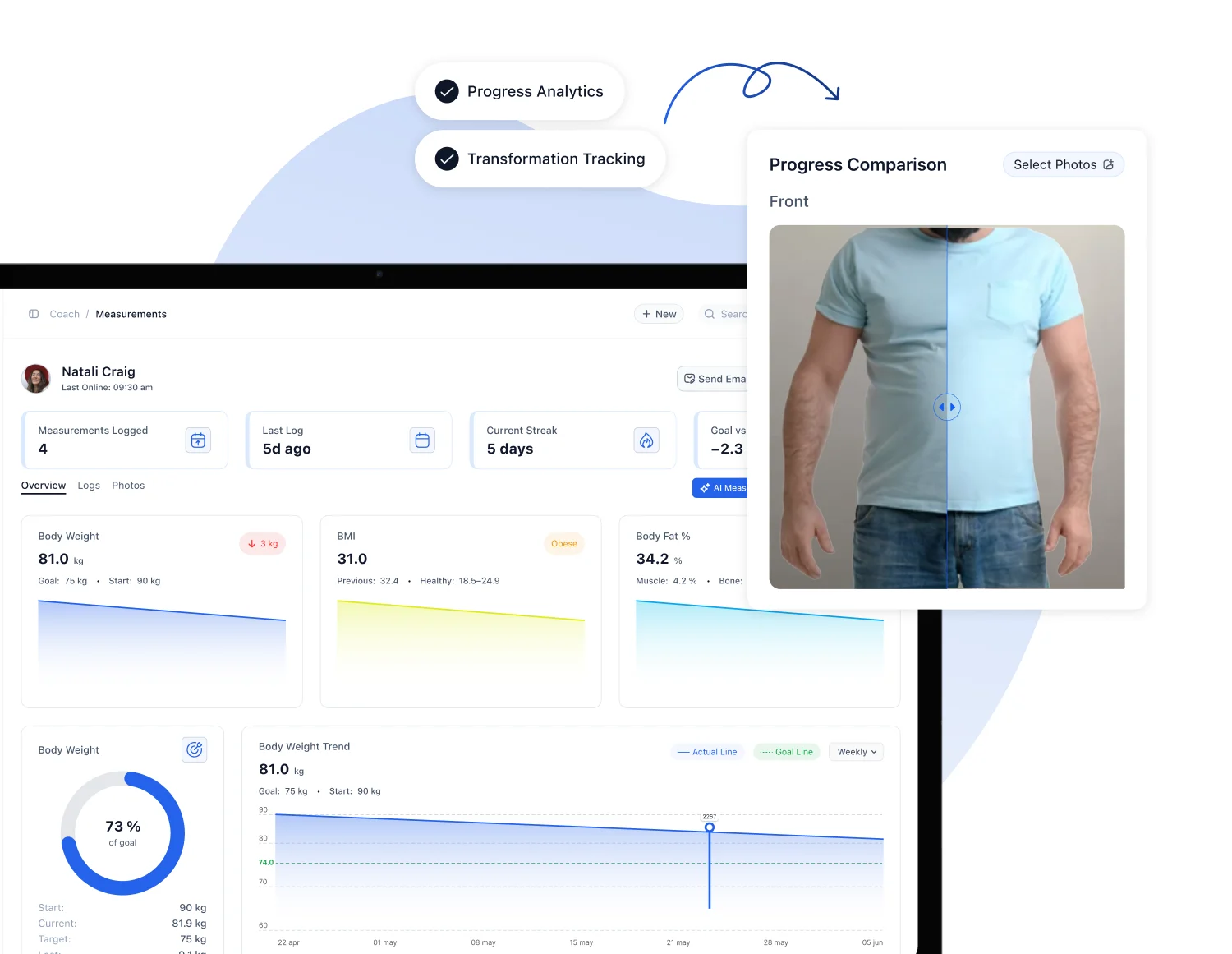
The templates above work best inside a platform that connects scheduling, messaging, and progress data instead of three separate apps. Prioritize tools with integrated booking, in-app messaging, intake forms, media uploads for video feedback, progress logs, and calendar sync.
A workable six-step workflow:
- Client signs up and completes an intake form covering goals and health history.
- Coach schedules the first call and sets the check-in cadence.
- Client logs weekly data (training, habits, measurements) through the app.
- Coach reviews the metrics before the scheduled check-in.
- Coach sends short video or text feedback based on what the data shows.
- Coach updates the plan and the cycle repeats.
FITsociety’s booking calendar supports group classes, small-group sessions, one-to-one appointments, and online PT, with calendar sync available for Google Calendar and Outlook/Microsoft 365, which keeps session scheduling and client messaging in the same place instead of split across tools.
Run this workflow inside one platform
Coordinating check-ins, feedback, and bookings across separate apps creates gaps where messages get missed. FITsociety brings client communication, scheduling, intake forms, and progress tracking into one dashboard for coaches and one portal and mobile app for clients, with a public API and MCP support available for teams that want to connect it to other tools in their workflow. As community-driven fitness software, it is developed with ongoing input from coaches and trainers, though not every suggestion becomes a built feature. Explore FITsociety’s plans to see which setup fits your client list and team size.

FAQ
How to find clients for online coaching?
Finding clients typically comes down to referrals, a visible social media presence showing real coaching work, and partnerships with gyms or studios. A clear niche and consistent content showing your coaching style tend to attract better-fit inquiries than broad advertising alone.
What is the best way to communicate with clients?
The best approach combines a scheduled cadence (weekly check-ins, biweekly calls) with the right channel for each task: video for complex feedback, text or in-app messaging for routine updates. Setting this in a coaching agreement up front, as recommended by the ICF Code of Ethics, prevents mismatched expectations later.
Why is communication important for a sports coach?
Clear, consistent communication builds the relationship that drives adherence and trust between coach and athlete. Research on remote coaching found that personalized, relevant communication affects the strength of that connection more than the sheer volume of messages sent.
What are some coaching techniques?
Common techniques include structured goal setting, progressive program adjustments based on logged data, and feedback delivered in an observation, interpretation, and next-step format. Many coaches also use scheduled check-ins and short recorded video feedback to personalize guidance without requiring a live call every time.
Sources
- Remote coaching: Coach and athlete perspectives in endurance sports
- Establishing and Maintaining Healthy Boundaries with Athletes: A Coaches’ Practical Guide
- ICF Code of Ethics