Twist Jumps
Twist Jumps are a dynamic and energetic exercise that helps improve your coordination and balance while training multiple muscle groups at the same time. This exercise is unique because it challenges your cardiovascular system while also strengthening your muscles.

Execution
-
1
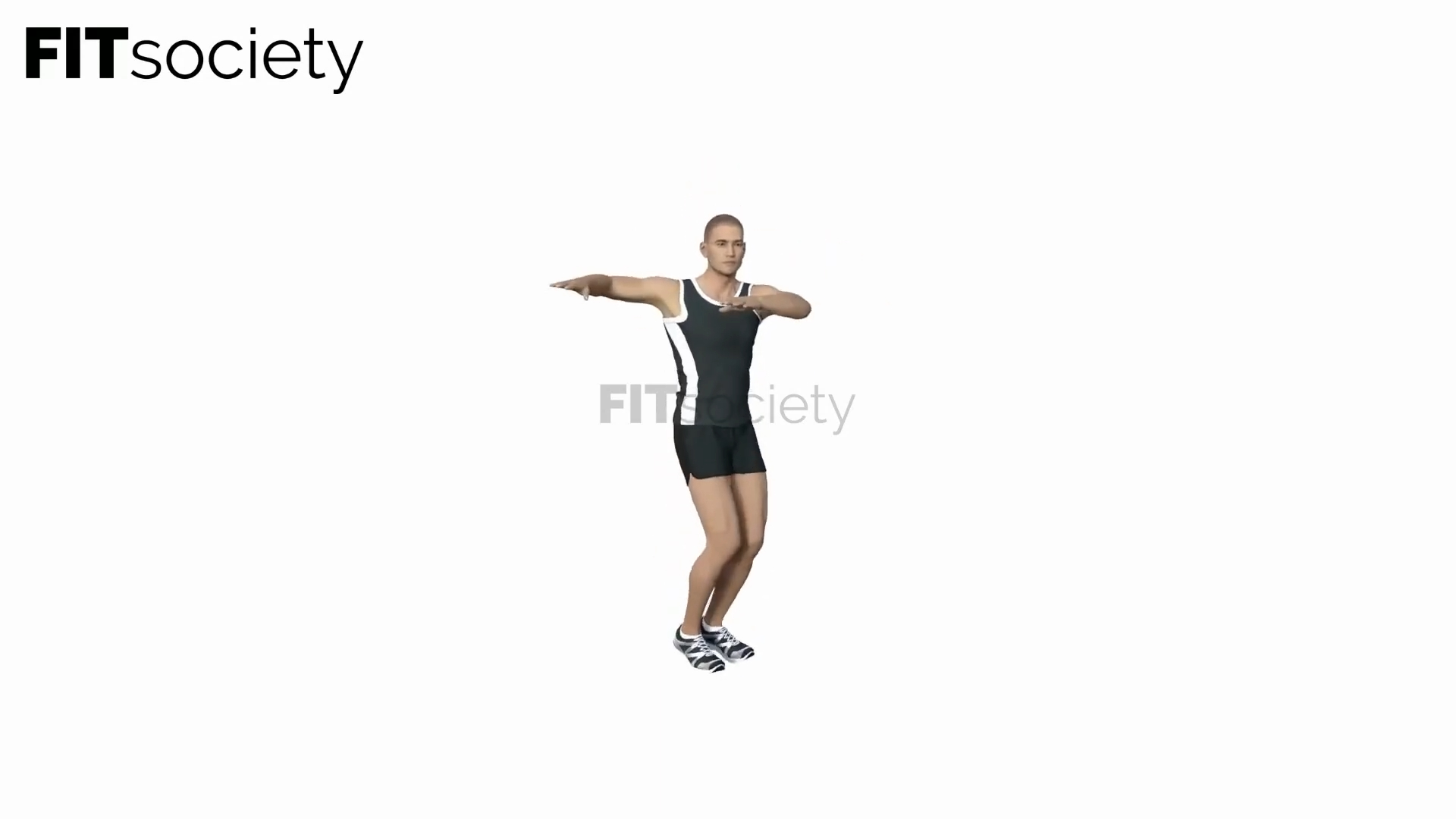
Begin in a standing position with your feet shoulder-width apart.
-
2
Jump upward and twist your lower body to the right while rotating your upper body to the left.
-
3
Land softly on your feet and immediately jump upward again, but this time twist your lower body to the left and your upper body to the right.
-
4
Continue alternating sides with each jump.
-
5
Keep your knees slightly bent when landing to reduce the impact on your joints.
Benefits
- Improves coordination and balance.
- Raises your heart rate, which helps burn calories.
- Strengthens and engages multiple muscle groups at the same time.
- Improves spinal flexibility through the twisting movements.
Common Mistakes
- ! Not fully rotating the body, which reduces the effectiveness of the exercise.
- ! Landing too hard on the feet, which can lead to injuries.
- ! Not keeping the knees slightly bent when landing, which places extra pressure on the joints.
Primary Muscles
Twist Jumps target your abdominals, obliques, glutes, quadriceps, and calves. Your shoulders and arms are also lightly trained by the twisting movement.
Possible Alternatives
- If the jumps are too intense, try performing the twist jumps without jumping. Simply twist from side to side with a quick stepping motion.
- For an extra challenge, hold a medicine ball while performing the twisting movements.
- Use a jump rope to increase the intensity and cardiovascular challenge.
Run your fitness business with more structure
- Planning, member management and coaching in one platform
- Built for coaches, studios and gyms
- Fewer separate tools, more overview