Dumbbell Bulgarian Split Squat
The Dumbbell Bulgarian Split Squat is a powerful exercise that targets the lower-body muscles. What makes this exercise unique is that it not only improves your strength and balance, but also helps develop your leg muscles symmetrically.
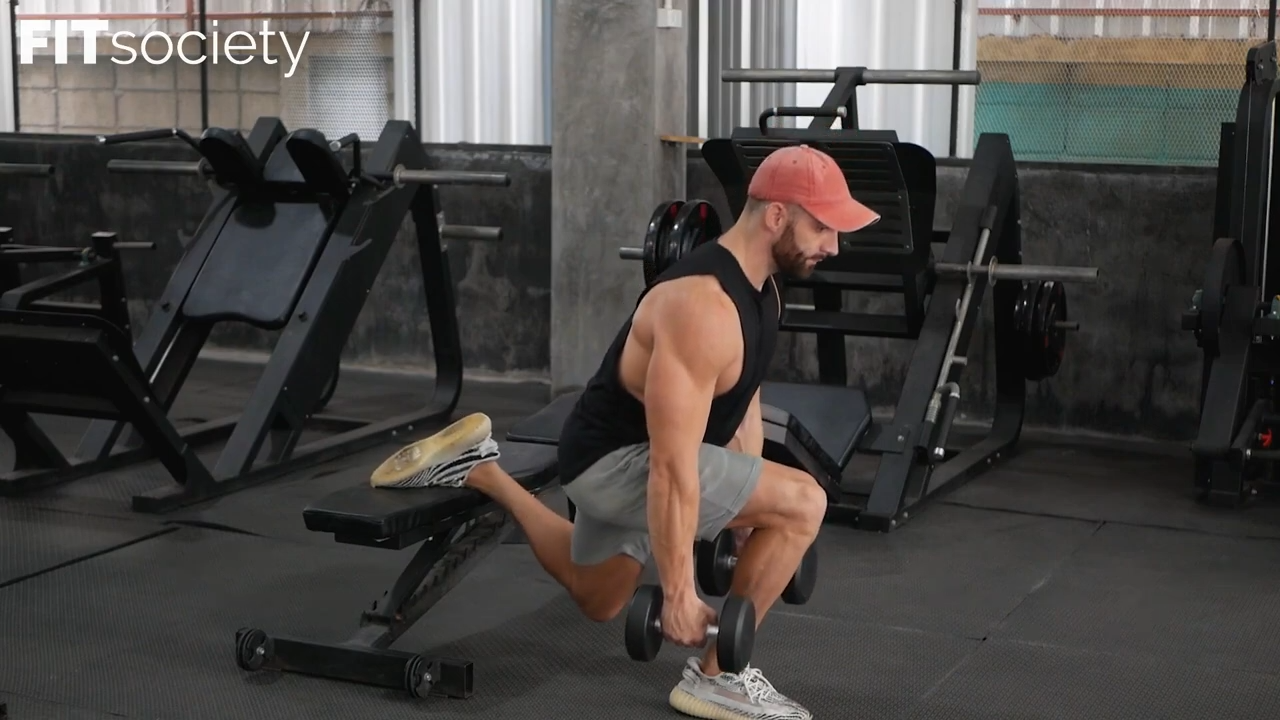
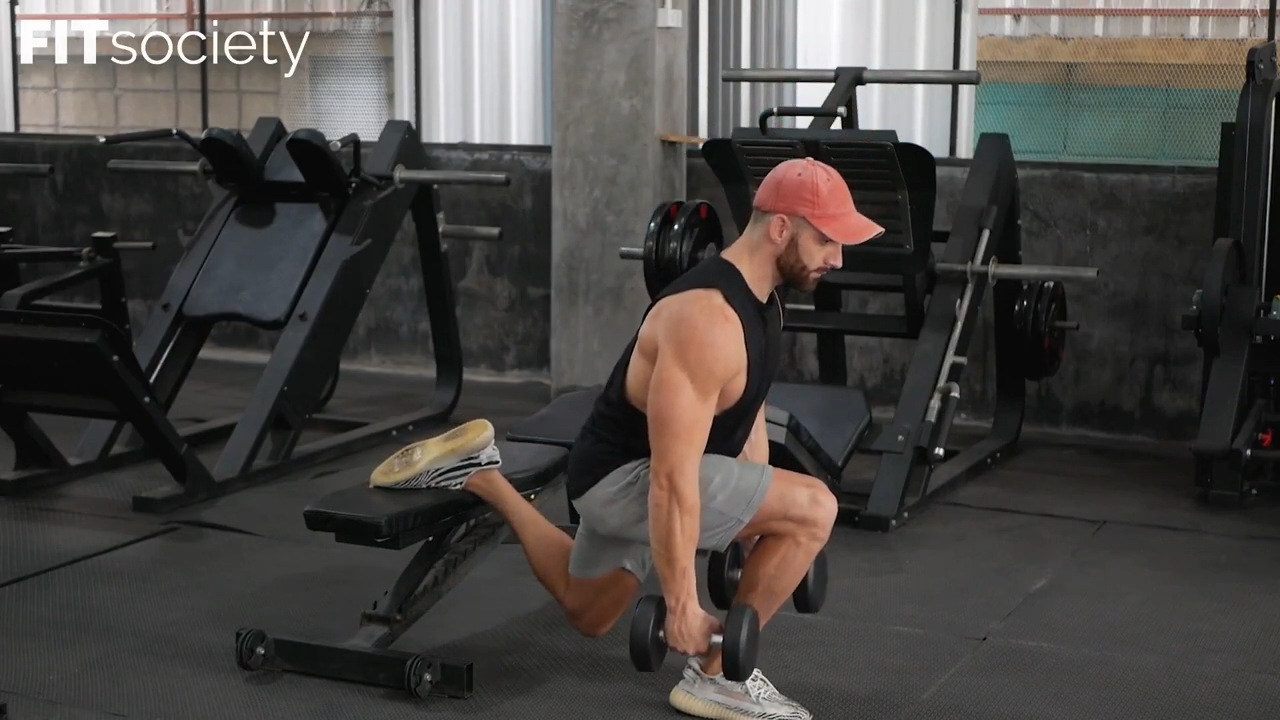
Execution
-
1
Find an elevated surface such as a bench or sturdy platform where you can place your rear foot.
-
2
Hold a dumbbell in each hand and let them hang at your sides.
-
3
Place your right foot on the elevation behind you.
-
4
Make sure your front foot is far enough forward so that your knee does not pass your toes during the exercise.
-
5
Slowly lower yourself through your front leg until your thigh is almost parallel to the floor.
-
6
Press yourself back up to the starting position.
-
7
Repeat for the desired number of repetitions, then switch legs.
Benefits
- Improves balance and coordination.
- Strengthens the muscles symmetrically, which helps prevent injuries.
- Increases muscle mass and strength in the legs.
Common Mistakes
- ! Leaning too far forward with the torso, which places additional stress on the back and knees.
- ! Allowing the knee of the front leg to move too far past the toes.
- ! Not lowering deep enough, which reduces the effectiveness of the exercise.
Target Muscles
This exercise primarily trains the quadriceps and gluteal muscles. The hamstrings and calf muscles are also engaged.
Possible Alternatives
- Use a lighter dumbbell or no weights if you are just starting out.
- Increase the intensity by using heavier dumbbells or wearing a weighted vest.
- For an extra challenge, add a small jump as you come up from the squat.
Run your fitness business with more structure
- Planning, member management and coaching in one platform
- Built for coaches, studios and gyms
- Fewer separate tools, more overview