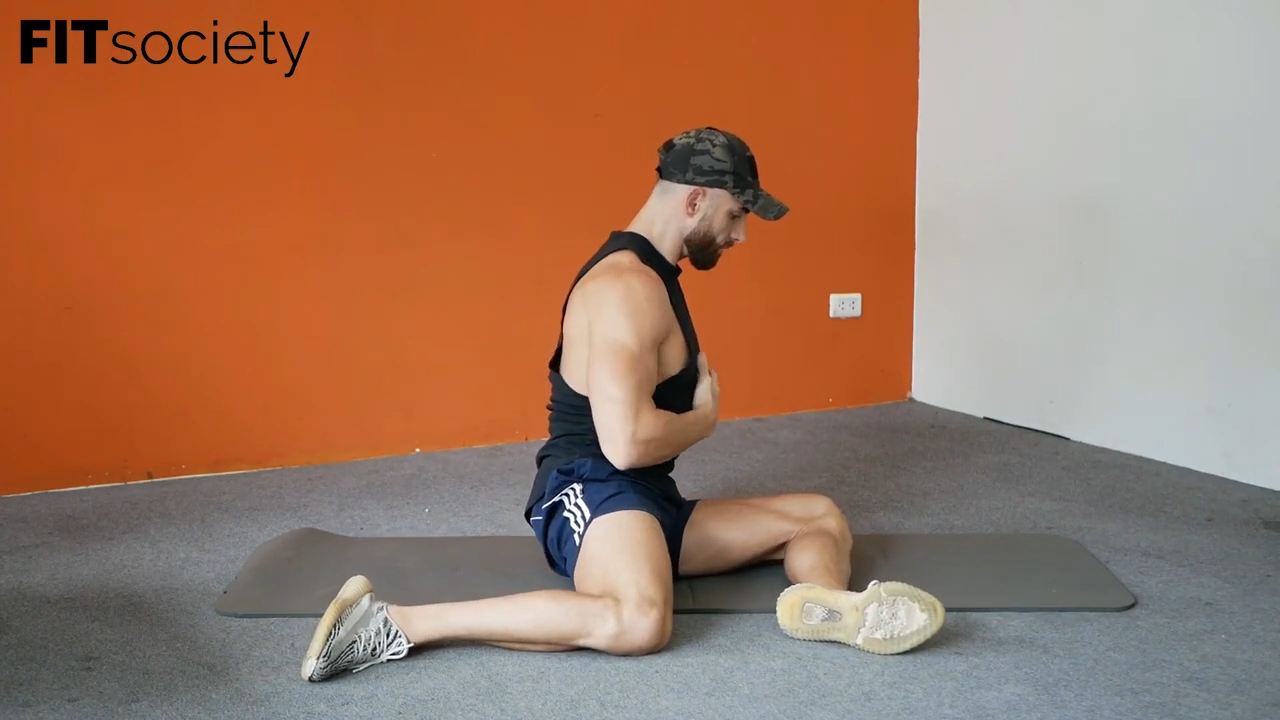
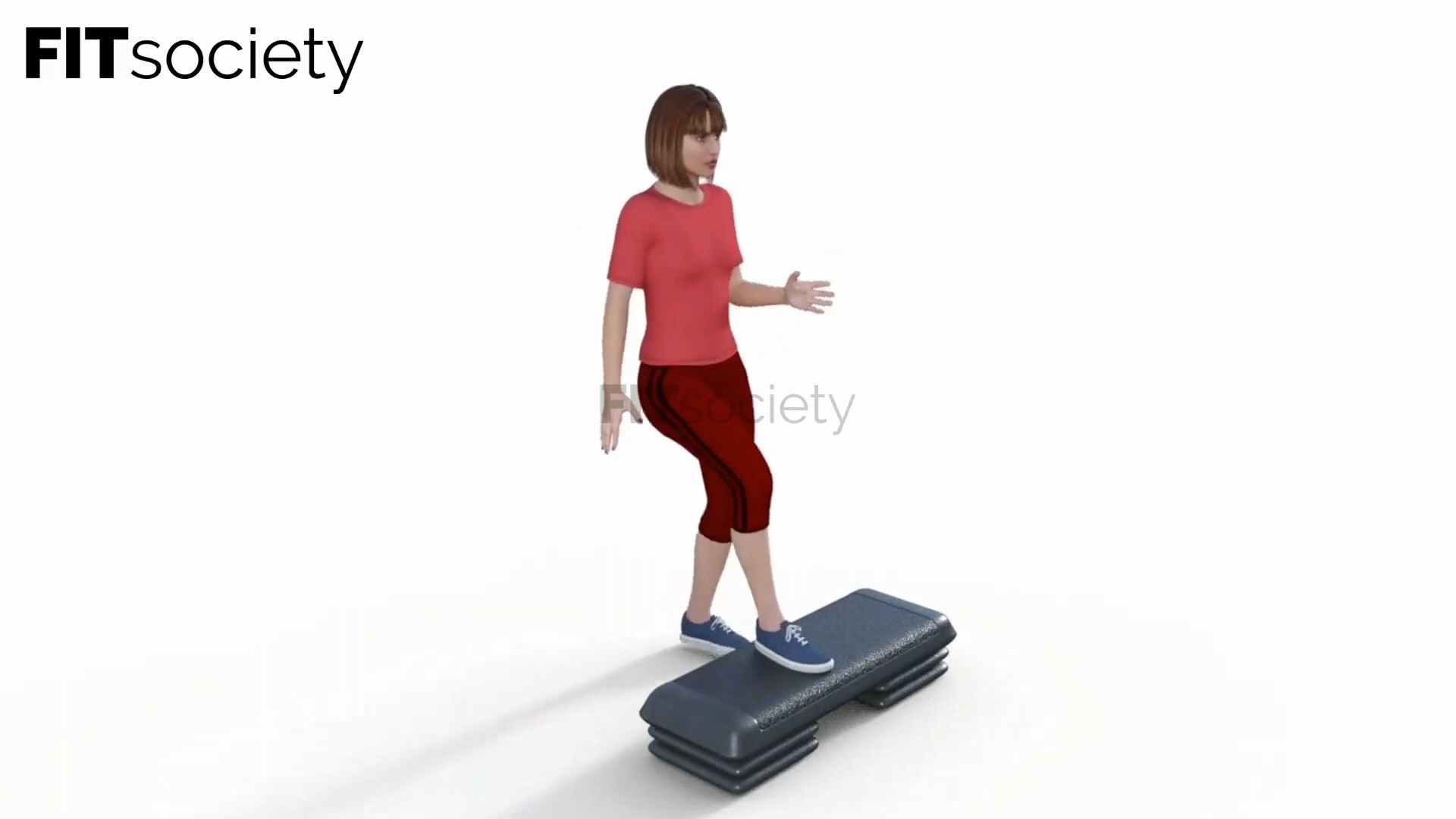
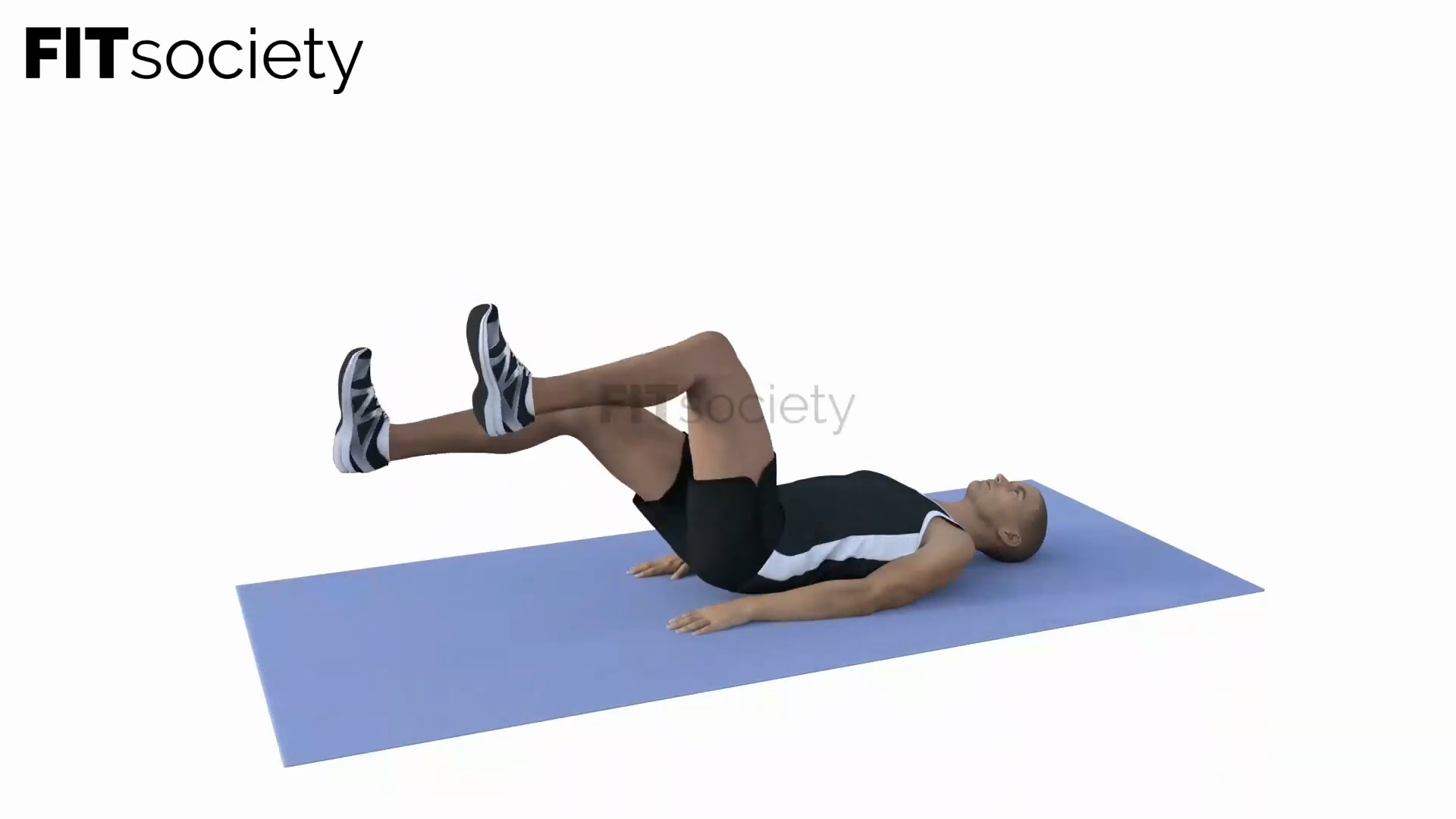
Cossack Squat
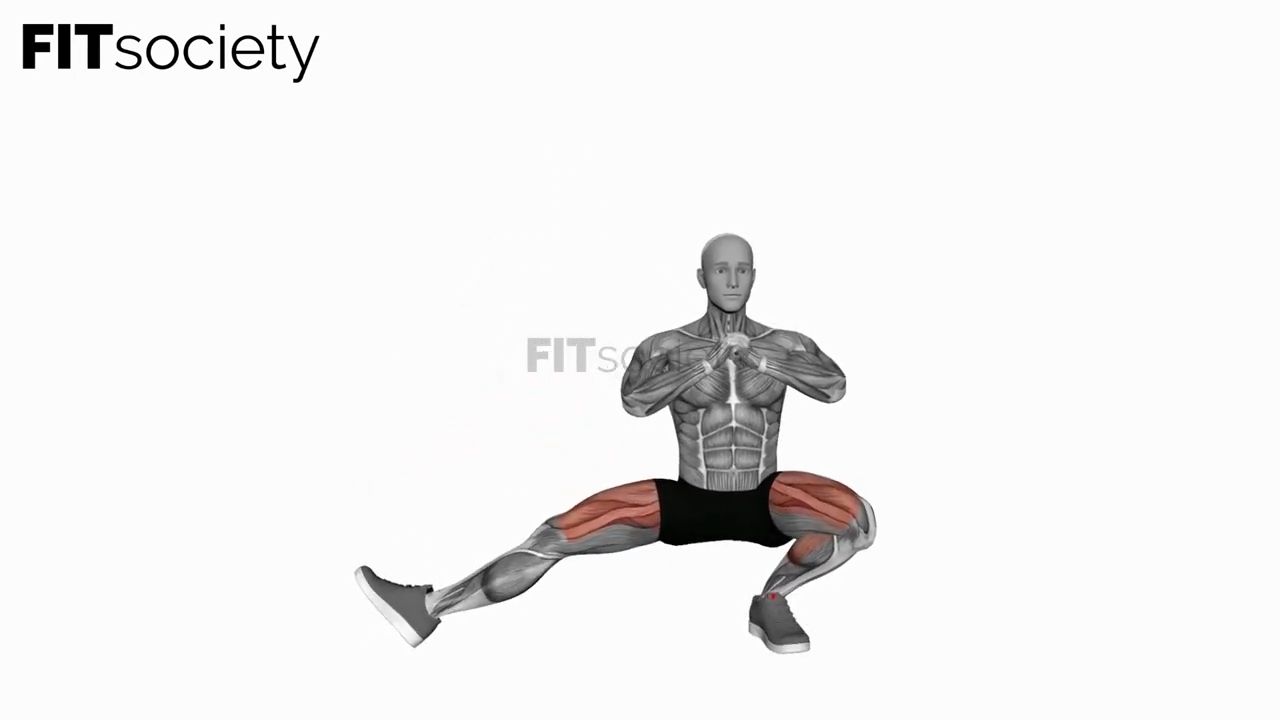
Execution
-
1
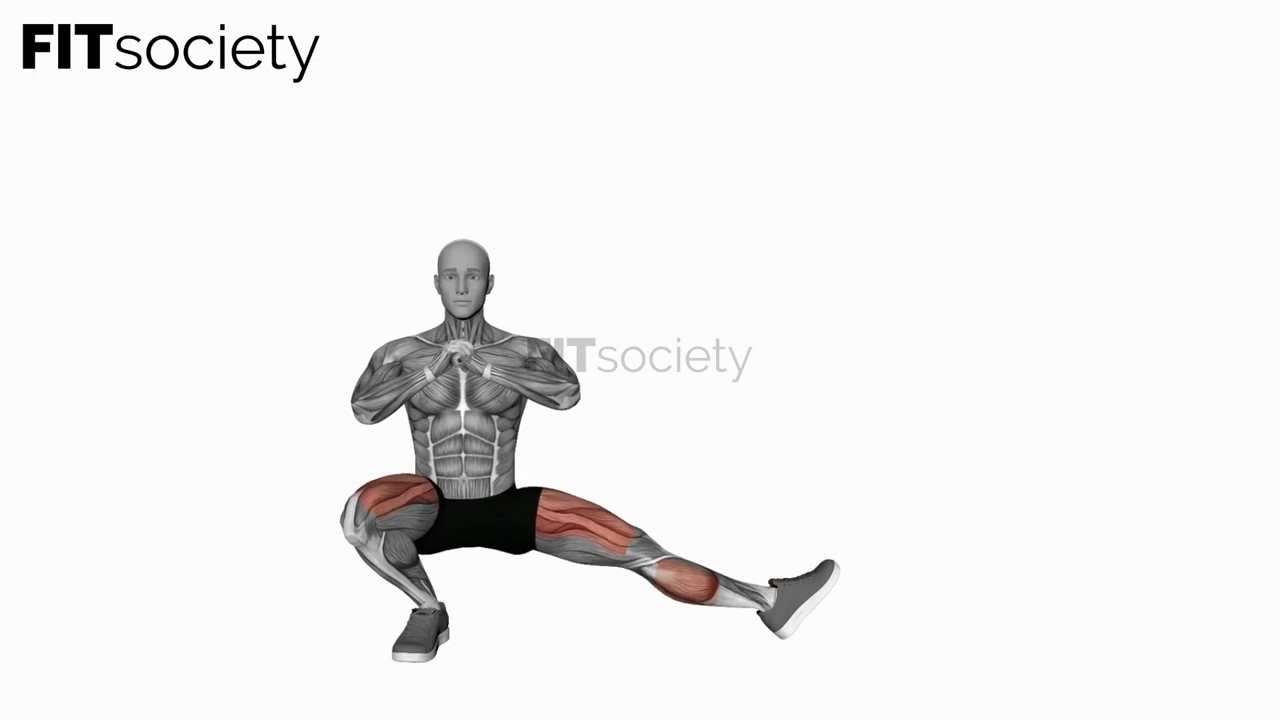
Begin in a wide stance, with your feet farther apart than shoulder-width.
-
2
Turn your toes slightly outward.
-
3
Shift your weight onto one leg while bending that leg and slowly lowering down. Keep the other leg straight with the foot flat on the floor or the toes pointing upward, depending on your flexibility.
-
4
Keep your chest lifted and your back straight throughout the movement.
-
5
Lower yourself as far down as possible, aiming to get your hips below the knee of the bent leg.
-
6
Push yourself back up to the starting position and repeat on the other side.
Benefits
- Improves hip flexibility and mobility.
- Strengthens the muscles around the knees and ankles, contributing to better stability.
- Helps develop better balance and coordination.
- Is an excellent way to address asymmetries in the body.
Common Mistakes
- ! Lowering too quickly: Take the time to perform the movement in a controlled manner.
- ! Arching the back: Keep your back straight to prevent injuries and activate the correct muscles.
- ! Lifting the heels: Try to keep your feet flat on the floor for maximum stability.
Introduction
The Cossack Squat is a dynamic exercise that combines flexibility, strength, and balance. It is an excellent way to train your lower body in a unique way, strengthening your muscles while also working on your mobility and stability.
Targeted Muscles
The Cossack Squat targets a wide range of muscle groups, including:
- Quadriceps
- Hamstrings
- Glutes
- Adductors (inner thigh)
- Abductors (outer thigh)
Possible Alternatives
If you want to adjust the intensity of the Cossack Squat, consider these variations:
- Use a dumbbell or kettlebell for additional resistance.
- Perform the exercise with a TRX strap to help you balance.
- If the full movement is too challenging, try a partial squat or work on your flexibility with other exercises.
Run your fitness business with more structure
- Planning, member management and coaching in one platform
- Built for coaches, studios and gyms
- Fewer separate tools, more overview