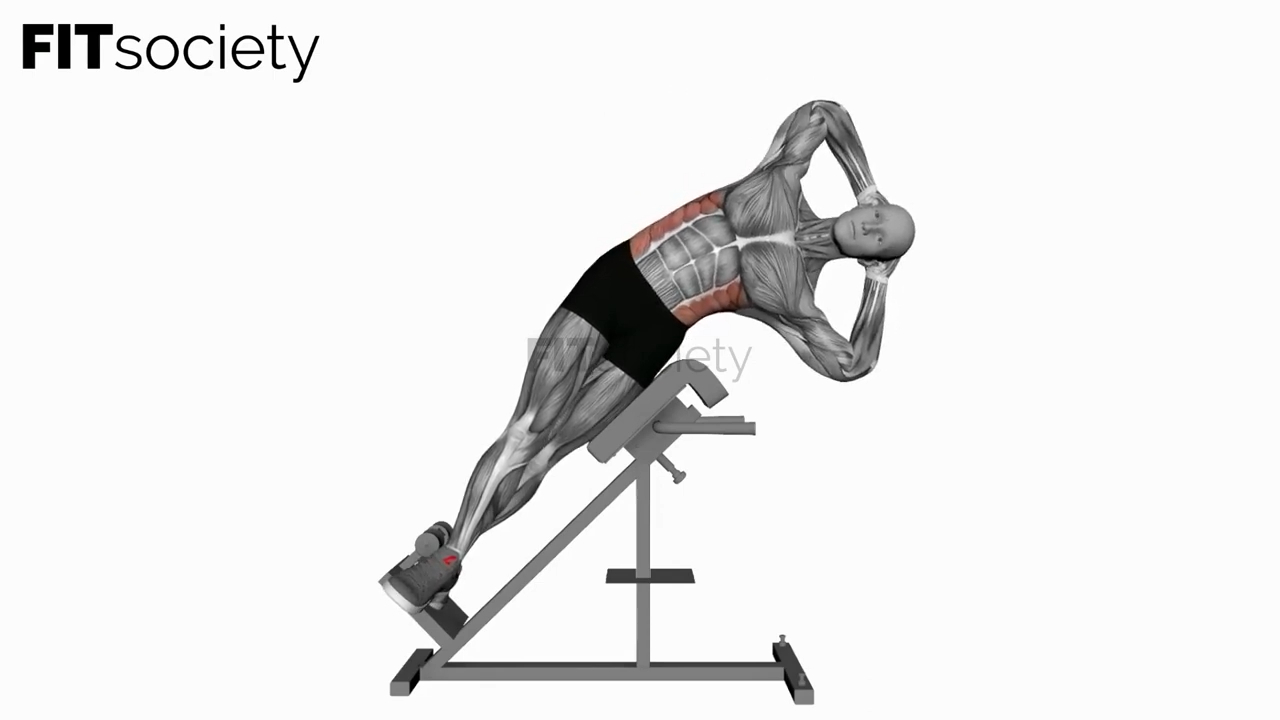
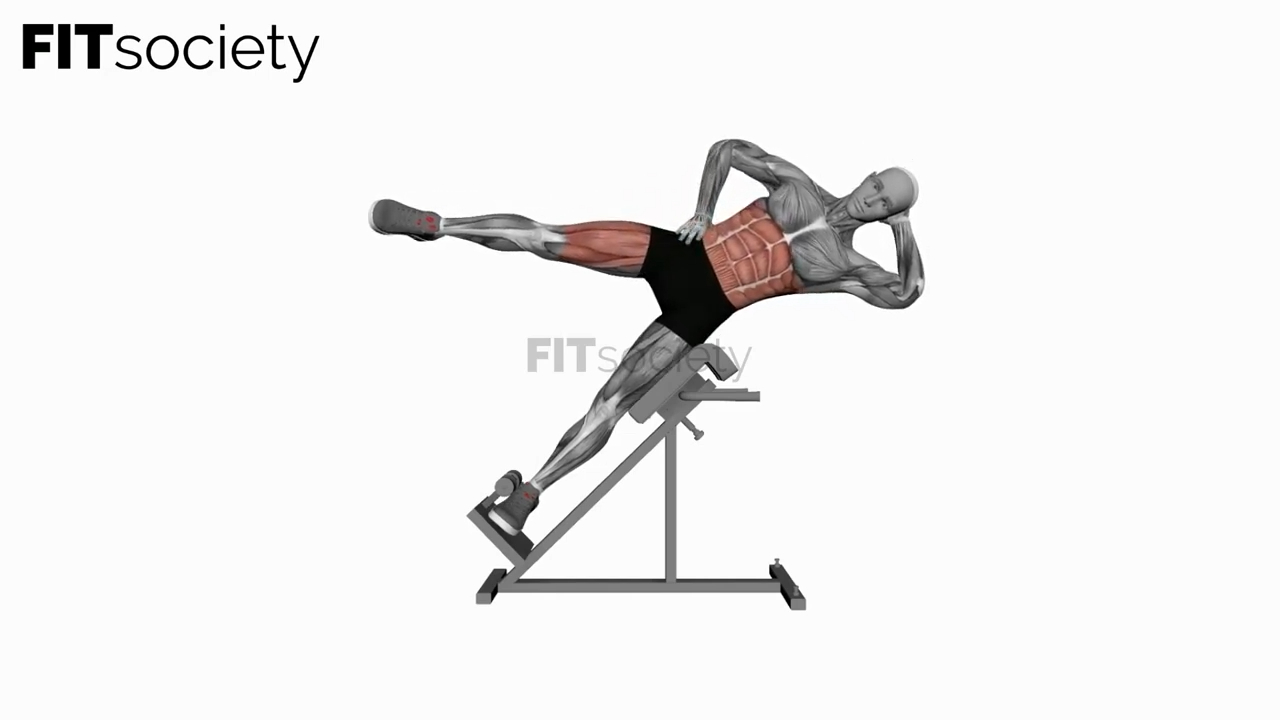
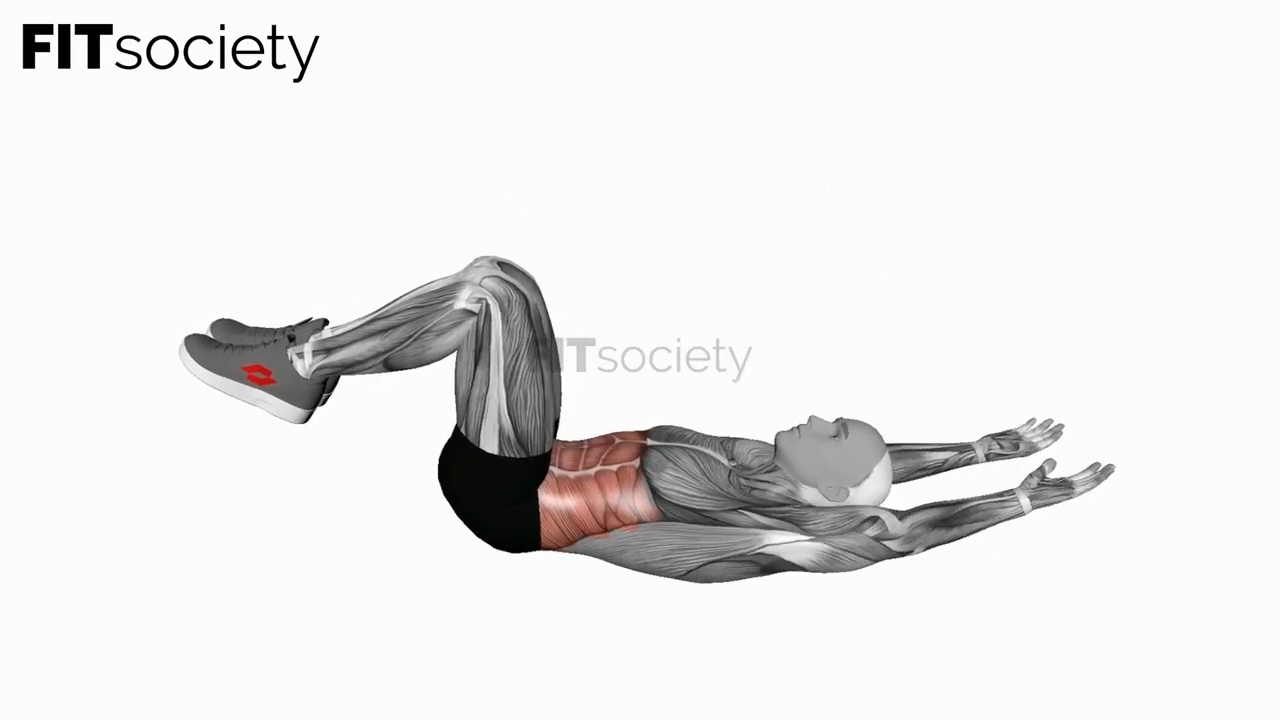
Motion Side Plank
The Motion Side Plank is a dynamic variation of the traditional side plank that improves not only your core stability but also your flexibility and balance. This exercise adds a movement element to the standard side plank, making it a challenging and effective workout for both beginners and advanced athletes.
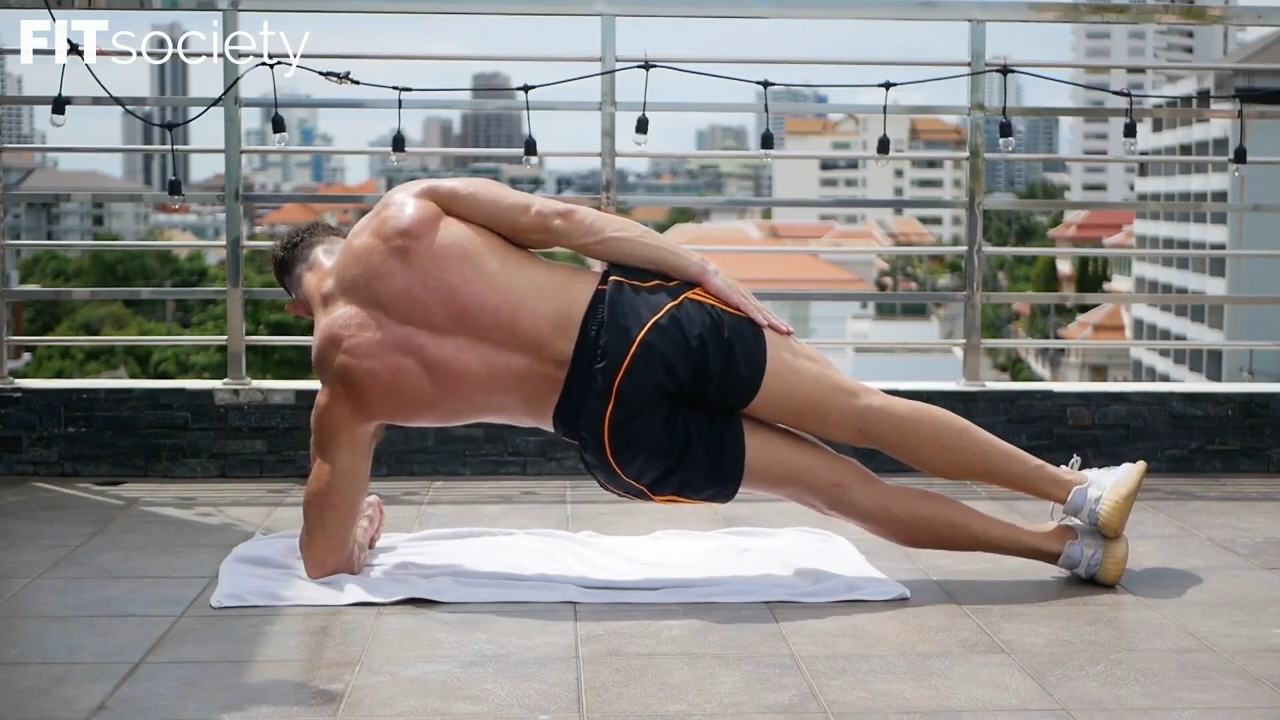
Execution
-
1
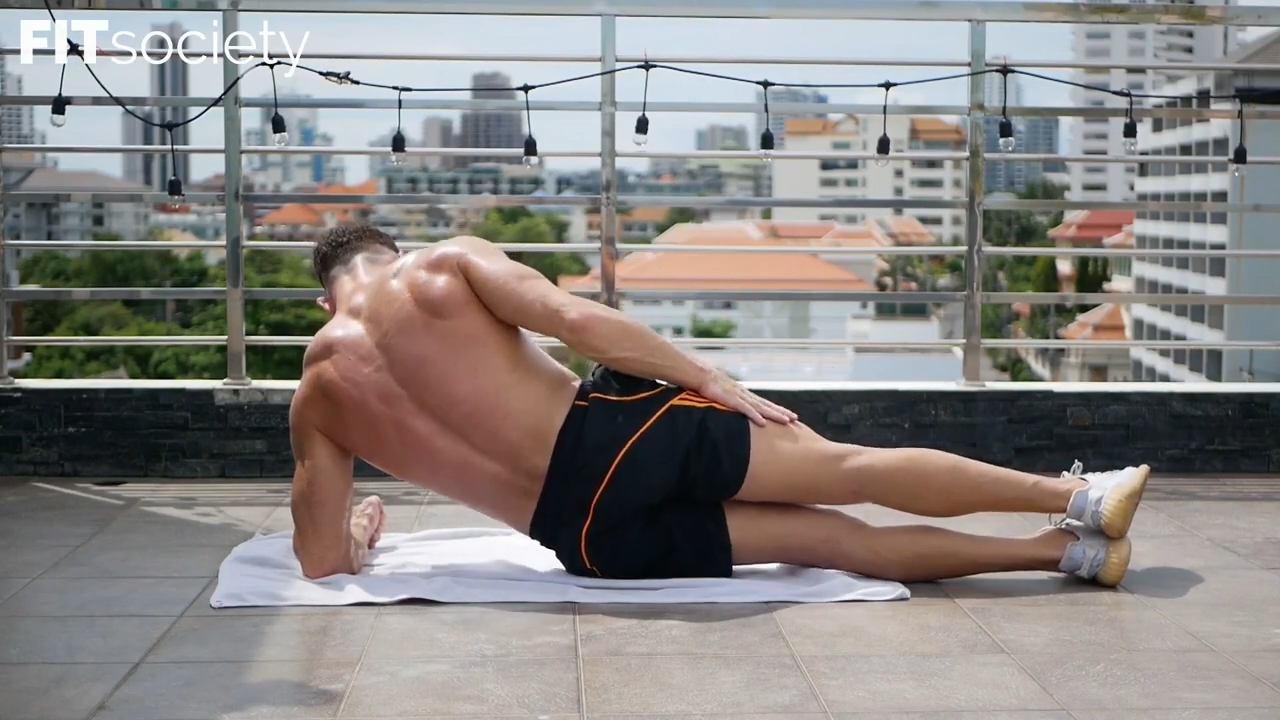
Begin in a standard side plank position with your elbow directly under your shoulder and your feet stacked.
-
2
Ensure that your body forms a straight line from your head to your feet.
-
3
Raise your top arm straight up so that it is aligned with your other arm.
-
4
Move your top arm underneath your body and rotate your torso with it to perform a torso rotation.
-
5
Return to the starting position and repeat the movement for the desired number of repetitions.
-
6
Switch sides after completing the set.
Benefits
- Improves core stability and strength.
- Increases torso flexibility and balance.
- Helps reduce the risk of back pain through a stronger core.
- Improves coordination and proprioception through the dynamic movement.
Common Mistakes
- ! Hips dropping: Make sure your hips remain elevated and aligned with your body to maximize the effectiveness of the exercise and prevent back pain.
- ! Elbow not under the shoulder: This can lead to unnecessary shoulder strain. Make sure your elbow is directly under your shoulder for stable execution.
Primary Muscles
The Motion Side Plank primarily targets the obliques, but also trains the shoulders, hips, and deeper core muscles such as the transversus abdominis.
Possible Alternatives
- To reduce the intensity, perform the exercise with your knees on the floor instead of your feet.
- For an additional challenge, try the Motion Side Plank on an unstable surface such as an exercise ball.
Run your fitness business with more structure
- Planning, member management and coaching in one platform
- Built for coaches, studios and gyms
- Fewer separate tools, more overview