Squat Punch With Dumbbells
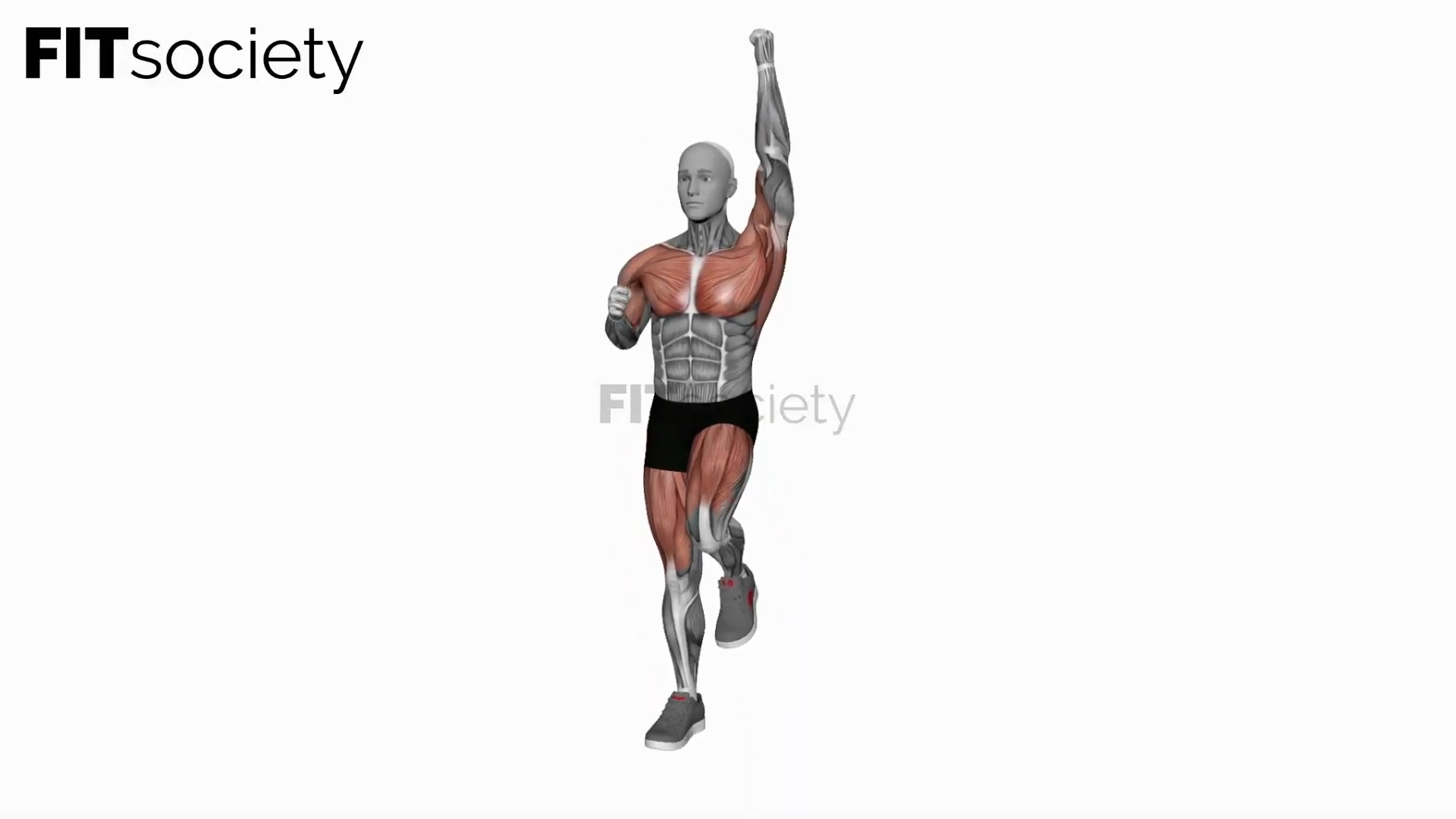
The Dumbbell Squat Punch is a dynamic exercise that combines strength training with cardio, allowing you not only to build muscle but also to improve your endurance. This exercise adds a new dimension to the traditional squat by incorporating a boxing movement, creating a full-body workout.
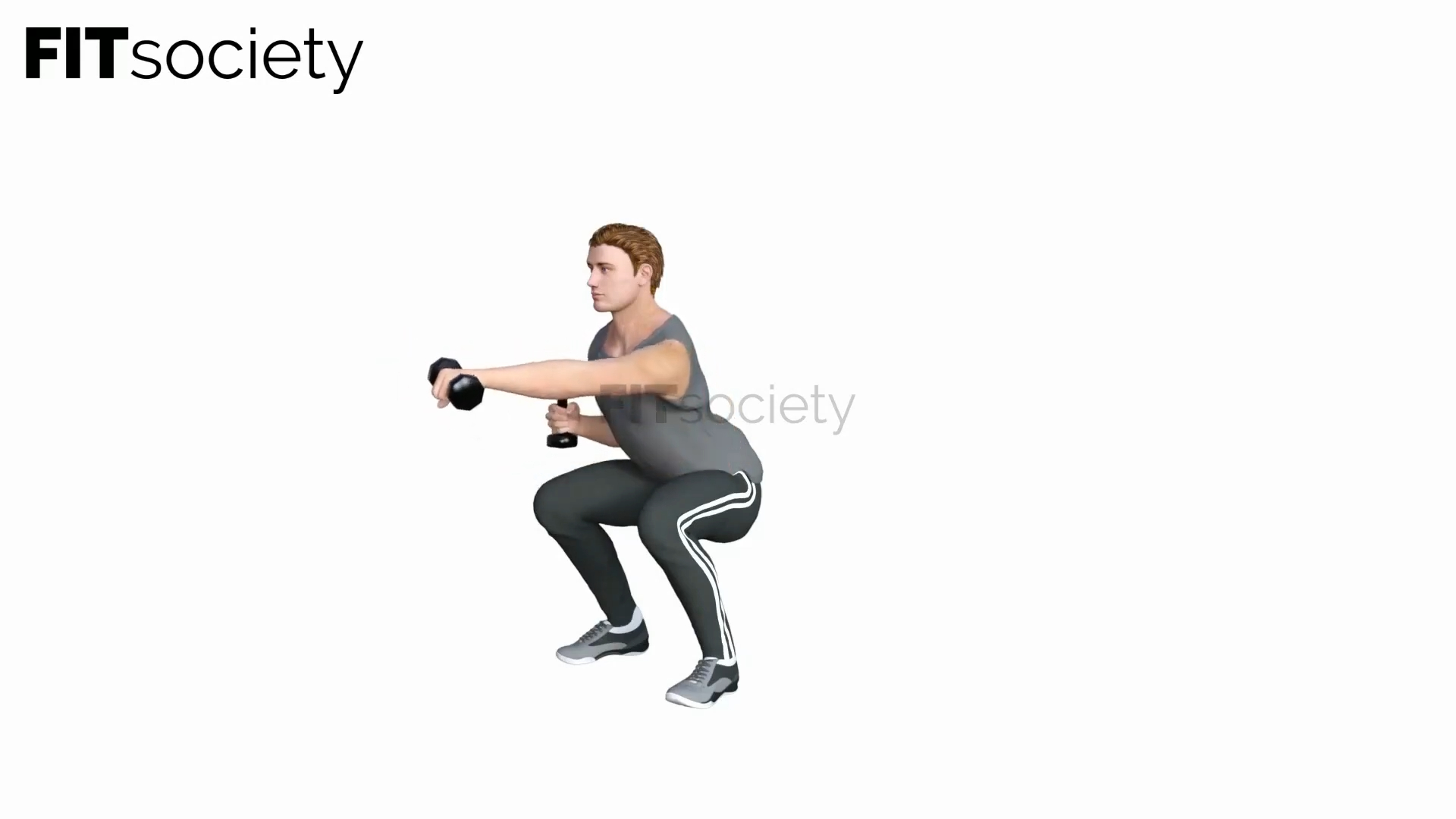
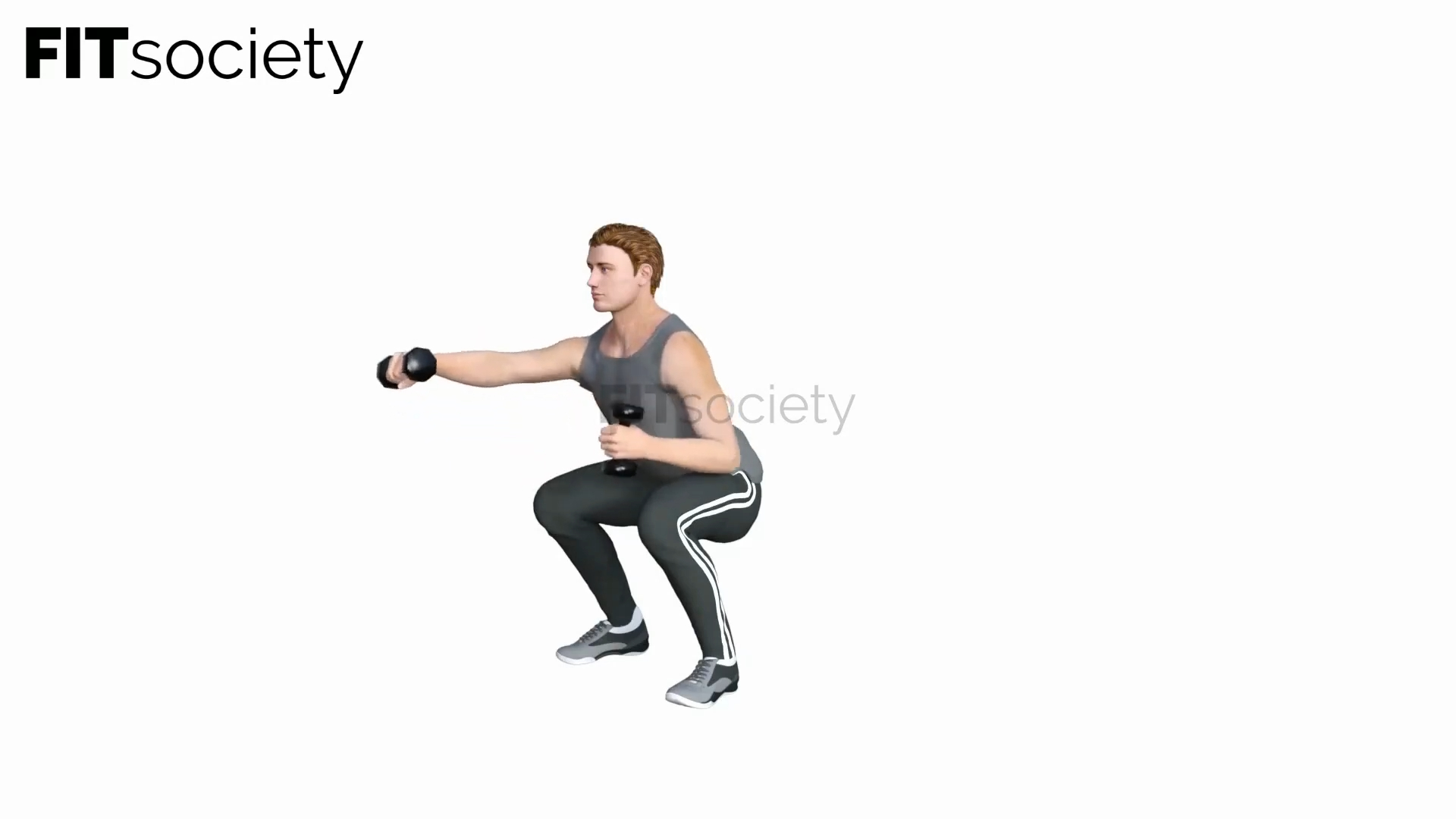
Execution:
-
1
Begin with your feet shoulder-width apart and hold a dumbbell in each hand beside your body.
-
2
Bend your knees into a squat position, keeping your back straight and your chest lifted.
-
3
As you rise from the squat, bring one arm forward in a punching motion. Make sure your arm is fully extended.
-
4
Return to the starting position and repeat the movement with the other arm.
-
5
Alternate arms with each squat.
Benefits:
- Improves coordination and balance through the combination of a lower-body and upper-body movement.
- Raises the heart rate, contributing to fat burning and improvement of the cardiovascular system.
- Strengthens multiple muscle groups simultaneously, resulting in an efficient and effective workout.
Common Mistakes:
- ! Moving through the exercises too quickly. Focus on the quality of the movement rather than speed.
- ! Not squatting deeply enough. Make sure your thighs are parallel to the floor.
- ! Arching your back during the squat. Keep your back straight and your core engaged.
Main Muscles:
This exercise targets a wide range of muscle groups, including the quadriceps, hamstrings, glutes, shoulders, arms, and core.
Possible Alternatives:
- To reduce the intensity, perform the exercise without dumbbells.
- For a greater challenge, increase the weight of the dumbbells or add a jump to the squat.
Run your fitness business with more structure
- Planning, member management and coaching in one platform
- Built for coaches, studios and gyms
- Fewer separate tools, more overview