Execution
-
1
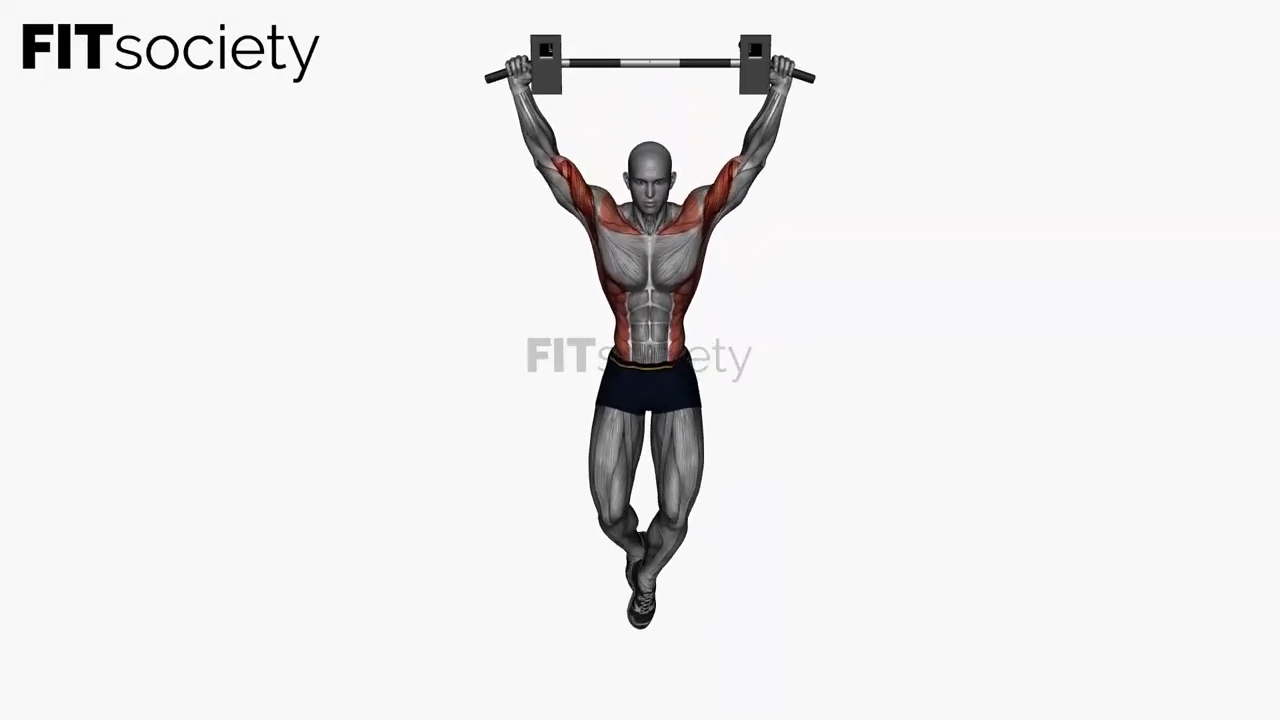
Begin by grasping a pull-up bar with an overhand grip wider than shoulder-width.
-
2
Let your body hang fully with your feet off the ground and your arms and shoulders fully extended.
-
3
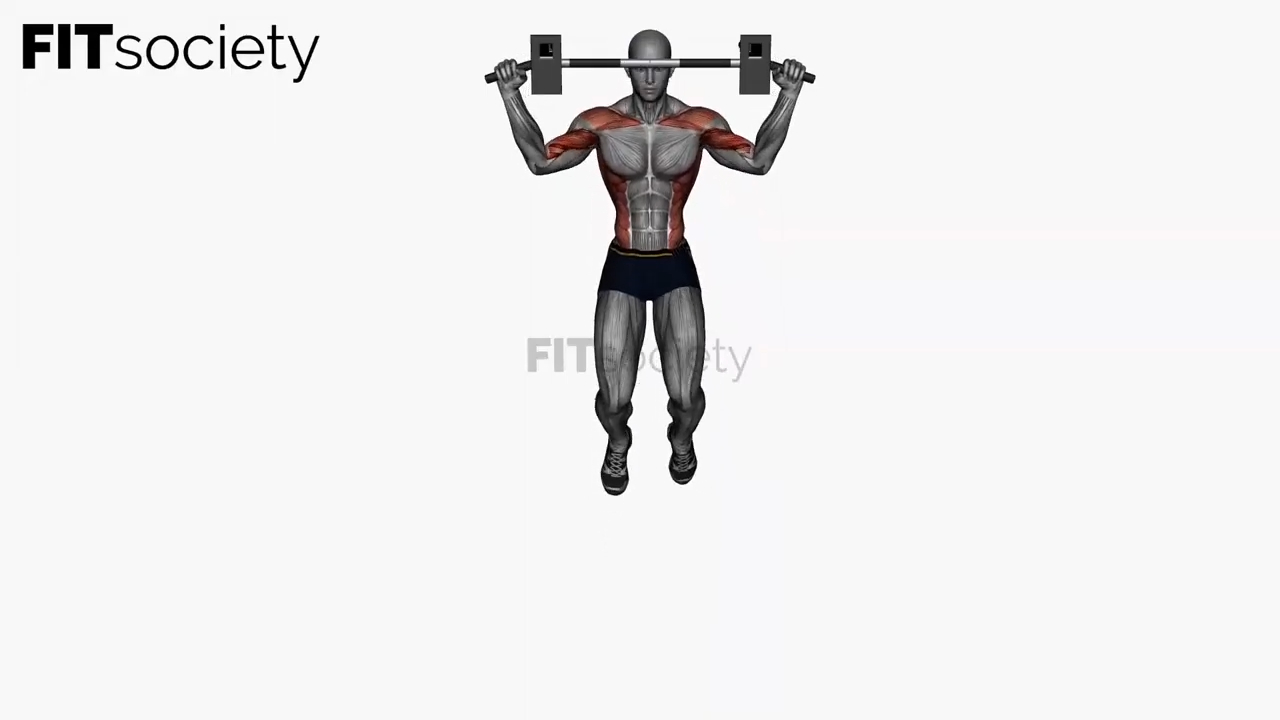
Inhale and pull yourself up by drawing your elbows down and back until your chin is above the bar.
-
4
Pause briefly at the top, then slowly and controlledly lower yourself back to the starting position.
-
5
Repeat for the desired number of repetitions.
Benefits
- Improves upper-back strength and size.
- Helps develop a V-shaped torso.
- Improves grip strength, which is useful for other exercises and daily tasks.
- Increases functional strength, which can help improve performance in other sports.
Common Mistakes
- ! Moving too quickly: Performing the exercise too quickly can lead to less muscle activation and an increased risk of injury. Focus on a controlled movement.
- ! Not fully extending: It is important to fully extend on every repetition to use the full range of motion.
- ! Excessive swinging: Try to minimize swinging your body to ensure that your muscles, not momentum, do the work.
Primary Muscles
This exercise primarily trains the latissimus dorsi, but also engages the trapezius, biceps, deltoids, and forearm muscles.
Possible Alternatives
- Assisted Pull-Up Machine: If you have difficulty performing pull-ups, an assisted pull-up machine can help by supporting part of your body weight.
- Band-Assisted Pull-Up: A resistance band can also be used to support part of your body weight while you work on building strength.
- Chin-Up: For a variation that places more emphasis on the biceps, you can try a chin-up with an underhand grip.
Run your fitness business with more structure
- Planning, member management and coaching in one platform
- Built for coaches, studios and gyms
- Fewer separate tools, more overview