Assisted Pull-Up
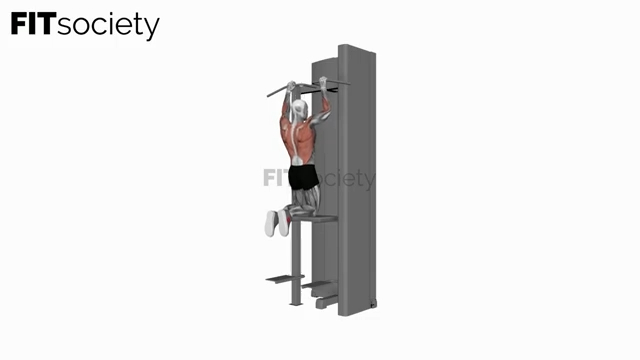
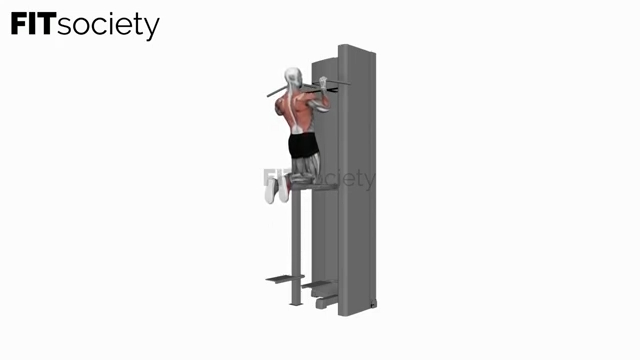
The Assisted Pull-Up is a fantastic exercise for beginners or those working to improve their pull-up skills. This exercise uses a machine or resistance band to support part of your body weight, allowing you to focus on technique and building strength in the upper-body muscles.
Execution
-
1
Begin by setting the machine to the desired weight or attaching a resistance band to a pull-up bar.
-
2
Step onto the machine platform or place your knees in the resistance band.
-
3
Grip the pull-up bar with an overhand grip, with your hands slightly wider than shoulder-width apart.
-
4
Inhale and pull yourself up until your chin is above the bar.
-
5
Slowly and controllably lower yourself back to the starting position while exhaling.
-
6
Repeat for the desired number of repetitions.
Benefits
- Improved upper-body strength and muscle mass.
- Increased grip strength.
- Improved functional strength that is useful for daily activities.
- Enables progression to unassisted pull-ups.
Common Mistakes
- ! Not lowering yourself fully for a full range of motion.
- ! Moving up or down too quickly, which can lead to less effective muscle activation.
- ! Shrugging the shoulders toward the ears, which can cause tension in the neck.
Primary Muscles
The Assisted Pull-Up primarily targets the latissimus dorsi, but also trains the biceps, trapezius, and the muscles of the shoulder girdle.
Possible Alternatives
- Use lighter resistance bands to increase the intensity as you become stronger.
- Transition to negative pull-ups, focusing on slowly lowering yourself from the top position.
- Try different grips, such as underhand or neutral, to target different muscle groups.
Run your fitness business with more structure
- Planning, member management and coaching in one platform
- Built for coaches, studios and gyms
- Fewer separate tools, more overview