Cable Standing Russian Twist
The Cable Standing Russian Twist is a dynamic exercise that focuses on strengthening your core and improving torso rotation. This exercise is ideal for developing strong, functional abdominal muscles and improving your overall stability.
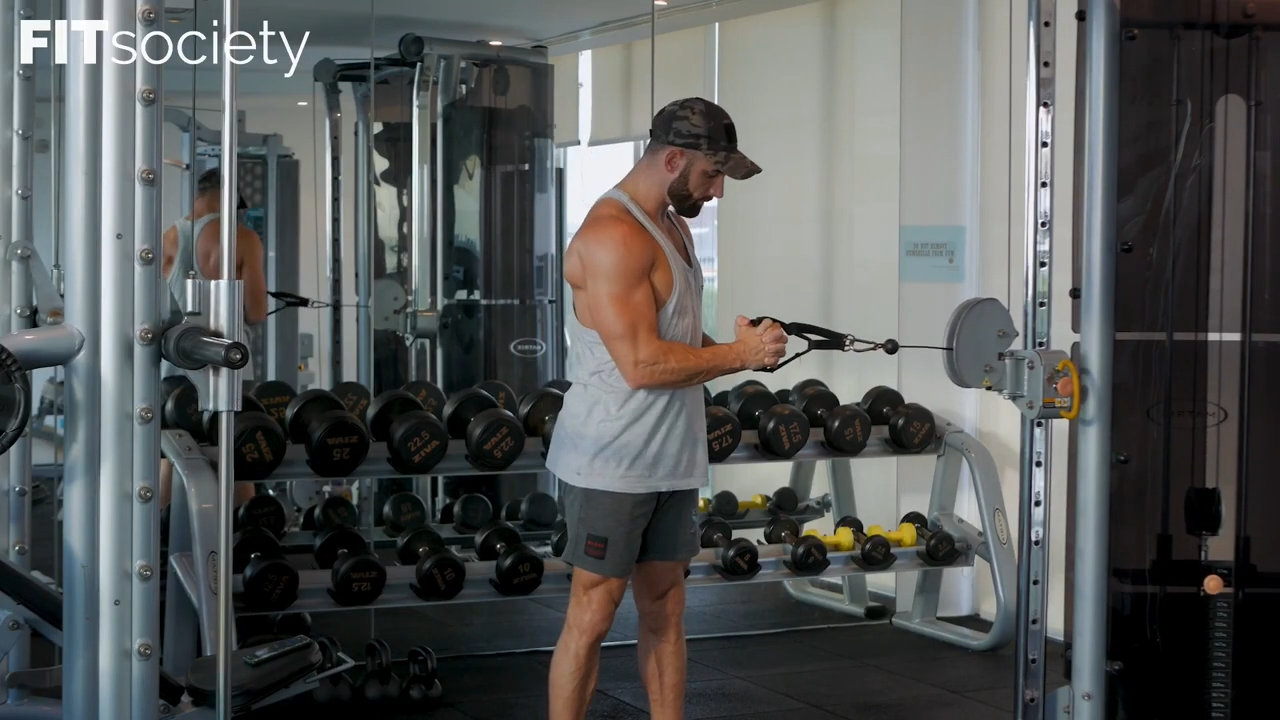
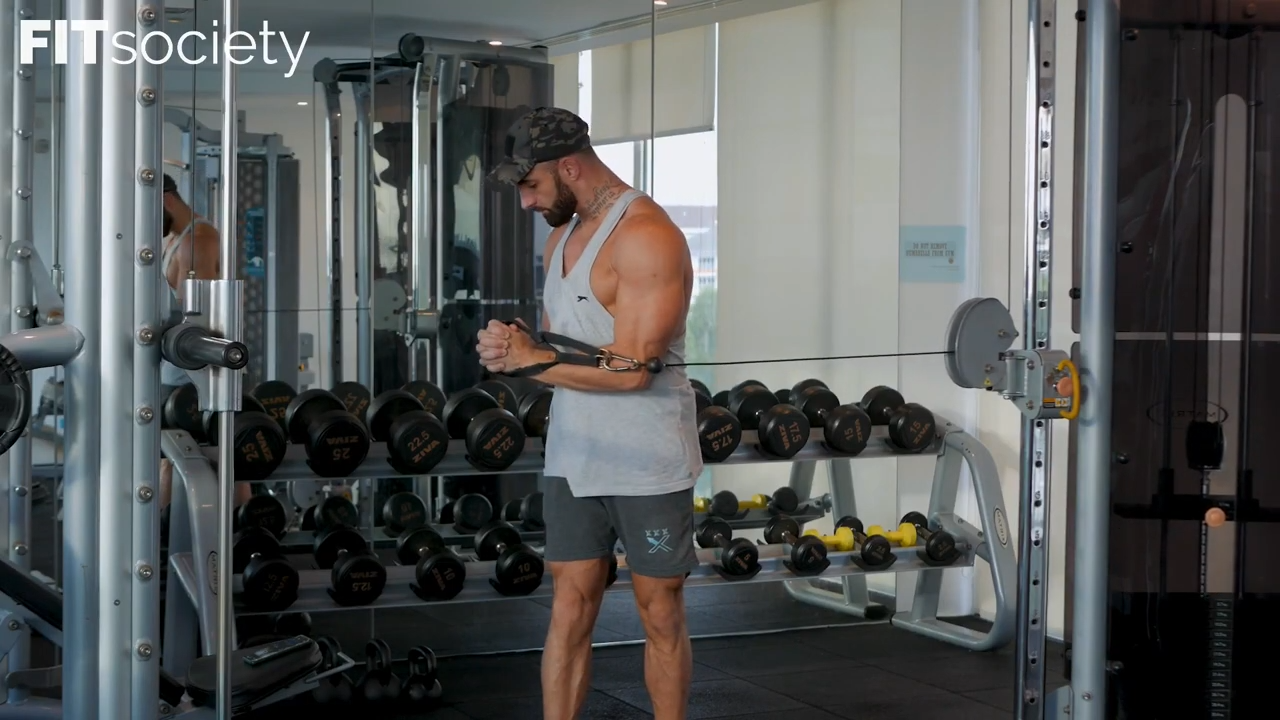
Execution
-
1
Set the cable machine to mid-height and attach a standard handle.
-
2
Stand sideways to the machine with your feet shoulder-width apart.
-
3
Grasp the handle with both hands, arms extended, and rotate your torso so that you face the cable machine.
-
4
Brace your abdominal muscles and powerfully rotate your upper body to the opposite side while keeping your hips and legs stable.
-
5
Rotate back to the center and repeat the movement for the desired number of repetitions. Then switch sides.
Benefits
- Improves the rotational strength of the core, which is useful in many sports.
- Helps develop a tighter, more defined waist.
- Increases the body's overall stability and balance.
Common Mistakes
- ! Rotating too quickly: Focus on a controlled movement to train the muscles effectively and prevent injuries.
- ! Moving the hips: Keep your hips and legs stable during the exercise to maximize its effectiveness for the core.
Primary Muscles
This exercise primarily targets the obliques, while the rectus abdominis and deeper transversus abdominis muscles are also trained. The shoulders and back are also lightly engaged.
Possible Alternatives
- Lower the cable resistance for beginners or increase it for a more intense workout.
- Perform the exercise with a medicine ball or dumbbell for variation.
- Try the Russian Twist on the floor if you do not have access to a cable machine.
Run your fitness business with more structure
- Planning, member management and coaching in one platform
- Built for coaches, studios and gyms
- Fewer separate tools, more overview