V Crunches
Looking to add an exercise to your routine that challenges both your upper and lower abdominal muscles? Try V Crunches. This exercise is unique because it combines a crunch with a leg raise, providing an intense workout for your entire core.
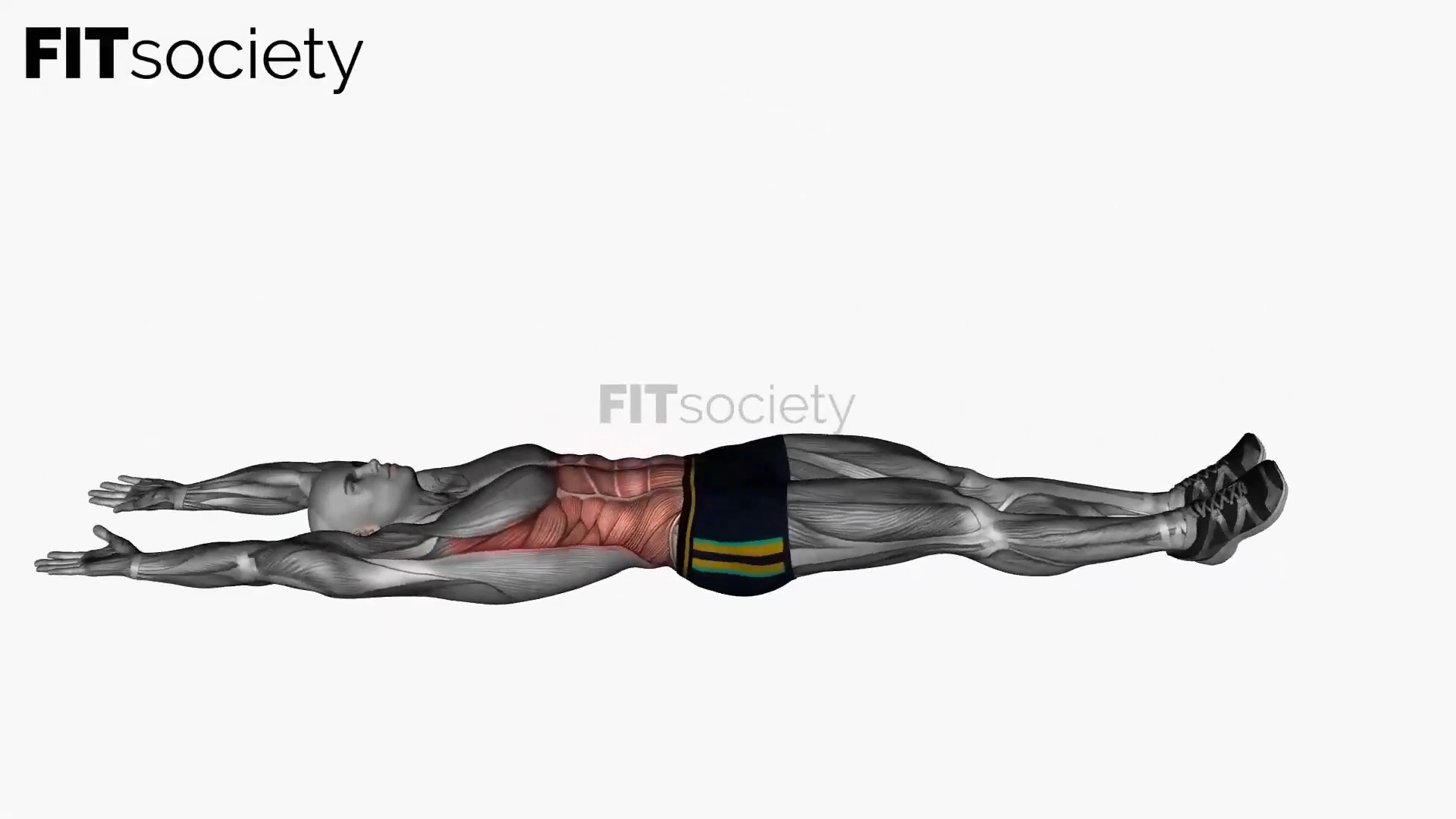
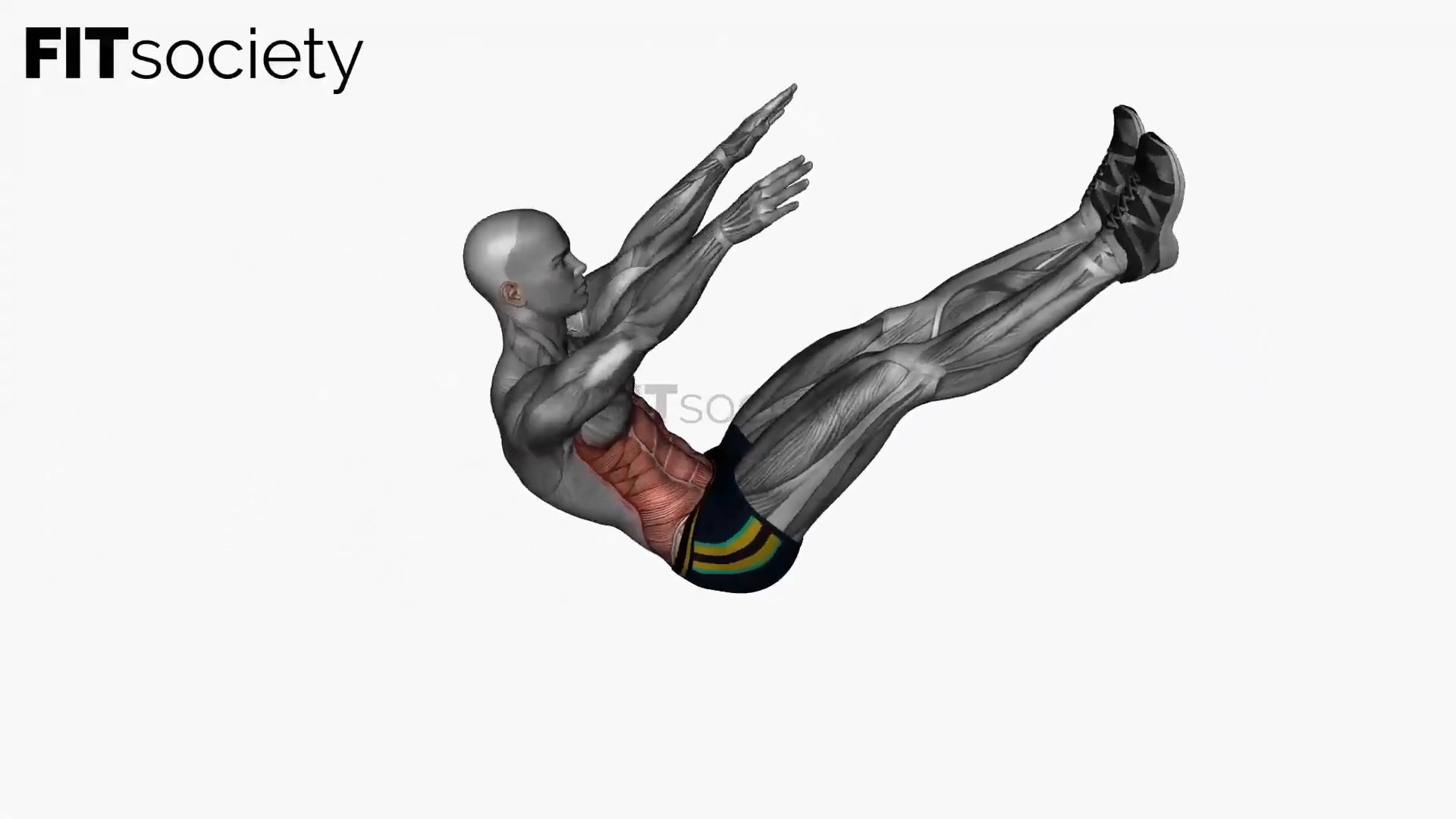
Execution
-
1
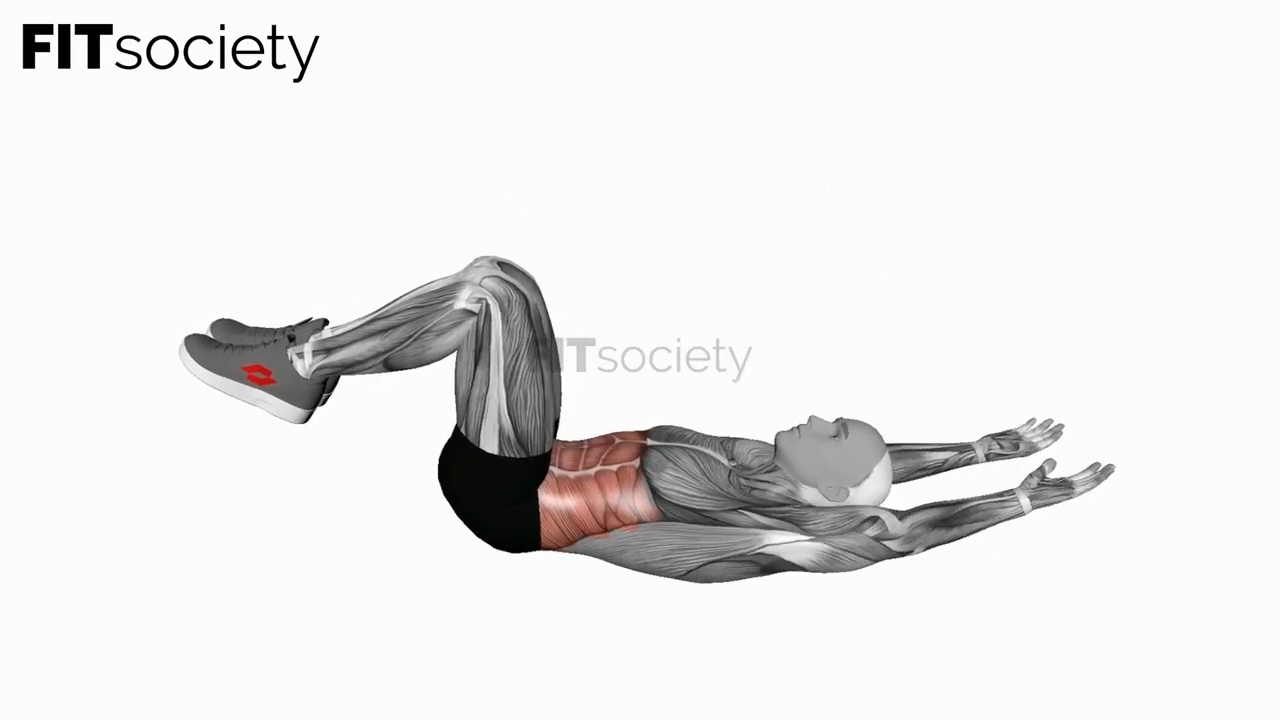
Begin by lying on your back with your legs extended and your arms overhead.
-
2
Inhale and simultaneously lift your upper body and legs off the ground while reaching your arms toward your toes.
-
3
Try to create a “V” shape with your body, with your hips being the only part still touching the ground.
-
4
Exhale and slowly return to the starting position.
-
5
Repeat for the desired number of repetitions.
Benefits
- Strengthens the entire core, which may contribute to better posture and less back pain.
- Improves balance and stability, which is useful for both daily activities and other sports.
- Helps develop a tight, toned abdomen.
Common Mistakes
- ! Performing the exercise too quickly: Take your time with each repetition to achieve maximum muscle activation.
- ! Not fully extending: Make sure your body reaches a full “V” shape for the best results.
- ! Straining the neck: Keep your gaze directed toward the ceiling to prevent neck tension.
Key Muscles
The V Crunch primarily targets the rectus abdominis (the “six-pack” muscles) and the obliques (the muscles on the sides of the abdomen). The deeper core muscles and hip flexors are also trained.
Possible Alternatives
- To reduce the intensity, try performing the exercise with your knees bent.
- For an extra challenge, hold a weight between your hands while performing the movement.
- Alternatively, you can also try Bicycle Crunches for variety in your core training.
Run your fitness business with more structure
- Planning, member management and coaching in one platform
- Built for coaches, studios and gyms
- Fewer separate tools, more overview