Reverse Crunch With Kick Out
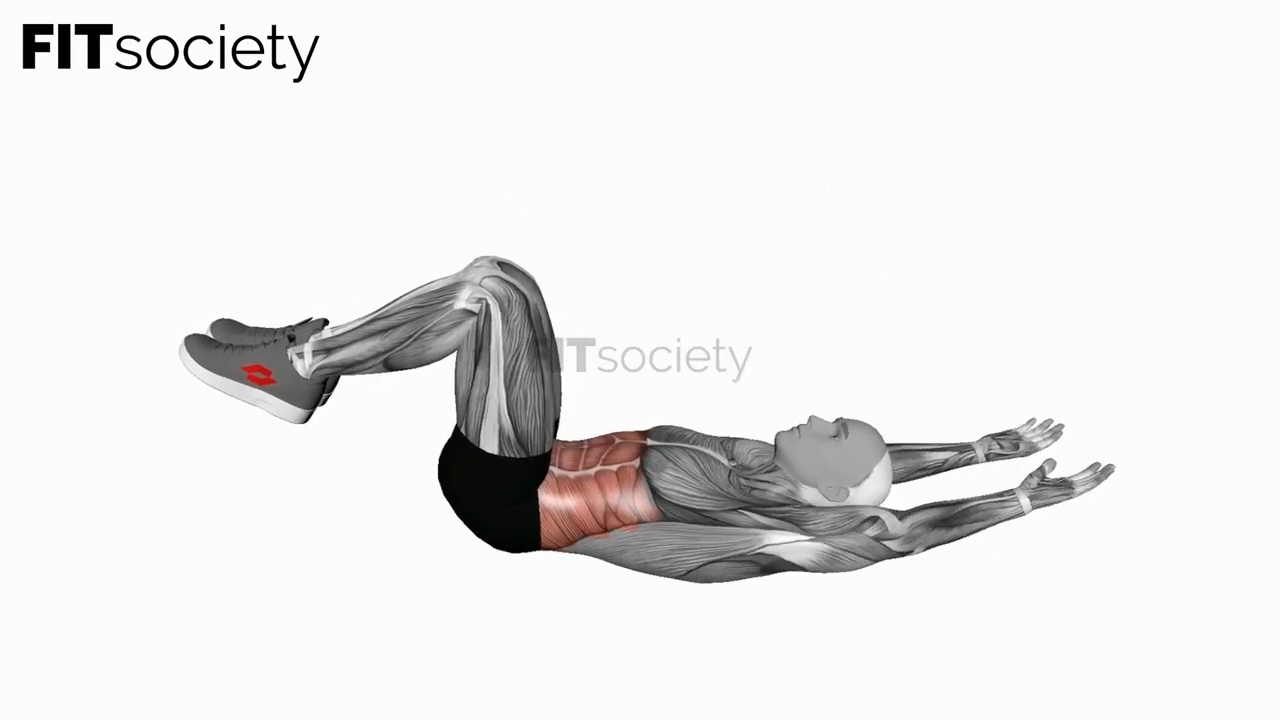
The Reverse Crunch With Kick Out is a dynamic abdominal exercise that focuses on strengthening your core, with additional emphasis on the lower abdominal muscles. This exercise combines the benefits of the traditional reverse crunch with an extra kick-out movement, providing a more intense workout.
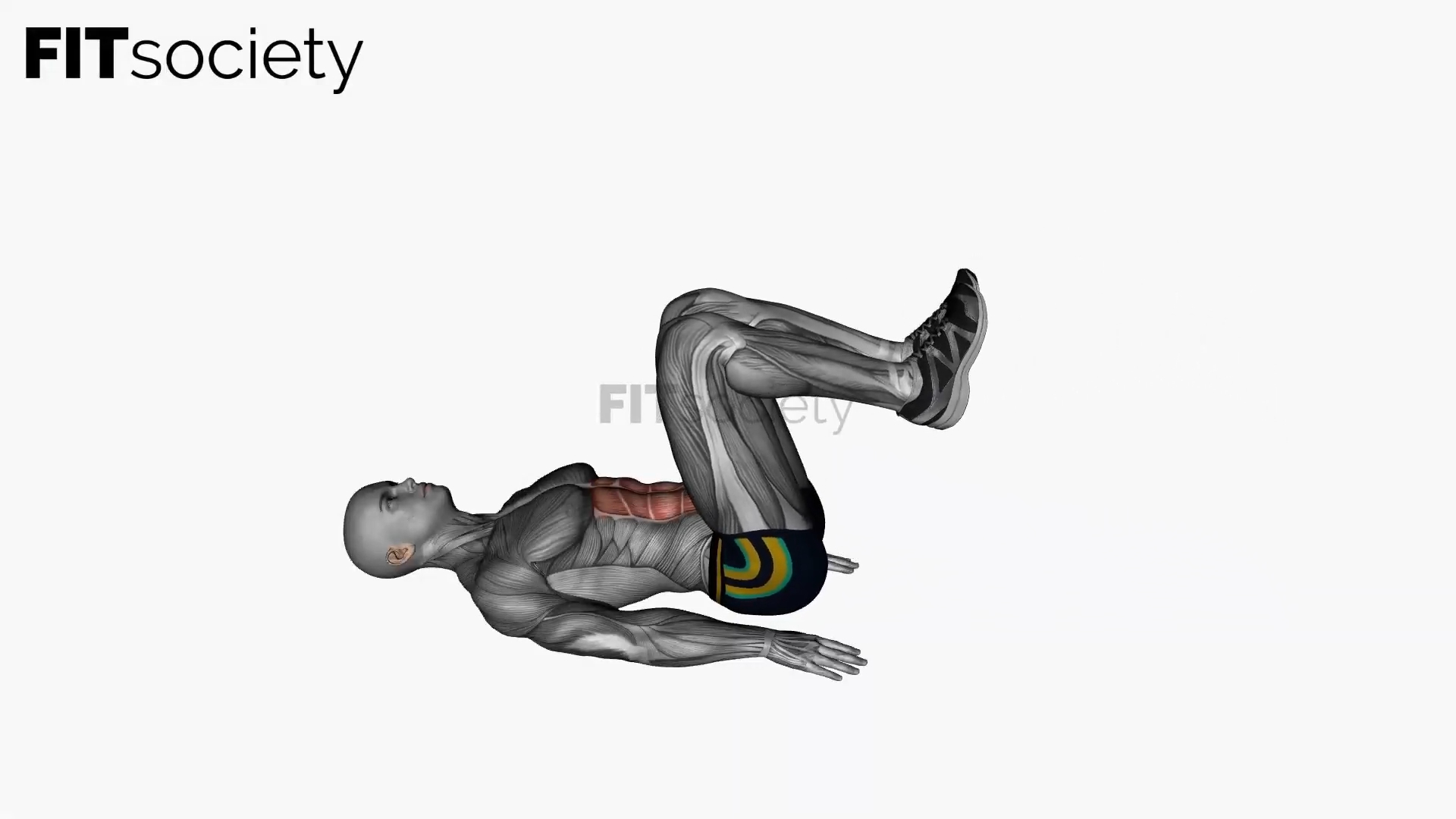
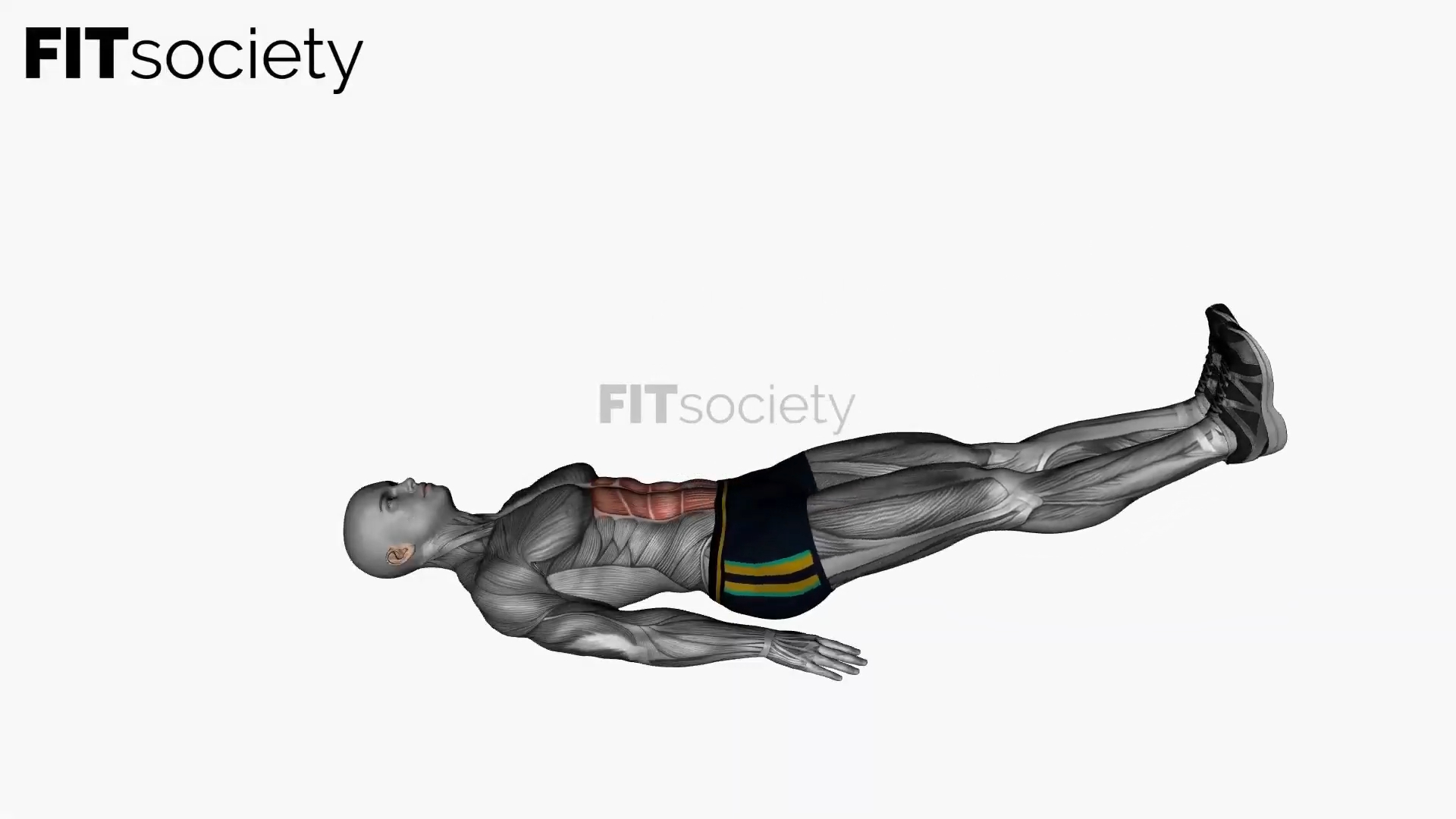
Execution
-
1
Lie on your back on a mat, with your hands by your sides or under your glutes for extra support.
-
2
Raise your legs and bend your knees so they form a 90-degree angle.
-
3
Exhale and pull your knees toward your chest by slightly lifting your hips off the floor.
-
4
As you inhale, slowly extend your legs forward without letting your feet touch the ground.
-
5
Pull your knees back toward your chest and repeat the movement for the desired number of repetitions.
Benefits
- Strengthens and defines the core muscles.
- Helps improve the body's stability and balance.
- May contribute to better posture.
- Increases hip flexibility.
Common Mistakes
- ! Performing the movement too quickly, causing you to lose control.
- ! Failing to keep your back flat on the floor during the exercise.
- ! Holding the legs too high or too low during the kick-out, which reduces its effectiveness.
Key Muscles
This exercise primarily targets the rectus abdominis and the obliques. The hip flexors are also trained lightly.
Possible Alternatives
- To increase the intensity, you can use a light dumbbell or ankle weights during the exercise.
- For a less intense variation, you can skip the kick-out and perform only the reverse crunch.
- Try performing the exercise on an exercise ball for an additional challenge and stability training.
Run your fitness business with more structure
- Planning, member management and coaching in one platform
- Built for coaches, studios and gyms
- Fewer separate tools, more overview