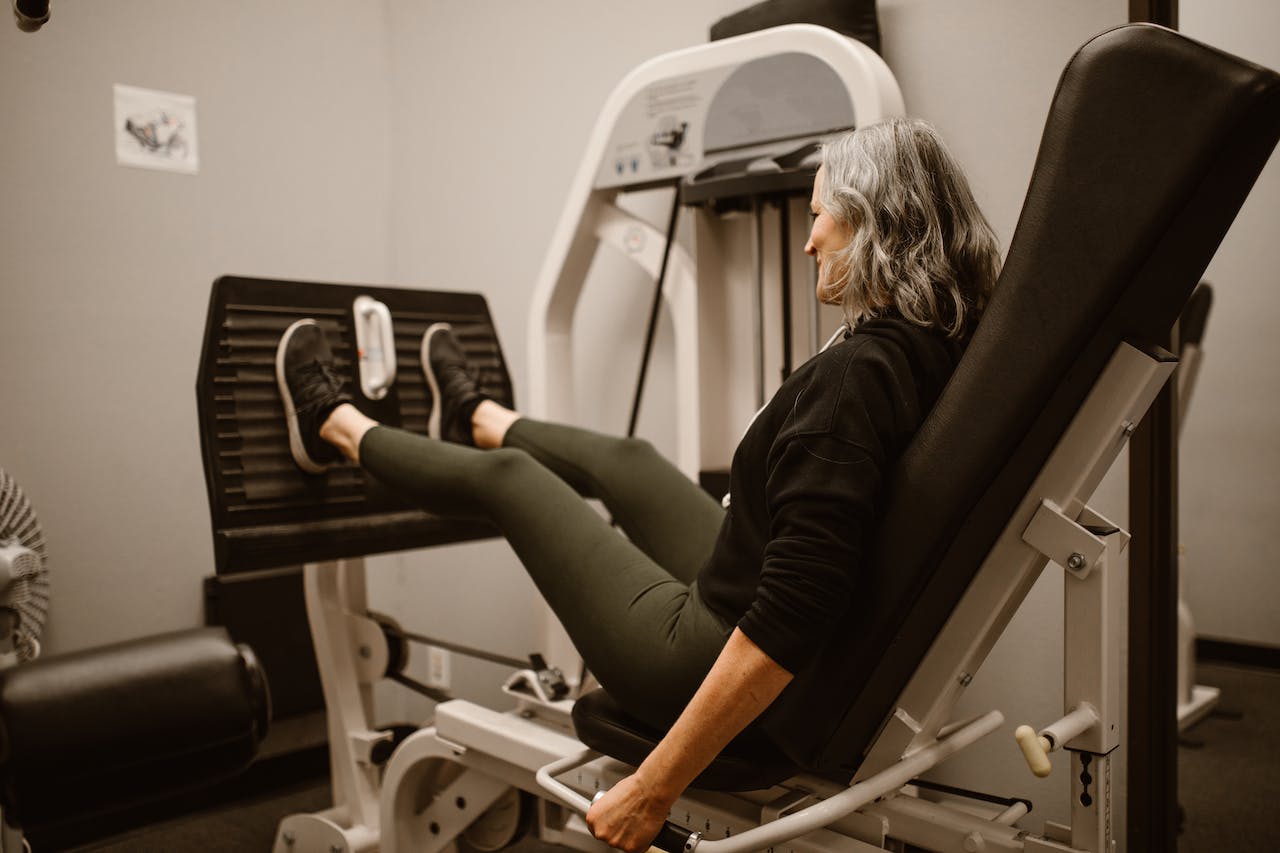
In a gym, unsolicited advice is regularly given and is not always appreciated. How do you give someone constructive unsolicited advice?
Unsolicited advice
It will not surprise you that I enjoy explaining things related to nutrition and training. Explaining things apparently suits me personally. As a manager at work, a sensei in the dojo, a father and finally as a fitness instructor, this is a character trait that comes in handy. Unfortunately, this trait does not have an off switch. I therefore find it very difficult not to say anything when I see something happening and think: "That is awkward at the very least". Given the development that there are more and more basic concept gyms and therefore less and less guidance, these situations only occur more often.
"Unasked for advice is criticism"
Like everyone who recognizes this and has given unsolicited advice in the gym themselves, I have of course experienced several times that this advice was not appreciated. The expression "Unasked for advice is criticism" often applies in these cases. The recipient of the well meant advice experiences it as criticism and moves into a defensive position from which only resistance arises. Instead of thinking as the person giving advice, "Stubborn piece of shit, then just carry on with the stumbling you call squatting" or something along those lines, you are better off thinking about what you could have done yourself to prevent this situation.
That is why a number of tips follow below for people who like to help others get started in the gym, but do not always see that help appreciated.
However, I will start with an anecdote. One of the many examples of a reaction to unsolicited advice that led to the writing of this article.
How others react to unsolicited advice that you give
An example that has always stayed with me is from a number of years ago, when I was still training at Fit4Less in Amsterdam. At one point I saw two guys bench pressing opposite each other. Both were training for maximum strength and muscle mass, heavy weights and few repetitions. About 5 reps at most. At one point I saw that one of them was having trouble racking the weight again, so I walked over to spot him, to help, while the other guy opposite him was resting.
Then I suggested that they spot each other. After all, they were both training heavy and were both alone. The guy I had just helped, I estimated him to be about 16, replied: "No, I do not need to go that heavy because I play 'professional soccer' and I am not allowed to become too heavy in mass". The other guy gave a look of: "Seemed like a good idea, but never mind".
First: One look at his physique was enough to see that this was serious bullshit. Even goalkeepers at professional level have a better physique. This was really a soft-looking guy. Not quite truly fat. But anyway, I pretended to believe him.
Second: I hate it when people say they "do not want to get too muscular". What do they think? That they will suddenly wake up and no longer be able to move their arms because their biceps have suddenly become enormous and are in the way?
"Not wanting to get too muscular is like not wanting to get too rich for people on welfare."
But anyway, back to that supposedly professional soccer player. I answered that if he did not want to become too heavy, cough cough, he would be better off training for muscular endurance or explosiveness, as described in my article on strength training for soccer players. So, somewhat lighter weights and more repetitions or plyometric exercises.
Then he looked at me blankly, a bit like the cat next to me now, and continued in exactly the same way, again without asking me or the guy opposite him for help. He manages two reps with difficulty and... then cannot get the third one up. I see it happening, the guy bench pressing across from him sees it happening, and we are both standing there watching with the thought: "That will teach you, you brat". Eventually the "little soccer player" had to apply the "roll of shame method", lowering the bar onto the chest, rolling it toward the waist while pushing so you can sit upright, and then removing the plates while seated to get the bar off you.
Besides this, I could name dozens of examples of ego lifters. People who use poor technique, for example, so they can handle heavier weights. They often think exactly the wrong way around: "Yes, but if I do it the way you say, I cannot lift as much weight". Exactly! Even when you have explained that the art is precisely to make it as hard as possible for yourself, combined with safe execution, they stubbornly keep going because they cannot accept having to train a bit lighter. Ego lifters require a separate approach, which I will gladly get into in a moment.
It is because there are many others who do appreciate the advice that you keep the energy to still help where you think it is really necessary. Although I was going to leave it at this one anecdote, I therefore want to place a second, more positive and more recent one next to it. Yesterday I saw someone deadlifting, at least, something that was supposed to resemble it. The eccentric part, lowering the weight, was completely neglected. He basically just dropped and bounced the barbell, so part of the way back up was already done by the bounce. When I approached him as an ego lifter, see below, he argued that he had back problems. But that was exactly an argument not to do it the way he did. I explained this, but thought: "Wasted effort, this one is too stubborn", given his nonsensical answer. To my pleasant surprise, however, I saw that he performed the next set exactly as I had explained, lowering it slowly until just above the floor and possibly lifting explosively as far as the back allowed.
If you give unsolicited advice, you therefore have to take every type of reaction into account.
Tips for giving unsolicited advice in the gym
Here are a few tips in no particular order:
Ask yourself whether you should really give advice
My first criterion here is the motivation of the person you want to advise. The "wants to but does not know how" people who are very motivated and have been training for a while, but for one reason or another have never taken the time to dive into the subject, even though that is becoming easier all the time with sites like this and many instructional videos on YouTube, among others. With this category, the chance that your advice will be appreciated is much greater than when someone comes to train once in a blue moon.
The fact that you pay attention to your nutrition all day and read everything about training and building muscle mass does not mean others find that equally important. They may want to achieve the same results, but in most cases they are not willing to do what is required. In that case, spare yourself the possible frustration of giving such a person advice. Chances are high that you will soon never see that person in the gym again because it is already March and the good intentions have long been forgotten. Or they think: "Who cares about all those details, I am already happy that I am here". I try to make it a rule for myself to possibly give someone advice only once I have seen that person working at it with motivation for a few months.
Here, distinguish between advice for safety and advice to improve the effectiveness of an exercise.
I do not wait a few months until someone is sitting at home with an injury or worse when I see unsafe behavior. I may not be a doctor who has taken the Hippocratic oath, but as a trained fitness instructor I do see it as a moral duty to point it out when the chance is greater that you will harm yourself or others than that you are reaching your goals.
Know that there is always someone who thinks they know better
With all the tips that follow, you cannot prevent some people from simply being incredibly stubborn. Whether that is because they are not serious at all and just do not care about your instructions, or because they are extremely serious and therefore think they know everything. Your effort was to provide someone with information, and you have done that. What they do with it from there is up to them, so do not worry about it too much and just shrug your broad shoulders.
Know that there can always be someone who really does know better
Also keep in mind that someone sometimes really does know better and that you yourself do not know everything. Insights change over time and knowledge changes constantly. It is very possible that someone is training in a way that is not yet familiar to you or with a specific goal. A while ago I saw a video with gym fails, you know, the videos I sometimes post here myself with blunders in the gym.
Often you see people using equipment in a totally different way than it was intended for, by doing exercises they apparently invented on the spot and based on nothing. In the video I saw recently, that compilation also included footage of a man training with a head harness around his neck on the cable. Apparently the creator of the compilation did not know this exercise, since he had placed it among nonsense exercises. That same creator is welcome to come film me in my gym twice a week while I train the back of my neck that way. So I laughed harder at the fact that he, as a supposed "expert", did not know the exercise than at the other actual nonsense exercises.
So you must always keep in mind that you yourself may be corrected, and rightly so.
Phrase your comment as a question
Partly because of the previous point, but also for people who really have no idea what they are doing, it is useful to let your corrective comment be preceded by the question:
"Is there a specific reason why you perform that exercise that way?"
It is possible, for example, that the person has an injury and therefore has to adapt the exercise. Or he or she is training for explosiveness and is doing plyometric exercises where you would normally emphasize a more controlled and slower execution. It is also possible, however, in the other 9 out of 10 cases, that the person has no idea what you are talking about and will respond with the question: "No, why?" or something along those lines. Then you can say: "Well, usually..."
The reason this often works is that you first position yourself as an equal by asking a question. If you place yourself "above him or her" by immediately telling them how it should be done, and thus effectively lecture them, you force someone into a role they may not want or may find difficult to accept at that moment. You quickly get nonsense reasons such as "I am a professional soccer player blah blah blah..."
If you first ask why it is being done that way, the person has no reason yet to invent something nonsensical for it. If you then indicate how it is normally recommended to do it, it becomes odd if a nonsense reason is suddenly mentioned after all.
Do not turn the teacher into the student
Giving feedback is an art about which countless communication trainings are given. There are many practical methods for this, but the most important thing is knowing how to convey a message without making the recipient lose face. Someone who has lost face listens about as poorly as someone without ears. For example, you could shout across the room:
"Hey dude, you there in the squat rack. You are doing it completely wrong, man!"
You can imagine, however, that while the whole gym is looking to see who the comment was aimed at, that person is not immediately inclined to listen to you.
Losing face happens quickly when you want to "turn a teacher into a student". For example, when a guy has been training for "as long as" a few weeks and brings his girlfriend to the gym, he will quickly take on the role of teacher and "just explain how it all works" to her. But because the guy has not been training "as long as" but only for a few weeks, he does not know that himself yet. That might not stand out so much, except that he keeps giving instructions to his girlfriend that are obviously wrong and can be heard by everyone. If you then say: "Man, everything you are telling her is total nonsense", he will very likely experience this as a diss and a loss of face instead of well meant help. With that, he loses any willingness he might have had to listen and is only busy saving his dignity in front of his girlfriend. If it really bothers you that much, save it until you catch him alone, even if that is not the same day.
"I heard you explain that exercise to someone yesterday. Is there a specific reason you advised doing it that way?"
Step on the ego lifter's ego
The opposite applies, in my opinion, to the ego lifter. He often deliberately performs an exercise with less good technique in order to use heavier weights. In many cases, this is the "wants to, knows how, but still refuses anyway" type. Bench pressing only halfway to the chest or bouncing the bar off the chest to press it up more easily, squatting as if you are going to sit on a bar stool instead of a chair, biceps curls by pulling your whole upper body backward like a swinging monkey to get the dumbbell moving, and so on.
Bodybuilding is the art of making it as hard as possible for yourself instead of finding the easiest way to move the weight.
When you give the ego lifter unsolicited advice, you can expect him to think he knows better, to see it as a loss of face and to be stubborn. After all, he is an ego lifter, apparently with a large ego that you step on quickly. For this, in my experience, the hard approach works. Just be direct and make clear that the way he trains really does not impress anyone*. For example, if I see someone squatting as if he is afraid his pants will tear if he lowers even a little bit, I say when he is finished:
"Now do a real squat". In this case preferably at a volume that is audible to everyone he thought he was impressing.
In most cases you get a question back, "What do you mean?", after which you demonstratively walk over to show it properly. When he then tries it himself, he will notice that it is much harder the way you explain it, but he probably already knew that. The most important point you have made is that correct technique is more impressive than heavy weights.
See it as a priority check: "Do you want to impress with heavy weights or with big muscles?"
In practice I notice that this works even more often than advice to people who do not know better. The ego lifter is often serious in motivation and sometimes needs to be pointed out that he is getting in his own way. Of course, it may also be that the person does it correctly because I happen to be there and does not want to be corrected again, while he still does half squats when an attractive girl is nearby. In that case, however, I do not have to be annoyed by it.
*Although in the rest of this article I sometimes even force myself to speak about he or she, in this context I deliberately talk about "he" because women are much less inclined to ego lift.
Setting a good example and being one helps
Admittedly, when giving advice it helps if you look better yourself than the person you are saying it to, or better yet, if you come close to his or her goals. I often hear people complain about fitness instructors who do not look motivating at all. This is recognizable, but not always justified. I know plenty of people who know an enormous amount about fitness, bodybuilding, strength training in general, nutrition and fat burning, while they themselves do not exactly look like fitness models. You can therefore miss valuable information by judging too quickly on that basis. However, if you are the one giving advice, you should take into account that your physique gives a certain weight to your advice, whether positive or negative.
Setting the right example yourself is also important. If you are the know-it-all who regularly corrects someone, you can of course bet that you will be watched closely when you perform an exercise yourself. So practice what you preach! I therefore always hate footage in which professional bodybuilders suddenly train much heavier and with less technique because they know it will be watched by many people. Those people are watching with the thought: "You are that big, how do you do that?" I find it annoying when the training is then done in a way you would not recommend to most people, apart from the fact that "chemical performances" are not representative of someone who wants to deliver "natural performances", and therefore has to take more account of the body's limitations and need for rest.
Giving women advice
Finally, separate attention for a man giving unsolicited advice to a woman. First ask yourself why you are giving a woman in the gym advice, because she will ask herself the same thing. If you yourself doubt whether the way she performs her technique or her appearance is the reason, do not be surprised if she visibly doubts your intention and sincerity.
That also brings in the last point about being a good example. When I give women advice, I regularly hear "but I do not need to become that muscular", here we go again. Especially when it is about the underestimated importance of strength training and the underestimated importance of cardio when it comes to fat burning. Although I know they really do not have to be afraid of that, they mainly look at my appearance and think I am projecting my goals onto them.
Conclusion
The easiest way to prevent unsolicited advice from being experienced as criticism is not to give it. So first assess whether the situation really needs your instructions. If you do decide to give advice, think about how you can do this as constructively as possible. And if you finally think: "I did not ask you at all to explain to me how to give unsolicited advice", then tough luck, since you have already read the whole piece by now.